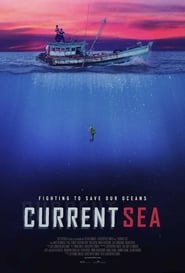
Current Sea
Muat Turun Sari Kata English
Maklumat siaran
Tag
Pratonton sari kata English
200 baris pertama.
My name is Matt Blomberg,
I'm a investigative journalist in Cambodia.
Four years ago, I was a sports reporter in Australia.
That was my goal in life,
and then I came here on a holiday.
I didn't want to go home,
so I applied for a job at The Cambodia Daily.
There's not much professional sport here, so
I got sucked into the world of
corruption and investigation and scandal.
There's a lot of different people
using a lot of different methods to try and confront
injustices all over the world.
For me, the most effective way is with a pen and a camera.
From Phnom Penh I was following the story about illegal fishing
and starting to get little bits of stories
about the lawlessness at sea.
And then one day
I heard that a Cambodian man was killed
in a clash of Vietnamese fishermen.
To where?
Yeah, yeah,
yeah, yeah for sure.
So I went down and visited the village,
met the widow,
Then started, you know,
poking around the villages and asking questions.
- Was there any justice for the death of Auok?
- The governors think they are wrong.
- At this point, I hadn't seen anything myself.
So I went and asked the captain to take me out.
It's a really volatile situation
because there's so many fishing villages
who are all living off the same patch of ocean.
There's hundreds of boats that go out every night.
There's these fishing communities all along the coast.
The scale is massive.
He says that all these
boats with their lights off are Vietnamese and that,
this is Cambodian water for a little bit more.
So that's everything off the sea floor.
Everything.
I watched them drag hundreds of kilos worth of sea life
onto the boat.
20% of it is put into buckets
that are going to be sold at market later
and then the rest of it,
the stuff that wasn't worth any money, just died.
Their yields are down exponentially every year.
The yields are dropping and dropping and dropping.
It's a race to the bottom.
The more villages I went to,
I just kept hearing the same story.
There's no fish left,
that the Vietnamese had taken all the fish
and that the local fishermen are powerless to stop them.
If you have a look at the maps, you can see that
Thailand in the west and Vietnam in the east,
their waters have been fished out.
The Vietnamese have pillaged their own oceans and
the fishing fleets from there are moving into Cambodia.
There's billions of dollars worth of seafood
exported from Southeast Asia every year.
And so, a lot of people around the world
are affected by the things that happen here.
In Cambodia, things are pretty desperate.
It became apparent very quickly how serious this issue is.
If this problem is not addressed, it's only a matter
of time before there's no fisheries in Cambodia at all.
Hundreds of thousands of people's
livelihoods are on the line.
Through talking to the fishermen down there,
I found out about
this vigilante British guy who was living on an island
off the coast and
doing his best to try and keep the illegal fishers at bay.
So, I'm thinking to myself,
"Who is this guy Paul?"
- At least one set of Vietnamese pair trawlers,
First one,
somewhere between 500 meters and 1 kilometre
north of Koh Seh. Now we...
- Paul's strategy is to flood Facebook with
live streams when he's out on patrol.
- Oh there he is, throwing stuff!
Live on Facebook! Here we go, chasing the boat.
90% of Cambodians
see Facebook as their lead source of information.
And he knows that pretty high ranking people are watching,
- Okay here we are, continuous offenders.
- And that if he keeps slapping them in the face
someone will react eventually.
Guy's waving an axe at us.
- The illegal fishermen are notoriously violent.
They go to work armed with machetes and slingshots
and homemade guns and anyone who gets in their way,
they're willing to use those weapons.
They've rammed boats, they've sunk boats,
they've launched coordinated attacks even.
- 2, 3, 4, 5, 6, 7 and 8 electric trawlers
trying to ram our boat right now.
- Obviously I was quite interested in it,
so I went down there looking for him.
I also heard that Paul
wasn't very keen on talking to the media.
His staff told me, you know, he doesn't like journalists.
The small one has all the cameras and some stuff in it.
How're you doing, Paul?
My first impression was that
getting along with Paul will be difficult.
What I wanted to do
was to get into a position where we can share information.
Nothing else to do.
But it took me a little while
to even gain his attention.
- I approached him and sat down and
slowly started chatting to him.
No, it's okay. We've done all the
research we've been doing it first...
And I guess I won his trust in the end.
At the end, at the end.
Yeah, yeah. It was like, that was exactly...
- At the very beginning when these little seahorse trawlers
came over from Vietnam,
this was what the bycatch looked like.
So it was a really, really sensitive habitats
that hadn't been disturbed.
So you've got, that's a, say a 30 minute trawl,
and they have that much life in it.
This is exact, almost the same trawler
and that's what they catch now.
So the first one was, I think 2008,
so they get, and that will be maybe a two hour trawl.
It's pretty crazy how little there is now left.
But I've got to say,
the Vietnamese ones must be working hard..
Matt contacted me
and I gave him a bit of information about things
and we talked and it sort of progressed from there.
The other and he's like,
"If I had this and if I had this..."
Twelve years ago, I was a diver,
I loved the ocean and I came to Cambodia
to work as a dive instructor.
It was a very small island.
Just off the coast of Sihanoukville, called Koh Koun.
When the ocean started being destroyed,
no one else was there to stop it
and I was there.
There wasn't really a choice, it had to be done.
So, that was when I started Marine Conservation Cambodia.
- We started out to protect the seahorses here
and the more we started to work with the community,
the more we understood how little fish were left
and it became much more about
protecting the community and the whole marine environment.
We worked on getting the illegal sand dredging banned.
We ran a clinic.
We ran a small English school, for the local kids.
It was very successful.
And the deputy governor
basically asked if we were interested in doing,
in the ocean here in Kep,
exactly what we'd done there.
And so, we set up MCC here in Kep,
and then we began work.
- MCC has a very small area in front of Koh Seh,
the island that they populate.
We have the conservation area
that we've officially been granted
by the provincial government.
- And it's surrounded on three sides by Vietnam.
Essentially we really are
smack bang on the front line.
- This is the border, right here,
between Cambodia and Vietnam.
This is our medium boat.
This is the boat that we go patrolling on.
Phon is the captain on the boat.
We run the patrols
to stop the trawling boats
from going into the marine conservation areas.
Three electric boats,
Clearly know they're in the wrong.
They're running from our boat right now.
- They also have an extensive research program
that follows the seahorse populations in the area.
MCC is a really grassroots operation.
Y'know they're all living on a thread out there.
For Paul, every time he wakes up in the morning,
he's risking everything.
'Cause he's got his family, he's got five kids and a wife
living on that small island with him.
- Hello everybody. - Hello everybody.
- So can you give us hundreds of money, all your moneys.
- You guys love being live, don't you?
- Papa I want to say something too.
- What do you want to say? What'd you want to say?
- Whoever is watching me right now,
please help me to save this island and this ocean.
Current Sea subtitles in other languages
More English subtitles for Current Sea
- Current Sea 2020 720p WEBRip x264 AAC-[YTS MX] · 11 downloads · 2021-07-27
Komen
No comments yet. Be the first to leave one.