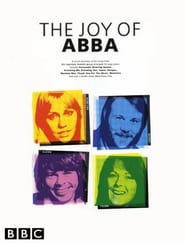
The Joy of ABBA
Muat Turun Sari Kata English
Maklumat siaran
Tag
Pratonton sari kata English
186 baris pertama.
Between 1974 and 1982,
four Viking invaders plundered the Anglo-Saxon pop charts.
'No-one cared if you were big in Austria, '
or Germany, or Sweden.
But if you were accepted in Britain, OK, that's fine.
Now you're a real pop group.
Combining European musical influences,
perfect production, and lyrics of love and loss,
ABBA were unique.
A lot of their songs have dealt with the mundaneness of, you know,
watching TV, going to work, falling in love a bit,
having your heart broken. That was their talent,
of making something very normal seem otherworldly.
ABBA made us fall in love with the sound of Swedish melancholy.
'You have this incredible cheerfulness.'
At the same time, you have this real darkness,
and this real sadness within the songs.
'ABBA sort of really gouged out this sense of...
'of the kind of sadness, the difficulty, of the human condition.'
You can't know true joy without knowing true pain.
But they would create a critical storm.
'ABBA were the black riders, '
the musicians of evil!
I'm going to quote T.S. Eliot,
"'Human beings can't bear too much reality."
'Obviously, you knew that ABBA were going to sell
'a shed-load of singles as a result.'
It's hard to sort of trust, or to really even know,
what someone means when they say, "ABBA don't really do it for me."
If you don't like ABBA, you don't like pop.
ABBA's eight-year career was a battle for the legitimacy
of pop music.
ABBA works for one reason and one reason only - it's complicated.
We all know the four things that Sweden is famous for abroad...
...glass, free sex, drunkenness and suicide.
Now, how does all this fit together?
As Swedish as meatballs, smorgasbord,
and flat-pack furniture, ABBA were outsiders looking in,
four pop dreamers whose formative years
offered a distinctly European take on American and British rock'n'roll.
'I grew up in a small town south of Stockholm, '
and I had a cousin who was one year older than me,
and he was sent to England for a holiday,
'summer of '59, '60, or thereabouts.'
And then... he came across the latest fad,
which was skiffle.
'There were skiffle groups everywhere in clubs.'
The idea was that anyone should be able to do it,
'and he was all-consumed by this
'when he came back from his summer holiday.'
And he said, "We must start one of those groups."
And this is when my parents bought me my first guitar.
Hootenanny Singers!
'They did sound, actually, quite...'
not that dissimilar to Mumford & Sons now,
sort of slick, a little bit posh folk music.
'And they had big hits.'
'Benny was completely in another group at that time,
'but we both listened to The Beatles.'
The first time I heard She Loves You...
Ohh!
I thought, "They are gods! How can they create something like this?"
'Until then, if you were in a folk group, like I was,
'you would play other people's songs.
'You realise, "What is this? They're writing their own stuff.
"'They have their own songs.'
"Maybe we can do that too."
As Björn tasted his first success with folk-pop,
future writing partner Benny Andersson
was playing keyboards in the Hep Stars.
Lead singer Svenne Hedlund was Sweden's first true pop star.
Well, this is from the charts
in 1965, in May.
Top ten, when we were number one,
number two, and number four.
And, as you can see here, there's The Beatles.
Yeah, I'm very proud of this list!
The Hep Stars were originally a covers band
whose biggest hit was a version of The Renegades' Cadillac.
'What happened was that we had letters from the fans who said,
"'When are you going to start to write your own songs?"'
It was like a demand from the public!
So... Benny, he wrote his first song,
'called No Response, and it became a top-ten hit.'
The second one he did was a beautiful song called Sunny Girl,
and that was a number one for weeks, for months.
I started writing, my group, and Benny and his,
and... then we met in '65 or '66
and started to write songs together, and the rest...
Most of you probably know what happened.
50 years of the Hep Stars,
and we're still... working,
still going strong.
And, of course, we're still the greatest!
Stars within their respective bands,
Björn and Benny would pen their first number together,
Isn't It Easy To Say, in 1966.
But what about Agnetha and Anni-Frid?
There's a very Swedish culture called dance bands.
'They're not playing dance music in the James Brown sort of way,
'more like polka and oompa-poompa
And both Frida and Agnetha started out as singers in dance bands.
Some: "Up, Up And Away"
To British audiences, it seemed like ABBA came from nowhere,
but, in their homeland, they were a super-group,
each member having served a pop apprenticeship.
'Agnetha Fältskog was maybe one of the most popular singers in Sweden
'and had several number-one hits.'
Frida also was a big singer,
entering the Eurovision Song Contest in Sweden, for example.
We met these girls and fell in love, as you do,
and, eventually...
...you know... It was...
We, we got married, anyway,
and that's the way it started,
'and not by forming a group and thinking it was a great gimmick
'to be two married couples, which many people thought.'
So this is Lycka, I think that's how you say it,
and this was the album released by Björn and Benny,
erm, in 1970, I think,
and it features the big Swedish hit Hej Gamle Man!,
which I think translates as Hey, Old Man!
And the significance of Hej Gamle Man! as well
is it's the first recorded song
that features the voices of Anni-Frid and Agnetha.
'Björn and Benny appeared as a duo, '
they were called "Björn & Benny" on an album,
and they started using their girlfriends as backup singers,
'realising they sang much better than they did!'
There are lots of different reasons why ABBA melted the hearts
of millions and millions of people
all over the world.
'The beautiful alchemy that happened between Frida and Agnetha's voices
'is just one of them.'
Agnetha was a true soprano, or is, and Frida a mezzo.
'We were actually working with...
'If you say one singer with an incredible range, '
I mean, it just happened, everything came together like that.
People Need Love.
Billed as Björn and Benny, Agnetha and Anni-Frid,
ABBA released their first single in 1972.
People Need Love had a distinctly European flavour.
'Schlager was a style of music that was very popular'
in central, eastern and northern Europe.
Very, very sentimental songs,
almost reminiscent of very simple folk song melodies.
It's kind of strongly associated with Germany, west Germany.
'There was kind of schlager music, there were also, as it were,
'schlager films, or heimatfilme and they're set in these kind of...
'Nordic, rural, idyllic retreats
'where things like World War || never happened,
'in which there's no sense of a sort of recent past,
'there's no particular sense of a future,
'they're just set in this kind of... fictional sort of present day.'
Almost about a kind of amnesia, in a sense,
erm, and certainly a flight from reality.
There was the German schlager, schmaltz,
was on the radio in Sweden, and the French and Italian palates,
all of it, mixed with, er... Swedish folk music and stuff,
'so we were exposed to all of that growing up, '
which I think you can feel, you can hear in our writing...
...which made us kind of strange in the '70s
in comparison with, you know, most other stuff.
There's a conspicuous yodelling at the end of People Need Love,
which you didn't hear too much of,
at least not until Morrissey had a hit with Suedehead.
People Need Love broke ABBA as a top-20 band in their home country.
But, in 1972, was this schlager-influenced pop group
in tune with the times?
'All the fun of the fair on May Day in Stockholm,
'and, of course, the traditional labour processions and demonstrations.
'And the only serious incidents occurred as extreme leftists
'tried to interrupt the main procession.'
Sweden was ruled very much by a sort of left-wing movement.
'There was an opinion that pop music should be very political, '
and you should have a left-wing stance in everything you did.
There was no glamour, nothing else.
'The Swedish youth, in the '70s, should be listening to prog music.'
Unlike its British namesake, Swedish prog was a music movement
based around an anyone-can-play ethos, married to socialist lyrics.
The Hoola Bandoola Band were prog's pin-ups,
and, in the early '70s, they were more important than ABBA.
'We were the white knights, '
we fought for the right ideals,
we said the right things, we played the right music,
and we looked the way you should look,
Komen
No comments yet. Be the first to leave one.