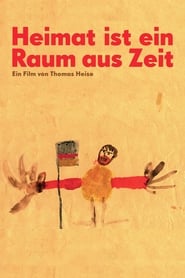
Heimat Is a Space in Time (Heimat ist ein Raum aus Zeit)
Muat Turun Sari Kata English
Maklumat siaran
Tag
Pratonton sari kata English
200 baris pertama.
ACCORDING TO LEGEND, HERE STOOD GRANDMOTHER'S HOUSE
Eighth homework essay Wilhelm Heise, 14 years old
Berlin, March 9, 1912
War is a frightful, raging horror. It strikes herd and shepherd alike.
With the tremendous cultural advances over recent centuries,
the conviction has increasingly gained traction across Christendom
that war is but human slaughter.
Completely contrary to the Commandments of Christian love for our neighbours and enemies.
How much misery and destitution has been wrought by a recklessly started war?
Out of wounded conceit those hot-tempered brutes on the throne begin a war
like some Louis XIV or the bloodthirsty Corsican,
and the people have to pay for it.
Burning homesteads, smouldering rubble heaps,
bloody, contorted corpses,
screaming and groaning wounded,
families distraught over a dead father, over their beloved sons.
Here lies the bloom of humanity,
trampled upon by the raging victor's pounding footsteps.
Never shall a nation forget the defeats and wounds inflicted upon it by the enemy.
Thereafter that hatred will yet again
brutally vent its spleen in a fresh, bloody war.
But afterwards all cry out: Woe to the vanquished!
And hideous is the havoc wrought by war in the spiritual realm.
Everywhere the people's level of education suffers,
whilst superstition thrives in the soil of stupidity.
Those bloodthirsty brutes on the throne
seek to guarantee the steely mechanics and obedience of their armies
through ignorance and delusion.
Hence, they carefully shield their people from the beacon of enlightenment and of knowledge,
so that no liberating ray of light penetrates their subjects' dark night.
Their science is instilled on their cannon barrels.
Hence, it is little wonder
that a Nation is so deeply engulfed in ignorance and superstition.
With spiritual degeneration comes the decline in ethics and morals.
In war, blood and thunder are virtues.
Man's bestial nature celebrates its greatest triumphs.
He derives pleasure in his enemy's death.
Ghastly brutality and even the vilest wickedness are permissible.
If one kills in peace time,
that is deemed as murder, and is punished.
If one commits the same act in war, but on a much vaster scale,
it will be greeted with approval, and even rewarded.
In war, man turns into an animal.
Once he sees blood flow, he's doomed.
And he'll strive thereafter to bathe in the blood of his enemies.
Sometimes, however, it is impossible to avoid war.
Should an overpowering enemy offend the German people,
then it spreads through every corner of the Fatherland like spring awakening.
Woe betide those who dare to stretch out their hands
with disdainful greed to rob the German Empire of a patch of its dear, noble native soil.
Then, yes, German people awaken!
Then, even he who otherwise opposes war
will become a full-blooded, true patriot.
Early September 1922, Berlin
Wilhelm Heise to Edith Hirschhorn
Dearest Fraulein!
During my summer trip I had the pleasure
to get to know your Viennese sisters Irma and Sidi,
as well as your brother Otto.
We spent a few days together in Zell am Ziller
and also made a trip lasting several days together.
I was then assigned the task
of passing on to you in person regards from your siblings,
though they were unsure of your address in Berlin.
Yesterday, Fraulein Sidi wrote me a letter in which she informed me of your Berlin abode.
Should you care to spend a few hours
chatting about Tyrol and our shared experiences there,
I would be honoured to fulfil the task entrusted to me.
Given my ignorance of your diary,
I can't suggest a time.
But if given sufficient notice, I could make myself available
to meet you one evening near Potsdamer Platz at the Café Josty.
Please send me a message should you have the time and the desire to meet.
I remain respectfully yours, Dr Wilhelm Heise
Berlin 39, Samoastrasse 11
June 1945
Edith Heise, née Hirschhorn
Draft for a personal resumé
Alser Strasse. Change for U6.
I was born in Vienna in 1899.
My father was a commercial clerk.
Mother had worked as a seamstress in a factory.
Then spent a few years at home.
Both were Jews and came to Vienna at a very young age.
I grew up as the middle child in a family of five.
Things were in short supply in our household, but I hardly noticed that,
for I grew up in comfortable surroundings
and everyone was kind to me.
I must have been twelve years old
when I began noticing many differences between people,
started asking about the whys and the wherefores.
In our home, the evenings always saw very lively discussions,
for we had a wide circle of relatives and friends.
In particular, a younger brother of my father,
a class-conscious worker, a bookbinder at a left-wing publishers,
made a deep impression on me.
Thanks to him, I was introduced to the ideas of Socialism.
This uncle, the others as well, my father, and his elder sisters,
all died later during the Hitler years, on being deported to Poland.
At that early age, however,
I went to the only humanistic grammar school for girls with public status.
Learning, especially classical languages, came easily to me.
Palffygasse.
Please be attentive, others might have greater need of your seat.
In 1914/15, considered highly gifted,
I was sent to the Vienna School of Applied Arts, where I studied with enthusiasm and perseverance:
Drawing, painting, sculpture, and naturally a lot of theory.
That was the time of the First World War.
Wartime events might then have galvanised me toward becoming politically engaged.
But my professional work so thoroughly absorbed me
that I didn't think about anything else.
I always kept aloof.
Perhaps because I was so different from my fellow students,
many from the Sudetenland with Völkisch and ethno-nationalistic backgrounds
and otherwise lacklustre conservatives.
There were heated and impassioned debates about Judaism.
Though we argued, we worked together in a comradely fashion.
Elterleinplatz. Change to 9, direction Gersthof.
Then came the 1918 Revolution, which I supported.
Even so I remained aloof, everything felt distant.
My work alone was permanent, and dear to me.
Of course I hated the war.
I saw the most gruesome war cripples begging in the Vienna streets,
saw some enjoying the good life in those post-war times while the rest of us starved.
Now it strikes me as though I was seeing things through a fog back then.
I came to Berlin in 1922.
First as artistic director in a company,
thereafter I spent two semesters under Professor Giess
at the Public School of Applied Arts on Prinz-Albrecht-Strasse.
Rosensteingasse. Change to 9.
In 1924, I married a communist, Dr Wilhelm Heise,
he was a school inspector, a teacher at that time...
The draft of the résumé breaks off here.
Berlin, December 1922
William to Edith, back in Vienna
Dear Edith!
I'm really sorry that I let you go back to Vienna.
Yesterday I gave my lesson in Tegel.
I talked about"Die and Become!" for an entire hour.
I feel this was my happiest hour
and I truly, truly regretted that you weren't present.
Whether I'm thinking of you?
Mother says I'm so very foul-humoured ever since the Viennese lady has gone away.
Darling, I'm actually not in a happy state at present.
I've been reading so much Strindberg
and that weighs damned heavily, if one is so inclined.
Strindberg, I mean the analyst of human beings bar none.
He is evil.
And perhaps, in some way, I am too?
Otherwise, how can I re-live this so agonizingly?
Well darling, let's leave it at that.
When we next see each other, everything will be just nice, yes?
I kiss you and love you, Wilhelm
Dear Lad!
When you get this letter the day after tomorrow, it will be a full year since we met.
It was on September 8, on a Friday. Do you still remember?
I'm a bit sad today.
And now I don't know what else to write to you
other than there's a beautiful story of you and me in the beautiful wide world.
Come!
I keep thinking of you over and over, and I'm so happy and proud
that you're fond of me and that I'm allowed to be good to you.
How I'd like to be at your side every night!
Only sometimes it felt you've virtually forgotten me in all this betrothal affair.
My folks are hale and hearty.
If they're now afraid to let me go to Berlin?
They have, I think, more awful ideas about it than is necessary.
But over time I've got to bring them round to believing
that I absolutely must go to you now.
Do your parents know that I have no money?
That I am a Jew?
Dear sweet, big one!
I don't feel right about being financially dependent on you.
But I'm saving so that I can come to you soon.
Here's a recipe:
150 grams of grated almonds or nuts
150 grams of sugar
One lemon, juice and rind, grated
Two whole eggs
Three extra yolks Three egg-whites whipped
One tablespoon flour
First, whisk eggs and sugar for about half-an-hour,
and then gradually mix everything in, with the whipped egg-whites right at the end.
Young lad, jot that down on a slip of paper and give it to your mother.
And don't gripe about me!
A very tender, hushed kiss. Edith
Dearest Dittle!
It's really not easy for me now, I feel so lonesome and dissatisfied inside.
Just come, then things will be different for sure.
Over recent days I've been vividly imagining this:
I'm sitting on the balcony and reading.
Sometimes I look up.
You're sitting in the opposite corner busy with something.
Sometimes you look up.
Sometimes we both look up at the same time, look at each other and smile.
I'm writing from school while the boys are writing their class essay.
Yesterday, the course began in Gleimstrasse. Tomorrow the Tegel one begins again.
The Spandau course goes through till December.
In Spandau, I pocket 80 billion marks per hour.
That sounds like something, but it's nothing.
Komen
No comments yet. Be the first to leave one.