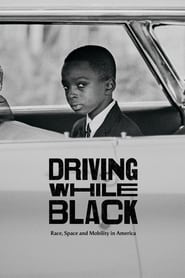
Driving While Black: Race, Space and Mobility in America
Muat Turun Sari Kata English
Maklumat siaran
Tag
Pratonton sari kata English
200 baris pertama.
is to take to the road.
Mobility is essential freedom.
Discovery, freedom.
- That notion of driving while black reminds us
that that's not available to all Americans.
To be able to move freely,
we live in a country
where it's never been everybody's right.
- There are still so many dangers.
Officer, I'm locking my car.
- We have to engage history with a kind of brutal honesty.
- - "Good roadsle beckon to you and me,
daily we grow more motor-wise.
The nomad in the poorest and the mightiest of us,
sends us behind the wheel -
north, south, east, and west -
in answer to the call of the road.
It's mighty good to be the skipper of a change,
and pilot our craft whither and when we will.
We feel like Vikings.
What if our craft is blunt of nose,
and limited of power, and our sea is macadamized;
it's food for the spirit
to just give the old railroad Jim Crow the laugh.
Nevertheless, there is still a small cloud
that stands between us and complete motor-travel freedom.
On the trail, this cloud rarely troubles us in the mornings,
but as the afternoon wears on
it casts a shadow of apprehension to our hearts.
'Where, ' it asks us, 'will you stay tonight?'
An innocent enough question;
to our Nordic friends, of no consequence.
But to you and me,
what a peace-destroying world of potentiality."
Alfred Edgar Smith 1933.
- Mobility is essential to freedom.
I think the automobile is emblematic
of the importance and the value
of mobility in a free society.
But, it also goes beyond mobility
and it allows us to understand
the way that African Americans
have moved forward in this country
and the way that AfricanAmericans have been pushed back.
- Could I uh see some ID please, sir?
For what?
- I need to see your driver's license
and registration.
For what?
Let me start out by saying:
driving while Black was always unsafe.
Yet, by the same token,
millions of African Americans did it.
- I think the idea of driving while Black
is a really helpful way to understand
that this form of mobility that Americans have revered,
and have enjoyed, and have romanticized, you know,
it's sort of part of, kind of, American iconography,
and what it means to be American,
is to take to the road,
to have this great expanse of the highway,
and to make memories with your family.
And I think that the notion of driving while Black
reminds us that that's not available to all Americans.
- For me, the term Driving While Black
isn't just a slogan,
it's not just part of our political rhetoric,
it's not just something we say to remind ourselves
of the persistence of racism in the United States.
It's a very personal experience of remembering, in fact,
the anxiety, the fear.
- I think it's really, really tough
for the majority of Americans to begin to even understand
the gut wrenching horror
that is driving in a racist society.
- Well you know Driving While Black
is a very interesting concept
and it entails so much more
than the actual driving while Black.
It's living while Black. Sleeping while Black.
Eating while Black. Moving while Black.
And so when we start talking about the brutal restrictions
on black movement in this country,
well that's a long history.
That goes all the way back to day one.
You have to get to the root of it.
You know, where's the root of it?
I think for African Americans,
any story about mobility really begins 400 years ago.
I think it's really important
to look at the longer history of race, space, and mobility,
because if we look to the past,
we can really see how travel or mobility
for African Americans has really been circumscribed.
So if we think about, you know, the first Africans
who came to the colonies through the Middle Passage
and on slave ships,
think about the trauma and the terror and the violence
of that form of forced mobility.
- If you just go back to those roots -
back to the era of slavery -
a chance to move around
was very much regulated and controlled
by those who were slave owners
over people who were enslaved.
- I think the extraction of black people's labor,
the use of black people's bodies,
their capacity to produce and to generate wealth
required, in fact, restrictions upon their ability to move.
And so much of American history, so much of American law,
is actually focused on policing that movement,
policing that mobility.
- Many enslaved Africans, never left a one-mile area
in their entire life, because they were constrained
to that plantation or that farm.
- We were slaves. We belonged to people.
Now I couldn't go from here across the street
without I have a note, or something from my master.
And if I had that pass, I could go wherever he sent me.
- The fact that you had to get a pass
to go from one plantation to another.
And if you didn't have that pass
you were likely to be stopped by slave patrols
and they were given permission to beat you
and to mistreat you, for having the audacity
to think that you could travel on your own.
- So we can talk about very, very early on,
you know, the imposition.
You know, the limitations that's imposed on Black life.
"You're not allowed to go beyond this point."
So right away you have some elements of racial profiling
from the very beginning of the Black experience in America.
- One of the things that I think is so interesting
is how policing developed in the south.
Policing starts with slave catchers.
These are men who are part of the community
who go around at night to make sure that enslaved people
are not leaving their plantations,
but they're also there to terrorize and to intimidate.
- The slave patrols of the old south
are there to control Black people's movements,
to keep slaves from moving off plantations,
to limit their ability to seek and find freedom
by crossing boundaries and borders
that they're not intended to cross.
And it's not a regional problem.
In the Northern states, in places like New York City,
there were regulations
on black people moving about in the nighttime.
And colonial New York, and 18th century,
19th century New York went to, in fact, great lengths
to police the movement of black people.
"I am unable to travel
in any part of this country
without calling forth illustrations
of the dark spirit of slavery at every step."
Frederick Douglass, 1852.
Many enslaved Africans,
like Frederick Douglass, stole themselves from slavery,
and from there, walked to a free state.
The Underground Railroad was a very loose network
of African Americans and white Americans
who helped fugitive slaves escape, where they could
disappear into a Black neighborhood
or perhaps working their way to Canada.
- The repercussions for the lack of success are terrible.
Deciding to run away could mean you might be beaten,
you might be sent further South, separated from family.
All for the belief that freedom of movement -
a chance to get to a better place - is worth the risk;
is worth all the issues that come with that.
- The Fugitive Slave Act was passed in 1850.
And it criminalized those people
who were supporting African Americans
on the Underground Railroad, because the law of the land
was that a slave had to be returned to their master.
- Now you see, that, that was in slavery time.
I recollect just as well, and he'd bring back
whole lot the colored people.
And they brought them hound in and brought three niggas
with them hound, runaway niggas,
you know, caught in the wood.
And they, right, right across, right at the creek there,
they take them niggas and put them on,
and put them on a log lay them down and fasten them.
And whup them.
You hear them niggas hollering and praying on them logs.
And there was a nigga bring them in.
Then they take them out down there and put them in jail.
- The Fugitive Slave Act was designed as an act
that would appease the southern states
and keep them from leaving the Union.
But instead of appeasing the southern states,
it really demonstrated to many people in the North,
how they were complicit in slavery.
They watched, as African Americans
were dragged from homes,
were put into jails,
they were being taken back into slavery.
They saw the suffering of these people.
Komen
No comments yet. Be the first to leave one.