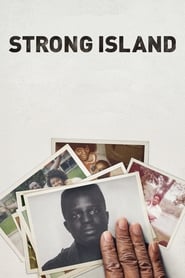
Strong Island
Muat Turun Sari Kata English
Pratonton sari kata English
200 baris pertama.
Hello, it's Yance.
Hello, it's Demitri Jones returning your phone call.
-Hi, Miss Jones. How are you? -OK.
I am not sure if you remember my name, or my brother's name.
He was a homicide victim,
back in 1992, when you were with the Suffolk County District Attorney's Office.
-OK. -His name was William Ford.
You worked on the case with Stephen O'Brien
and Detective James Hughes.
OK, what do you want to know?
I was calling to see if you were willing
to, within, you know, your legal restrictions,
answer some of the questions that have been,
sort of, plaguing me for the last 22 years.
No. I'm not going to do that.
OK. Do you mind if I ask you why?
Because as a prosecutor, everything that
happens in the Grand Jury is confidential.
-So I'm not going to discuss it. -Sure. Right. No.
I'm asking about the investigation.
Yeah, no, I'm not willing to discuss any
of my prior cases on film with anybody.
-May I interview you by phone? -No.
-OK, and... -I don't want to discuss the case.
And you don't want to make any comment?
I do not want to make any comment.
-OK, Miss Jones. Thank you. -Bye.
My son...
lying dead in a coffin,
with the most peaceful look on his face.
You, your sister...
And I remember thinking...
"How are we gonna make it without him?
How will our life go on, without him?"
Even then,
I was saying,
"Wait until we get to court!
I said, "This is a young man who has never been in trouble in his entire life.
Wait until we get to court."
So you were saying this to yourself on the day of the funeral?
"Wait until we get to court.
This death is not going to be in vain."
I'm not surprised that the case didn't go to trial.
I just want to know all the reasons why.
I'm not angry.
I'm also not willing to accept
that someone else gets to say
who William was.
And if you're uncomfortable with me asking these questions,
you should probably get up and go.
All of the years that we were growing up,
if we went through a section, or passed a section
that was predominantly white,
you ran.
That's when I started to realize the economic difference.
OK, so these people weren't wealthy,
but their wealth was that they were white.
My father's name was George Alexander Dunmore.
I was two when my father died.
He had a severe asthma attack.
He was taken to the hospital.
There was a White waiting room,
and a Colored waiting room,
and even though he was critically...
in respiratory difficulty,
he was made to wait.
And during that period of time, he died.
Tell me the story of how you met Dad. When did you meet Dad?
Well, let's not say, "When did I meet him?"
When did I become aware of him?
What's the difference?
Because I saw him when I was in the sixth grade,
and he was in the seventh grade.
I did not speak with him
until October of 1958.
I was a sophomore,
and he was a junior.
And... where we lived,
in Charleston, South Carolina,
we always had a Coronation Ball
at County Hall.
Your father came over.
He asked me for a dance,
and he asked me that night if I would be his girl.
I tried to be cool,
and let a few seconds pass
before I said, "Yes!"
I didn't say yes, I said,
"Yeah, I guess so."
You know? But I was jumping for joy inside.
Because I had loved this man from afar
since I was in sixth grade.
We got married July 10th, 1965.
Now,
I think that my husband...
was a gorgeous man, OK?
He was handsome.
We moved to New York.
I absolutely loved it.
We found an apartment in Brooklyn.
I enjoyed it immensely.
It was the kind of apartment building
that had a lot of old Jewish ladies who lived there.
And they would line up in front of the window
in the afternoon, and they'd sit there.
They were wonderful.
I remember coming home one day,
and one of them said,
"It looks as if you're going to have a baby!"
I said, "Oh, my goodness, I thought I was hiding it."
I was elated, you know.
And when I sang he would get quiet,
and when I stopped, he would move a little.
And if I didn't start right back up,
his little feet and hands would be moving.
William was born in 1967.
Your father would say, "That boy's gonna be so spoiled."
He was. He was.
I made an "A" on the national teachers exam.
I loved teaching.
I loved it.
Because I knew what being educated
had done for my sisters and me.
And I also knew the struggle.
My mom stripped tobacco for a living,
OK?
She left school in the fourth grade,
and went to work.
I helped her learn how to read.
I think she had no shame with me,
because I was the youngest.
And I was proud
that I could help her read and write.
My mother started out her career
in New York City as an English teacher,
and worked her way up to become Principal
of Thomas Jefferson High School
in East New York.
After 13 years there,
she opened a school for girls and women at Rikers,
the jail that sits in...
essentially at the end of the runway at LaGuardia Airport.
She named it Rosewood, and she developed programs
that helped women leave prison with skills,
so that they would have options when they got out of prison.
And my father just believed
in my mother's ability to do anything.
Your father worked at Andrew Geller's.
Fabulous shoes.
Fantastic, beautiful shoes, and I loved them.
He wanted to be a draftsman.
He took the test for the Transit Authority
to become a motorman...
but he could still go to school.
Then you were born.
When Lauren was born,
he was overjoyed.
He was overjoyed.
But as you guys grew, you were so rambunctious.
We were looking for an apartment.
We looked in Brooklyn.
Nothing that we found did your father like.
He did not like anything that we found.
I must not have spoken to him for a month, OK?
I would put pillows in the middle of the bed,
because it meant that
we had to keep looking,
and at the time, I did not know how dead set he was
on moving to Long Island.
My father drove the J Train,
which ran on a loop through some of the
toughest neighborhoods in the city.
From his motorman's cabin, he saw a
very different New York than my mother.
He saw poverty, and crime,
and violence,
and a rapidly declining city.
My father was not a fearful man.
He was a realist.
He had already gotten out of the Jim Crow South in one piece,
and he didn't want to put his family or our future at risk.
We came out one Saturday,
and met Sam McCollough.
Nice, you know. He lived in the community.
He was the agent for the company
that bought this land and built the houses.
I was told later that they wanted to attract...
people who were employed by the city, you know,
whom they thought could afford the homes.
A lot of... African Americans
were moving out to Long Island.
Civil servants, like bus drivers, police officers, correction officers...
and they would put them in pockets, or neighborhoods in the different towns.
You could go to certain towns...
go to Deer Park and find the same "new D," Amityville, find the same "new D,"
but all the rest of Long Island was, you know, predominantly white.
So in that one neighborhood,
it was a haven.
When you would go out, you know...
you might be running back for your life, you know?
Strong Island subtitles in other languages
More English subtitles for Strong Island
- Strong Island 2017 1080p WEBRip x264 AAC5 1-[YTS MX] · 24 downloads · 2021-01-31
Komen
No comments yet. Be the first to leave one.