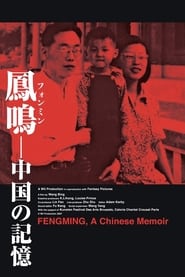
Fengming: A Chinese Memoir (和凤鸣)
Muat Turun Sari Kata English
Maklumat siaran
Tag
Pratonton sari kata English
200 baris pertama.
Well, I guess I'll start from the beginning.
It was just before liberation, and colleges in Lanzhou were accepting students.
I had no trouble getting into the Lanzhou University department of foreign languages
as an English major because I'd done well in English classes
All through high school, I'd dreamed of going to college.
I'd always been a good student,
and I figured that if I went to college,
I could use that knowledge to make a contribution to society.
So I took the entrance exam, passed and was accepted to Lanzhou University.
Then on August 26, 1949, Lanzhou was liberated.
When the PLA troops entered the city, we all turned out to greet them.
Not long after that, I went to visit Lanzhou University with some friends.
The PLA was already there, passing out revolutionary songbooks
with songs like You are a Beacon and The East is Red.
It didn't take us long to learn the songs by heart.
We felt so liberated, like the skies were blue again and everything had changed.
Suddenly, going to college seemed pointless and boring.
Joining the Revolution seemed the way to go,
so I gave up on college.
At the time, the Gansu Daily was recruiting staff.
I was a decent writer in high school,
and the journalists and editors at the Gansu Daily were said to be the best.
I figured I'd better throw myself into the Revolution and start serving the people,
so I gave up on college and applied for a job at the paper instead.
The hiring process was simple.
All they wanted was a brief background statement.
Of course, at seventeen, I didn't have much background to write about.
I wrote about my family, why I wanted the job and my hopes for the Revolution.
They hired me straight away, and that was the start of my revolutionary career.
I remember that I wore a cheongsam to the interview,
but when I got hired, they issued me a grey uniform, same as everyone else.
Back then, uniforms came with the job.
I felt so proud wearing that uniform, like a real revolutionary.
In May of 1957, I got to attend the national agricultural exhibition in Beijing.
all the papers sent representatives. I was chosen to represent the Gansu Farm Report,
and was sent to Beijing with a deputy director from the Gansu Daily.
At the time, there weren't many opportunities to go to Beijing,
much less attend a big agricultural exhibition.
I felt very lucky to be chosen.
No one else from the paper got to go.
I'd been doing good work for the secong section,
so it was a kind of reward, an encouragement of sorts.
On May 1, the papers announced a new directive from the Central Committee.
That was the start of the anti- rightist rectification campaign.
At the time, none of us gave it much thought. We were too busy sightseeing and visiting other people.
After all, it was my first time in Beijing and I went to see all the famous sights with a friend.
the Forbidden City and the Summer Palace, etcetera.
I also met up with some of my old classmates from Lanzhou.
I remember being surprised to see lychees in the markets.
You couldn't buy them in Lanzhou, but in Beijing, they were everywhere.
Back then, lychees only cost 5 or 6 jiao (6 cents) a pound.
Right when we left Beijing,
The People's Daily published a major anti-rightist editorial, Why is This Happening ,
but again, I didn't pay it much mind. I certainly didn't think it would affect me.
After that, I returned to my post in Lanzhou.
But that editorial had signaled the start of the anti-rightist struggle to come.
At that point, the Party was still mobilizing and soliciting viewpoints.
I was so naive back then. Since Party leaders were soliciting opinions,
and I considered myself an activist, I wrote some big character posters
and spoke out against the small minority of cadres who had erred.
I really didn't give it much thought.
While I was in Beijing, my husband Wang Jingchao had written several essays,
at the request of the leadership, of course.
At the time, Chairman Mao was calling for The People's Daily to publish more essays,
to change to tenor of the paper.
In those days, The Cultural Reporter was in the vanguard,
and The People's Daily was lagging behind.
When the center called for essays, of course, Gansu Daily followed suit.
They mobilized some staffers,
the most talented and progressive ones,
to write essays about the new campaign.
After that, my husband wrote his first essay, "A Brief Critique of Bureaucracy".
It created quite a sensation within the paper.
That was about the time Chairman Mao gave his famous speech
on contradictions among the people on Feb.,
and later, came out against bureaucratic excess.
"Whether in culture or in academic discourse, let a hundred schools of thought contend,
a hundred flowers bloom. Don't stifle the people with bureaucracy.'
In his essay, my husband was just responding to Chairman Mao's call.
It was an incisive essay, very frank,
a powerfully worded critique.
He felt bureaucracy was stifling the people,
and that bureaucrats were "arrogant with position, alienated from talent.'
That one really hit a nerve, and caused quite a stir.
A lot of people expressed their support.
After that, he wrote his second essay.
I think it was called something like. "On Thrice-Estranged Cadres".
It was about cadres estranged from the Party, the Leadership and the Masses.
He pointed out that some cadres were unwilling to accept constructive criticism.
Of course, this essay didn't endear him to the leadership.
Certain cadres and their toadies began to distance themselves from Jingchao,
and the masses followed suit.
By this point, the leaders were already unhappy with my husband.
They'd branded his writings "poisonous weeds", but he was still unaware of this.
Then he wrote his third essay.
I think it was called "On Conflicted Morale"
That third essay was never published.
At the time, Wang Jingchao was one of Gansu Daily's leading writers.
Originally, the leadership thought quite highly of him and his writing.
He had studied at Xian's Northwest University.
When Xian was liberated, he joined up with a revolutionary unit from Gansu,
and marched with them into Lanzhou.
In September of 1949, he helped establish Gansu Daily
with a group of other alumnae from Northwest University.
He was part of this core group, one of their best writers.
Whenever there was an important interview, he was the one they sent.
But during the anti-rightist struggle, his third essay was branded subversive.
At the time, I was down in Wushan conducting interviews.
I had no idea that an anti-rightist struggle had begun at the paper,
or that I'd become caught up in it.
When I was doing interviews out there My boss sent a letter telling me
to come back right away and take part in the struggle.
While I was in Wushan, I'd been writing regularly to my husband.
It was during the Hundred Flowers movement, and I remember asking
him in a letter whether we harbored any rightist tendencies ourselves.
Back then, we were still soul searching, questioning, trying to improve ourselves.
Then I got that letter telling me to come back and join the struggle.
never imagined how it would affect my life.
I took the train back to Lanzhou.
I got home at about midnight, just as my husband was getting ready for bed.
I just washed up and prepared to go to bed.
It wasn't until after we went to bed that he calmly told me...
There was an anti-government "little black clique" at Gansu Daily,
and he was the accused ringleader! I was absolutely shocked.
How could anyone even think that we were anti-Party or anti-Socialist,
much less part of some so-called "little black clique"?
Supposedly there were 6 or 7 members.
He told me they'd been struggling against him for ten days, day and night.
These were huge struggle sessions, involving up to two hundred people.
At that time, there were about 100 people in the editorial department,
and another 100 in other departments.
all those people struggling against him, and this had been going on for days!
As if he were some evil mastermind.
We tried to imagine how anyone could think him capable of such a thing.
At the time, I never imagined I'd eventually be branded a rightist too.
I just couldn't believe it.
I couldn't believe he'd become the target of such political persecution.
That night, we hardly slept a wink. He told me all about the struggle sessions.
The next morning, we both went to work as usual.
His office was in the cultural section, and I was with the Gansu Farm Report.
I still remember the socialist labor competition chart hanging above my desk,
with all the red flags our team had earned.
When I got back, my colleagues handed off some work but didn't really speak to me.
That afternoon, while I was working on the second floor,
my husband was in a struggle session on the third.
Though I wasn't allowed to attend, I could hear them shouting at him,
trying to get him to confess.
"Why do you have such deep hatred towards the party and society?" He couldn't explain.
People cursed him, saying "You should go meet God with your granite head."
When they shouted that he was full of shit, he dared to shout back that they were full of shit.
He didn't admit that he was against the party and socialism.
But in a situation like that..
. you couldn't get a word in edgewise. You couldn't even defend yourself.
Struggle sessions were supposed to be about dialogue, but the dialogue was one-sided.
It went on like that for about a week.
Then came the big character posters about me.
They wanted me to make a clear class distinction and denounce my husband.
They wrote things like, "Why do you two always speak and march in lock step?"
They wanted me to make a clear class distinction, but how could I?
In my heart, I knew he was innocent. How could I denounce my own husband?
A week later, they started holding struggle sessions against me.
I need to use the bathroom.
Shall we continue?
A week later, the struggle sessions started. I was considered a "minor rightist".
But from the day I joined the revolution, I'd always toed the party line.
Whatever the leaders said to do, I did.
I was conscientious and obedient, and worked hard at my job.
So the sessions against me were small, never more than 20 people,
and most of those were colleagues.
But already, I'd been branded a rightist.
I had to stand while everyone else sat, just stand there with my hands at my side.
I had to listen to every criticism, every slur.
It was a very painful experience.
I wanted to die of shame! Hadn't I forsaken college for the Revolution?
Hadn't I served the Revolution well?
From 1949 to 1957, I'd earned nothing but praise for my work.
How could I possibly be anti-Party? Standing up there, I just wanted to die.
Suddenly I was a class enemy!
Someone to criticize and denounce.
They even accused me of collaborating on Jingchao's essays.
asked how that was possible, since I was in Beijing at the time.
Then someone said we must have talked about it at home,
plotted out beforehand what we were going to say.
They wanted me to confess our secrets, tell them everything we talked about at home.
But there weren't any secrets to confess.
Our whole union
was based on a shared love of Socialism and the Party.
We were both outstanding at our jobs.
He'd dropped out of college to join the Revolution,
and I'd sacrificed my college dreams..
In those days, not just anyone could get into Lanzhou University.
A lot of my classmates didn't get in. I was one of the few who did,
but I gave it all up for the Revolution. I'd devoted my life to the Party!
And now to be branded a class enemy? It was more than I could bear.
How could I face anyone? Better to die than go on living like that.
But I wasn't allowed to talk during those struggle meetings.
I couldn't even.
.couldn't even try to defend myself.
I had to listen as they twisted the facts
into all sorts of horrible accusations.
Fengming: A Chinese Memoir subtitles in other languages
Komen
No comments yet. Be the first to leave one.