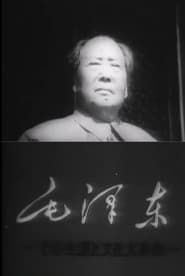
Mao Tse-Tung and the Cultural Revolution (毛沢東--その生涯と文化大革命--)
Muat Turun Sari Kata English
Maklumat siaran
Tag
Pratonton sari kata English
200 baris pertama.
Long live Chairman Mao. Long live Chairman Mao.
Behind those faces lurks fanaticism.
The fanaticism that made the Chinese Communist Revolution.
It is National Day, 1 October 1966,
and the great proletarian cultural revolution has just begun.
Old culture, old ideology, old customs,.
old traditions, all of the olds must be destroyed.
This was the slogan used by the Red Guards,
who suddenly appeared during August 1966.
Anything feudalistic, capitalistic, or revisionistic was destroyed or changed
to suit the needs of revolution.
Names of towns and streets and even localities were changed.
Wall newspapers were plastered in cities and towns.
often criticizing men long-established.
Some were purged.
Liu Ping, head of Peking University,
Liu Qingyi, chief of the party's propaganda department,
Luo Ruiqing, chief of staff of the PLA,
were all criticized and purged.
Even chief of state Liu Shaoqi was included
in the first sweeping move.
Chairman Mao, was it necessary to create the situation you call revolution?
It seems that most people in the world cannot understand the situation.
Chairman Mao, for the last 30 years
you fought through revolutions and battles and won a victory.
You established a new country and ruled it continuously for 18 years.
but still you stirred up another revolution
and thus destroyed the concept of revolution
held by most people.
Chairman Mao, what reason did you have to bring about this cultural revolution?
We would like to study your path
sift through the history of China to seek the answer.
First, we want to recall your own words written in 1927.
A revolution is not a dinner party, or writing an essay,
or painting a picture, or doing embroidery.
It cannot be so refined, so leisurely and gentle,
so temperate, kind, courteous, restrained, and magnanimous.
A revolution is an act of insurrection,
an act of violence by which one class overthrows another.
3,000 students gather in front of Tienanmen on 4 May 1917
shouting, China is for the Chinese people.
They were protesting the actions of the Chinese government
in giving way to the Japanese 21 demands.
This was the May 4th movement, the beginning
of years of protest and rebellion.
Eight years before, on 10 October 1911,
a group of army officers attempted to take over the decaying Manchu dynasty,
which had ruled China since the mid-17th century.
The Empress Dowager,
who held power during the latter part of the Qing dynasty,
crushed an earlier group
which had been alarmed over China's defeat during the 1895 war with Japan
and was trying to bring about reform.
The reformers persisted and eventually overturned the Manchu government
in the widespread Wuchang uprising of 1911.
Sun Yat-sen received news of the revolution while he was in the United States.
He returned to China, assumed the presidency of a provincial government,
and established the Republic of China.
But the fruits of revolution were never realized
as expeditionary forces from the north
soon took over.
The history of China's defeat and humiliation during the 19th century.
begins in 1842 when the British defeated Qing forces
and signed the Nanking Treaty during the Opium War.
England's colonial foothold began a great power struggle with the United States,
Russia, France, Japan, and finally Germany carving out spheres of influence,
economic and territorial concessions, which they backed with military force.
China became a paradise for foreigners and a hell on earth for the Chinese.
Shanghai especially became a western city, alien to the Chinese.
The military destroyed all opposition, however slight.
Shaoshan, Xiangtan County, Hunan Province is Mao Zedong's birthplace.
Mao, you were born when China was in a miserable condition.
Later, you said to Edgar Snow,
there were two parties in my home.
One was my father, who was the chairman.
The opposition party included myself, my mother and younger brother,
and sometimes our hired hand.
Biography of a revolutionary
In 1919 when the May 4th movement began to spread you were in Changsha
You were only 17 at the time of the Wuchang uprising
and spent half a year in the Revolutionary Army
Between those two dates you organized the Xinmin Xuehui
the new people's study society
After the May 4th movement,
you started editing the Yang River Review for Hunan students.
Even in those days before you had studied Marxism,
you had solutions for complex problems.
What is the biggest problem of society? It is the problem of food.
What is the most powerful force?
It is the downtrodden people when their strength is used.
Therefore, the people must fight with united strength.
July 1926.
The People's Revolutionary Army faces the military might of the Northern Armies,
led by Generalissimo Chiang Kai-shek,
regarded as the likely successor of Sun Yat-sen,
who died the year before
Many members of the Chinese Communist Party
were in both the People's Revolutionary Army and the Kuomintang,
for at this time, it was the policy of the CCP to follow a dual course of action.
It was also the policy of Joseph Stalin at that time,
guiding the Communist Parties of the world
through the common turn to collaborate with the bourgeois world.
The people in various areas where destruction by the military had been severe
supported the People's Revolutionary Army.
Workers contributed toward this new Revolutionary Army.
A new provincial city government, represented by laborers, students, citizens
was established in Shanghai.
However, the contradiction between workers' organizations and military
seeking stability with foreign powers
was like an unstable explosive bound to detonate.
On 12 April 1927, the explosion came.
The end of the communist KMT collaboration was a tragic bloodbath
following a coup d'etat and KMT takeover in Shanghai.
In Hunan meantime, Mao had set up the National Farmers Movement Study School
Mao, you were heading the school when the CCP was established in 1921.
For a time during the KMT-CCP collaboration,
the movement prospered, and years later when the revolution was successful,
this was a movement which praised as most characteristic of the farmer.
In fact, during the early part of 1927, just before the Shanghai Coup,
you visited Hunan farmers and wrote a report,
Survey of the Hunan Peasants' Movement ,
which very well describes the struggles of the farmer and forms the basis for revolution.
Your thinking was contradicted by other communist leaders
who believe revolution must be started by city workers,
the urban base of Lenin.
When the 1927 coup spread to Changsha,
you went underground and began organizing the farmers.
Here you were making a speech at a conference of peasant representatives.
The strength of peasants is like a windstorm and is increasing.
Peasants will remove the net restraining
and move straight along the path of liberation.
They will send all imperialists and army cliques into their graves.
16 October 1934.
After recovering from malaria, you start on the famous long march.
You were not quite 41 at the time,
and your entire belongings consist of only two blankets,
a bleached cotton sheet, a waterproof cloth, an old umbrella, and a few books.
Because Kuomintang forces were nearby,
you had to leave without specific destination in mind.
This is how the army looked.
Not much spit and polish.
But though seedy-looking, the People's Liberation Army was disciplined.
It followed three main rules of discipline,
did not create inconvenience to the people
and the eight points for attention were strictly enforced.
Mao, you organized 1,000 armed farmers
and took them into the Jinggang Mountains and waited for Zhu De's to arrive
from Nanchang where he had organized a rebellion.
Then with Zhu, you organized the Autumn Harvest Uprising
and showed them what you meant by peasant-based revolution.
You became the party representative, and Zhu De became the military commander,
and that was how the Red Army was formed.
Then the Red Army instilled political views among farmers
surrounding the Jinggang Mountains
and gradually built up the liberated areas.
It was when your wife was captured by the Kuomintang and killed
when she refused to announce that she was divorced from you.
Ruijin, Guangxi, 1931
At an important conference in Soviet territories liberated by the Red Army,
you were elected head of the provincial control government, even though party
leadership was in the hands of the ultra-leftists under Wan Ming,
who headed the students recently returned from Moscow.
The Long March proved to be the test for future CCP leadership,
which is ultimately yours.
Mao, you are a poet.
This is what you wrote after the Long March.
No one in the Red Army fears the hardship of the Long March.
We looked lightly on the thousand peaks and the ten thousand rivers.
The five mountains rose and fell like rippling waves.
The Wumeng Mountains were no more than small green pebbles.
Warm were the sheer precipices when gold-sand river dashed into them.
Gold were the iron-chained bridges over the Dadu.
Delighting in the thousand snowy hills of the wind mountains,
the last path vanquished, three armies smiled.
Chairman Mao, the Red Army, led by you, fought against the enemy,
and marched through 12,500 kilometers of mountains and rivers
and finally arrived at the Soviet area in northern Shanxi
in October 1935.
The army, which began with 300,000,
had dwindled to less than 30,000,
but the survivors burned with firm revolutionary conviction.
Every communist must grasp this truth, you wrote,
"political power grows out of the barrel of a gun."
Mao, three years before you led the long march,
the Japanese Kwantung Army bombed the railroad at Liutiaohu,
and announced the Chinese did it.
In ensuing military actions, Chang Hsueh-liang attacked.
The Japanese took Manchuria at the end of a three-month campaign,
installed Puyi as emperor, and proclaimed the state of Manchukuo.
This flagrant invasion resulted in violent anti-Japanese sentiment
by the Chinese, who carried out anti-Japanese education,
demonstrations, strikes, and terrorism,
which the Chinese government promptly suppressed.
While the Chang government in Nanking resisted Japan with one hand
and suppressed anti-Japanese elements in China with the other,
You, Mao, set forth the policy of stopping the internal strife
and joining in a united front against Japan.
Thus you and the Communist Party may clear your strong sentiment of nationalism.
You did not settle down in a cave in Yan'an after the long march.
Edgar Snow interviewed Zhou Enlai in Jan. 1936,
Komen
No comments yet. Be the first to leave one.