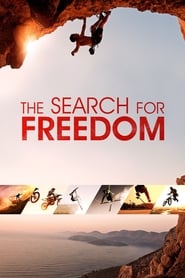
The Search for Freedom
Download English ondertitel
Release informatie
Tags
Voorbeeld van English ondertiteling
De eerste 200 regels.
I watch my 16-month-old son, and he's fearless,
and he wants to just walk out into the shore break.
I mean, there's something so interesting about that,
to watch him just stare at the ocean, stare at waves coming in,
and watch them just crash on the shore, and that's super entertaining.
So much of it is just, you know, you put your feet in the water,
and you feel your toes sink into the sand, and to feel that draw,
the pull of the tides and the surge of the shore break...
You know, and you want to go out deeper.
You could live for three months on 100 bucks.
We didn't think of it as any kind of a culture.
We just thought of it as like, "Aren't we lucky to be doing this?"
There was less than 15 chairlifts in the world,
and I bought my first pair of skis for two dollars.
We were kind of disenfranchised from society.
I mean, we had totally different lifestyles than our parents.
It was obvious that this was going to go someplace,
but, man, we were like broke hippies.
We were kind of on the low rung of the totem pole.
You were kind of an outlaw, kind of an outcast.
And there was no future in that.
You're 100% focused on what you're doing right now, this instant.
This instant is the most important thing in all of your life.
The past is the past, and the future... Well, who knows what's coming?
Somehow, every time you do it, at whatever level,
I mean, whether it's your first day
or you've been doing it your whole life...
It somehow manages to free you from a lot of the things in life
that are going to try and sink you, try and drag you down,
that are going to try and make you unhappy or negative.
It somehow allows you to leave all that behind
for maybe just a moment, but sometimes that moment's enough.
It's a basic instinct of a human being, his search for freedom.
And still the search for freedom is within all of us.
Whether you're young or old, male or female, it's the same thing.
It's that thrill of the first ride,
and once it gets under your skin, you can never stop.
We would all be in prison. I think.
If you're kind of a misfit kid and you want to rebel,
you need a place to do that in a positive way.
Some guys grab skateboards and did it.
Other guys grabbed climbing ropes and came up here.
My number-one goal was to cover the Earth with bikes.
You know, it's going to happen. This is going to happen.
There's no doubt. It's just a matter of time.
To me, being in the wilderness is what it's all about.
Wilderness is the battery that recharges all of your energy.
Gives us life, gives us inspiration.
You're touching it. You're feeling it. You're a part of the cliff.
You understand the power of this thing that you're interacting with.
I think what motivated me when I was young
and what motivates me now are basically the same things.
That sense of glide, and that sense of weightlessness.
There's a host of sports now that didn't used to exist,
and they all have that same sensation
that is sort of core to a lot of people's nature.
Adventure, to me,
is just getting out of your comfort zone and going into the unknown.
That's where I feel every emotion of life and feel the most alive.
Most sports are a form of art. It's no different than an artist
having a big piece of canvas and a paintbrush.
Having a skateboard and going out in the city is a similar thing.
Skateboarding happens to be one of those sports
that allows you to push pretty far into a creative place.
Well, I just wanted to see what it felt like to be fifth gear, pinned,
and just sail in the air as long as I could.
It just seemed like such a great idea.
When I started surfing, there were maybe, you know,
not more than a thousand or two surfers in the world, for sure.
So we felt very, very elite
because we knew about this thing that the mainstream had no idea existed.
Surfing was the antithesis of organized social behavior when it began.
See all those guys in their cars leaving for their nine-to-five?
Who's got it right, them or us?
And that was the question. That was the question.
A bum is somebody who won't work, and I've never worked, so that fits.
If you love what you're doing, it isn't work. It's fun.
I made my first movie in '49, '50.
I did all the photography, all the editing, stole the music,
booked the shows, got the ski clubs to put it on, designed the posters.
I showed up on time, set up the projector, set up the screen,
set up the microphone and the PA system,
and narrated the show live.
110 cities in one year.
I made movies of people skiing.
Now, of course they said, "Who is going to watch that?"
They were right in a lot of cases, because there was many times,
I can't tell you how many,
where I showed up in a high school auditorium, 1,000 seats, 1200 seats,
and there'd be eight or ten people there and that was all.
But those eight or ten people, I really screwed up their lives,
because at least two or three of them took up skiing.
We all tried to figure out something we could do
that we could stay at the beach and live how we wanted to live.
I mean, obviously, like, a surfer would rather live
in an expand-o trailer on a perfect point break
than have a mansion in Beverly Hills
with 45 servants and eight Rolls Royces.
I mean, it's just where your priorities are.
At the time, if you go, "I'm a surfer," they go, "Oh, God, poor guy."
The high school I went to had 3,000 kids, and I was the only surfer.
And where was that? - That was in Long Beach.
In 1959, the movie "Gidget" came out,
and surfing went from just a small amount of surfers, trace amount,
to several million by '63.
The Endless Summer came out in 1964, '65, and opened in Kansas City.
And there were guys driving cars around
with surfboards sticking out the trunk that had never seen the ocean.
"Endless Summer" showed the rest of the world
what surfing was really like,
and it was correct for the people that were in it.
It entertained a general audience
who didn't know anything about the sport.
It's just a home movie. You just shoot it,
and then when you get home, you look at the footage and edit it.
But that's what I'd always done.
We shot, edited, narrated, not because I thought I was good at it.
It was the only one I could afford that would work for 50 cents an hour.
Every time a new movie would come out, you'd go to the opening,
and it was a gathering of the clan.
What the surfers found in them that was so compelling
was what other good surfers looked like, what they were doing.
So they were the basic form of communication.
And the surf magazines came along in the early '60s,
and it was the beginning of the lifestyle culture.
It was the first time they'd had a language
and a dress code and behavior that left where you did it
and was taken to school, or wherever you went.
And then the funny thing about surfing is,
is that it spawned skateboarding.
And then skateboarding urbanized and came back and influenced surfing.
So there's all kinds of cultural cross-pollination.
The clothing industry caught hold in the early '70s,
and this thing went ballistic.
If you were to ask me back then if we were going to have
the largest surf-skate-snow industry company ever,
I'd tell you, no, not a chance, no way.
It's really not about any one person, never has been.
I always call myself just a humble board short maker so here we are.
Let's talk a little bit about you.
OK.
I lived in a little house in Newport. We had no money.
I had a Volkswagen van. That was our biggest asset in the company.
At least we could drive around and make things happen.
I had no business being in business.
I had no idea how to start something.
I thought my business experience would be to just go to work for somebody
and get a paycheck and learn.
So we really had to make it up as we went along,
just driving around town all day long finding fabric, Velcro, snaps.
We'd get about 24 pairs out of production every day.
I'd put the snaps in every pair.
And we'd put them in my Volkswagen van, and drive to an account
who would take as many as we could supply.
I thought, "All right, well, this sounds fun."
I can hang out at the beach. I can keep surfing.
I have this little project, do it for a year or two,
and then I'm going to go to graduate school. That was my plan.
You know, when I was young, climbing saved our lives.
We had nothing to do with corporate America.
I mean, this is the '60s. We just said no to a lot of that stuff.
We had a counterculture lifestyle and made our own way.
We really were proud of the fact
that climbing had no economic value in society.
That was great.
When we were doing big walls in Yosemite and stuff,
hardly anything had been done. So you didn't repeat routes.
I mean, why repeat a route when you can go do a new route?
I think the curious common bond that we all had
is a passion to do something with no outside motivation.
It was more from the inside.
Because you weren't going to get famous about it.
You weren't going to get paid for it, no way, no how.
When you first started coming into this place,
it was really intriguing about the lifestyle and the characters.
It just seemed like an array of characters.
You've got to remember, it was in the early '70s.
There was a whole revolution of things going on in mainstream society
of protesting wars, you know, hippie generation and all that.
It seemed like everything was an adventure around here.
Every step you were taking had an inspiration of the unknown
and the excitement just to be here.
If you go back in the history of bicycles,
over 100 years ago, people rode nothing but unpaved roads.
So one could say,
"Well, off-road riding, that started when bicycles started,"
which now everybody takes for granted.
But back in the '60s, '70s, it was a radical proposition.
There was this whole place where people would go to, this shrine,
where it was so close to a major crazy city, San Francisco,
yet at the same time you could get so far away.
The golden key was this thing called a balloon tire bike,
and originally it was, you know, found objects.
It was bikes that were found in second-hand stores
and, you know, the Goodwill or dumps.
What happened here was a mongrelized bike.
I mean, some people, half the people would spit on it
and say, "This is a piece of junk. Are you out of your mind?"
And the other half would say, "That's what I want! I need that thing."
I was lucky enough
The Search for Freedom subtitles in other languages
More English subtitles for The Search for Freedom
- The Search for Freedom 2015 DOCU 720p BluRay x264-AN0NYM0US · 27 downloads · 2015-10-03
- The Search for Freedom 2015 DOCU 720p BluRay x264-AN0NYM0US · 18 downloads · 2015-10-03
- The Search for Freedom 2015 DOCU 720p BluRay x264-AN0NYM0US · 27 downloads · 2015-10-03
- The Search for Freedom 2015 DOCU BRRip x264-RARBG · 43 downloads · 2015-09-18
Opmerkingen
No comments yet. Be the first to leave one.