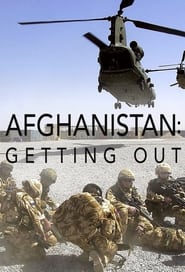
Afghanistan: Getting Out
Download English ondertitel
Release informatie
Tags
Voorbeeld van English ondertiteling
De eerste 200 regels.
This programme contains some scenes which some viewers may find upsetting
On 15th August,
I was not expecting anything big to happen.
Breakfast went so normal, that day was normal.
I had to attend my 9am meeting with President Ghani at the palace.
And President Ghani welcomed me
and it was, honestly speaking, very normal. We cracked jokes.
He recorded a statement.
STATEMENT PLAYS ON TV
Then after that, we said goodbye to President Ghani and he went
because it was afternoon time.
Usually always between 12.30 and 3pm, he take a nap.
So let's go now and eat.
All the president's protocol people were in their suits.
They were serving us food.
After lunch, we came out.
It's only me and my colleagues.
There is no-one else.
The palace is quite quiet.
Then I received a call from Minister of Foreign Affairs.
He said, "Where is the boss?"
I told them he was with us half an hour ago.
He's at home.
And he told me, no.
He ran away.
Sound of a helicopter.
President Ashraf Ghani has fled the country... ..has gone.
Fleeing to neighbouring Uzbekistan... ..leaves a pretty huge
vacuum that one can only assume the Taliban is going to fill.
I received a call from my wife and she was saying, "What's happening?"
I just kept telling her, "I'm safe.
"Don't worry about me."
She was crying and begging me to leave palace and it's not safe.
We went to one place from there. Another place.
There was running, like they were panicked.
GUNFIRE
I managed to get in the airport.
Things were getting out of control.
I'm thinking, "What happened?"
A desperate scene unfolds at the Kabul airport.
People here in the capital are utterly petrified and essentially
have nowhere to look to now.
I might face consequences that I never even dreamed of.
The Taliban stormed into Kabul.
Images emerging of insurgents in the country's equivalent
of the Oval Office.
The British and the Americans have spent billions, but the policy
has been an abject failure.
This war used to be called Operation Enduring Freedom,
and it's turned out not to be enduring,
and they're not leaving behind a society that is free.
The greatest foreign policy humiliation
in the history of the United States of America.
I think most Americans were disturbed by the chaotic,
desperate images of Kabul Airport.
As though there had been a sudden, unexpected destruction of the state.
But I'm sitting at home watching all this, and I thought to myself,
"You know, this is the result of a long, slow-burning fuse."
It wasn't months long.
It wasn't even years long.
It was about 15 years' long.
This is a history of missed opportunities where we could
have snuffed out this fuse.
Of course, there are things that we ought
to have done differently.
Can people find fault with the decisions that we made?
I'm sure they can.
There's a set of burdens and everybody who is involved has got
to carry that with them.
I was born in 1986 in north-west of Afghanistan.
My father was a senior member of the national resistance
against Taliban.
As a child, I could see a lot of people, a lot of meeting happening
in our house.
And then in 2001, the fate of our country changed.
Hey, guys, no more airplanes.
New York's a no-fly zone.
Way to go....
SHE SCREAMS
Oh, shit.
SCREAMING
Oh, my God. Oh, my God.
I remember I was in my constituency at home on the day
that 9/11 happened.
My wife was in Manhattan at the time, and so for several hours
I couldn't get hold of her.
We've identified Bin Laden as the prime suspect.
There's no doubt at all that the Taliban are helping
and harbouring him.
On my orders, the United States military
has begun strikes in Afghanistan.
I thought Tony Blair reacted rapidly and correctly by standing foursquare
with the Americans.
I voted for it in the House of Commons.
There was no choice, in my view, but to effectively sanction
the removal of that regime and the clearing out
of the terrorist training camps.
Key towns have fallen very swiftly, first Herat in the west
of Afghanistan, and now the capital, Kabul.
But intervention has to be followed by a process of building
a provisional government that includes every single element
of the country.
Fatima Gailani, I mean, you were about to go and live in the
United States at the very moment that all this happened.
Now you're going to go and live in Kabul.
Actually, for us, the Afghans, the life has changed dramatically.
I have been working for the cause since the communist coup d'etat...
I was born in a very privileged household.
My father was a religious leader and well respected.
We are descendant of Hasan, the first grandson of the Prophet.
The five years the Taliban had,
what happened to women disturbed me enormously,
and I was very vocal about it.
THEY CHANT
So I had to leave Afghanistan.
I thought I will have a quiet life in Rhode Island.
Then everything changed and I had to go back.
A new era of human rights and human dignity.
In the streets, barbers have been doing a roaring trade,
shaving off beards that the Taliban insisted on.
The rights of the women of Afghanistan
will not be negotiable.
The schools start opening for all Afghans - girls and boys.
And Afghanistan became home of all Afghans again.
I thought our miseries are over, the world will not
abandon us any more.
For me, it was a huge optimism before going to Bonn conference.
At this German hilltop retreat,
talks on a future government for Afghanistan appeared to be making
some progress today.
The aim, to set up an interim administration.
One stumbling block... We will never compromise upon equal opportunity
of education, equal rights and equal opportunity of work, equal rights
and equal opportunity of political participation.
Going to Bonn was a huge honour.
I mean, big honour.
Everyone wanted to be part of it.
I went there and I realised that it was just us
and Taliban are not there.
I was shocked.
Taliban were not outsiders.
They were people of Afghanistan.
They are not pieces of ice that you put on a hot stone
and just wish for them to disappear.
You are not invited to the conference.
So from there, the problem deteriorated.
I told to Americans that war is not a picnic.
Let's talk and resolve this issue.
Otherwise, your fate will be like the fate
of those who have invaded Afghanistan before you.
No, no, we don't know about that.
He entered Afghanistan illegally.
But they didn't hear.
It was a very big mistake on their part.
We were the people of Afghanistan.
Mr Karzai, can you tell us... Good morning.
It was decided that Hamid Karzai
will be the head of the interim government.
..as the new interim leader.
To make sure that peace and stability
is permanent in Afghanistan.
Thank you. Prime Minister, concerning...
I mean, you cannot artificially make a political situation for people.
It will not sustain.
There was instruction from our leadership.
Just go into hiding.
I myself went into hiding.
Armed with rockets, radios and rifles, the Taliban retreat.
They're heading for the hills to carry on a guerrilla war.
Manage yourself.
Don't appear in the public.
And after that, step by step, the resistance started.
Feels like the Inquisition or something in here.
Right, so, where does this story begin for you? Right.
So in late 2006, President Bush decided that he wanted to be kept
up to date literally every working day of the week on events
taking place in Iraq and Afghanistan.
He decided to find a military officer who could be his guy
in the West Wing, keeping him informed.
And it turns out that I either won or lost that competition,
depending on how you look at it.
Good morning, everybody.
We welcome this morning Lieutenant General Douglas Lute.
I don't know why you would put yourself in this position,
but I wish you well.
At 7.00 in the morning, President Bush would walk
from the residence, past the portico and into the West Wing.
He'd sort of hang his hat up on the on the coat rack
and yell, "Lute!" My name.
So I had three to five minutes to essentially brief him on overnight
events in the two war zones.
A year after I got to the White House, things in Iraq
had reasonably stabilised.
Meanwhile, in Afghanistan, things were going
in the opposite direction.
The Taliban were resurgent.
Suicide bombings were up.
So President Bush called me in and said, go over there,
spend enough time to get a feel for what's happening on the ground.
We've got nothing to lose here.
More English subtitles for Afghanistan: Getting Out
- Afghanistan Getting Out S01E02 1080p WEBRiP x264-DARKFLiX · 16 downloads · 2023-05-25
- Afghanistan Getting Out S01E01 1080p WEBRiP x264-DARKFLiX · 11 downloads · 2023-05-24
Opmerkingen
No comments yet. Be the first to leave one.