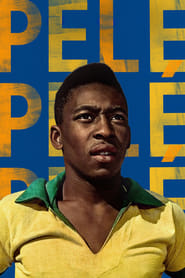
Pelé
Pobierz napisy English
Informacje o wydaniu
Tagi
Podgląd napisów English
Pierwsze 200 wierszy.
What an incredible sight
in the Aztec Stadium in Mexico City.
I don't think anywhere ever in the world
there's been an atmosphere quite like this.
Today, I officially declare
the 1970 World Cup open.
The 1970 World Cup is underway!
My dad said,
"Football is for those who have guts."
Pelé, the world's most famous footballer,
was the man all eyes sought out…
On his legs, Brazilian World Cup hopes are pinned.
Followed every minute of the day…
Pelé has hidden himself away.
This is Pelé's fourth World Cup.
He's worshiped to the point where he's almost a prisoner.
There have been threats to kidnap and even assassinate him.
Everything that was on the news,
that I wouldn't be able to come back, I wasn't in good shape...
Pelé's form has declined to the point
he's no longer the Pelé of old.
...it was a lot of pressure.
It's no longer time for talking.
It's time for fighting.
The World Cup was important for the country.
But in that moment, I didn't want to be Pelé.
I didn't like it. I didn't want it.
I was praying,
"God, this is my last World Cup. Help me prepare for my last World Cup."
In this moment, the Brazilians need Pelé.
…the Brazilians need Pelé.
Pelé.
The great Pelé.
Pelé.
Pelé!
Pelé is not as good as he was.
Pelé!
Brazil is my country.
It means everything to me.
It's the country that brought me into this world.
Brazil was a very young country, not very well-known.
I remember my grandparents, they sold firewood.
They had horses and their cart.
A lot of the time, I rode the horses when I was around ten years old.
I didn't know other countries existed.
I thought Brazil was the most beautiful country in the world.
We came from nothing. We didn't have much.
We were poor, but we were always able to work. My father worked.
My father, he was a football player, and his nickname was Dondinho.
I was known as Dondinho's son.
My dream was always to be like my father.
I thought my father was the best player in the world.
When Pelé arrived home from school,
he was always kicking a ball about with friends in the street.
He loved to play.
When he was inside, he was a troublemaker.
He always had a lot of energy.
There was a point in my father's career
when he got injured and his club was late paying him,
and so Pelé thought he had to help at home,
so he started to work.
I shined shoes, cleaned shoes
to help my family.
Did you think that one day you would be a famous football player?
No.
The principles that I was raised with, I still have them to this day.
It was my family that gave them to me.
I never thought, despite everything that's happened in my life, and even now,
I never think I am better than anyone.
I think this was because of the principles and the upbringing my parents gave me.
Thank God.
But when my father realized that he could play, he could be a player,
he encouraged him a lot.
Then they moved to Santos.
I was the first person at Santos Football Club to meet Pelé.
We were used to seeing a lot of people get approved at the tryouts at Vila Belmiro,
but who didn't have any talent.
And he showed amazing talent at his first training session.
He shook my hand so hard that I thought,
"I want to be on his side. I don't want to be his opponent."
He arrived with that personality. He wasn't afraid of anything.
Once he got on the pitch,
it was like he had been playing with us for years.
I was 16 years old,
and I would say, "Wow, I'm a professional footballer now."
And then I was called up for the 1958 World Cup.
We already had an idea of how he'd be as a footballer.
When he was drafted to the Brazilian national team,
we were overjoyed.
I said, "Well, we're going to Sweden."
I had never left Brazil before.
We thought Brazil was very well known in Europe,
but no, it wasn't.
Some Swedish girls who were there,
they touched my skin, and I thought,
"Why is this girl seeing if my skin colour will come off,
if it's dye that will come off?"
She kept rubbing it and checking her hand to see
because they had never seen a Black person before.
Our country wasn't known in the football community.
We weren't the favorites or anything like that.
I saw a skinny kid
who should have been feeling the pressure of being picked to play in the World Cup,
but he didn't feel it.
He was confident.
Quarter-final day in Gothenburg.
Some of the reporters would write I was too young.
That I didn't have experience.
My father always told me...
"Don't worry. When you step on the pitch, be confident,
because on the pitch, everyone is equal." And that gave me a lot of strength.
The ball comes to Pelé, he controls it and shoots…
Pelé scores for Brazil!
Pelé, who has played such a magnificent part,
is 17 years of age.
So often Brazil have been so near
and yet so far from the World Cup.
In 1950, they were hot favorites to win
and were sensationally beaten 2-1 by Uruguay.
In 1950, the World Cup was in Brazil,
and we were kids.
When the championship was held in Brazil in 1950,
it was Brazil's biggest hope to become a well-known country
and to evolve from the basic status it held.
There were no televisions,
so only the people who were there saw the match.
I was one of them.
There were 200,000 people at the Maracanã.
Brazil was committed
to putting all its efforts
into stepping onto the world stage through football.
My fellow Brazilians, in a matter of minutes
you will become world champions.
We kept our word and built this stadium.
Now do your duty and win us the World Cup.
Brazil on the attack…
It comes to Friaça, he shoots!
Brazil score!
Everybody was in front of the radio, listening.
Everybody was talking about it.
Ghiggia has it... He finds Schiaffino…
Uruguay score! A goal for Uruguay.
They've equalized.
Ghiggia on the right. He runs towards the Brazilian goal…
Uruguay score their second goal!
Uruguay win 2-1.
Everyone was quiet in the streets. It was silent.
It was a tragedy.
1950 represents
the biggest national failure.
And it's no wonder that after this, Nelson Rodrigues coined the term...
He classified that defeat
as the biggest example of the mongrel complex.
What he meant was that Brazilians were used
to putting themselves down
and praising the greatness of others.
"The others are the good ones. We're worthless."
Because a mongrel is a stray dog.
I didn't know what to say to my father
because he was crying a little.
And then I said to him, "No. Don't worry. Don't be sad.
I will win a World Cup for you."
In a few moments, Brazil against Sweden will get underway
in the World Cup Final.
And the World Cup Final of 1958 begins.
Liedholm scores for Sweden!
Sweden 1-0 Brazil.
Sweden are in the lead.
Now then, can Brazil fight back?
That's the question we all want answered.
Is another disaster about to happen?
Vavá finds Pelé and Pelé shoots!
What a shot by Pelé!
Nilton Santos crosses to Pelé,
Pelé controls it.
Incredible goal by Pelé!
He was a prodigy.
We used to laugh about it.
The greatest footballer of all time was being born, right there.
That's what he was.
Orlando...
Pelé. Out to Zagallo.
Into Pelé…
Brazil are world champions!
It was like a dream.
Amazing, you know?
That night, I didn't sleep.
I didn't sleep because I wanted to know if people in Brazil, my family,
if they knew about the game,
if they had listened to it.
Did they know I scored those goals?
Look at this scene! The people have taken over!
People are jumping! They're shouting!
They're all here to celebrate Brazil's victory
and welcome home our incredible players.
It becomes clear that Pelé is the man
who will begin to solve the Brazilian mongrel complex.
Through him, Brazilians learned to love themselves.
That's no small thing, symbolically speaking.
- Pelé was the man of the hour. - Yes, he was the man of the hour.
Pelé subtitles in other languages
More English subtitles for Pelé
- Pele 2021 PORTUGUESE 1080p WEBRip x264-VXT · 32 downloads · 2021-02-27
- Pele 2021 DUBBED 1080p WEBRip x264-RARBG · 43 downloads · 2021-02-26
- Pele 2021 1080p WEBRip x264 AAC5 1-[YTS MX] · 42 downloads · 2021-02-24
- Pele 2021 1080p WEBRip x264 AAC5 1-[YTS MX] · 42 downloads · 2021-02-24
- Pele 2021 PORTUGUESE WEBRip x264-VXT · 21 downloads · 2021-02-23
- Pele 2021 PORTUGUESE WEBRip x264-VXT · 23 downloads · 2021-02-23
- Pele 2021 720p WEB h264-TRIPEL · 42 downloads · 2021-02-23
- Pele 2021 PORTUGUESE WEBRip XviD MP3-VXT · 23 downloads · 2021-02-23
Komentarze
No comments yet. Be the first to leave one.