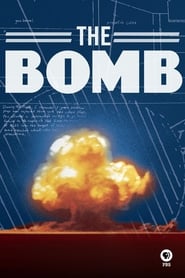
The Bomb
Pobierz napisy English
Informacje o wydaniu
Tagi
Podgląd napisów English
Pierwsze 200 wierszy.
70 years ago, the nuclear bomb altered our reality forever.
For the first time in human history, we now were capable
of our own destruction as a species.
The bomb affects everything.
It was the opening shot of the Cold War.
LAURA McENANEY: All U.S. citizens are now going to have to be on high alert.
This is a radio alert.
The bomb produces some of the worst psychological tension
ever in world history.
An international arms race,
confrontations and close calls.
Politics, culture, even sex.
There was a kind of thrilling excitement about it.
Fire.
Entire industries were created to build it.
This incredible energy opens limitless horizons.
New cameras, film stocks, and techniques devised
to photograph it.
Now, thanks to state of the art restoration
of original film masters, we can see the incredible power
of this device in a new way.
A technology that has changed human existence forever.
The bomb has receded in the public's imagination,
but it's still there.
We still live in its shadow.
Everybody is affected by it.
There's no place to hide.
It is an environmental issue, it's a political issue.
It's a moral issue.
It is the most important issue that we face.
The Bomb.
It first appeared in the New Mexico desert...
A place the Spanish called Jornada del muerto--
"journey of the dead."
Here, miles and miles from anywhere, the Bomb came to life.
The exact spot is inaccessible, hidden inside
a 3,000 square mile weapons range.
But for a few hours, once every year, it's opened to the public.
Thank you.Thank you.
Hope you like Mike Tyson.
They come from all over, like pilgrims to a shrine
to see and stand in the spot where the nuclear age began.
Where the modern era started.
It's probably what it is: a turning point.
We actually are at ground zero, where it actually happened.
Well, it's world history, too.
It changed-- it changed everything.
The bomb that was tested here 70 years ago turned night into day,
and set the world on a new and dangerous path.
It was a beginning that would lead
to over a thousand nuclear explosions through five decades.
Test after test in desert landscapes...
...on tiny islands.
A Cold War that brought the world to the brink
and produced an enormous stockpile of bombs,
most of which could destroy in one instant a city,
and much more.
60,000 nuclear weapons, between the United States
and the Soviet Union.
If something should go wrong,
the consequences would be catastrophic,
not simply for one nation or another,
but for mankind.
No less than the discovery of fire, the bomb marks
a dividing line between all that came before,
and everything that follows.
Nuclear war would entail
the end of civilization.
This was a millennial change in human affairs.
Everyone was at risk.
The force that first appeared on this spot--
a power greater than we can imagine--
where did it come from?
How did it all start?
The understanding of how the world worked
was being revolutionized.
And in 1938, in Germany--
and it's important to emphasize in Germany--
the greatest revolution of all occurred.
In Berlin, two German chemists, Otto Hahn and Fritz Strassman,
discover that bombarding uranium with neutrons creates
a different substance: barium.
They have no idea why.
But a friend, physicist Lise Meitner, suddenly realizes
they have split the nucleus of the uranium atom,
what she calls "fission".
Meitner publishes her conclusion
in the scientific journal Nature.
The news begins spreading
through the international physics community.
The implications of that were obvious to physicists
all over the world.
Out of a little bit of material, it can produce
an enormous amount of energy.
The timing could not be worse.
Nazi Germany is on the rise.
Adolph Hitler is about to start World War II.
As physicists around the world digest Lise Meitner's news,
they quickly realize this discovery-- nuclear fission--
could determine the outcome of the war.
Uranium... ...can be fissioned...
...when hit with a neutron...
...producing...
...a tremendous amount of energy...
...a lot of energy...
...per Einstein's equation...
...E=MC squared...
...every physicist knew...
...all over the world...
...an atomic bomb could be built...
...by the Nazis.
After all, the discovery had been made in Germany.
Germany had very good physicists.
Maybe Hitler's building the bomb.
The threat of Germany getting a bomb first is so unthinkable.
Hey, we're in a race with the Germans, perhaps.
But so far the race is only in the scientists' minds.
No one else understands the danger of a bomb
that doesn't yet exist.
Physicist Leo Szilard is convinced the only way to stop
Hitler is to get the bomb first.
Szilard dictates a letter, a warning about the threat
of a Nazi atomic bomb.
And he thought that the best strategy would be to get
Albert Einstein, the most famous scientist in the world,
to sign a letter to the president, Franklin Roosevelt,
and get things moving.
Szilard's letter and Einstein's fame do the trick.
President Franklin Roosevelt authorizes a project
to research uranium.
Two years later, the Japanese attack Pearl Harbor...
Hitler declares war on the U.S.
America is fighting two wars: against Germany in Europe,
Japan in the Pacific.
Suddenly, Roosevelt's uranium research project
is critically important.
What began as scientific inquiry is about to become
a crash program to build a bomb.
The bomb had its roots in many places, all of them managed
by the U.S. Army Corps of Engineers.
In this building, on Broadway in New York City,
the engineers set up an office.
On the 18th floor, the largest government scientific project
in history begins to take shape.
To keep its real purpose secret, the project is named after
the engineer district where it's located: Manhattan.
Ultimately, over half a million people will contribute
to the Manhattan Project.
They'll be led by this man: Leslie Richard Groves,
Army engineer.
Groves has been in charge of building the Pentagon,
and internment camps for Japanese-Americans.
Now he's itching for the next step in his career:
an overseas combat assignment.
Then Groves gets a surprise update from his boss.
I have a project for you.
And Groves realizes what it is.
Oh no, not that thing.
No...
He's ready to go overseas, and he's very disappointed.
Developing an imaginary bomb based on invisible particles
that will probably never work seems like a career dead end.
But, hey, you do what you're told.
You do what you're told, and you do it to the best
of your ability, and he put his foot on the accelerator
and never let up.
But first he negotiates a raise.
He says I'm gonna have to be a general.
I mean these scientists aren't going to respect me
if I'm just a colonel.
Now he gets to work.
Friday, day one: purchase 1,200 tons of uranium ore.
Saturday: negotiate special top priority rating for the project.
Monday: meet with presidential science adviser Vannevar Bush.
Wednesday: go to Tennessee, buy 56,000 acres of land
for factories.
Next, visit universities and meet scientists.
Columbia: Harold Urey.
University of Chicago: Arthur Compton.
Berkeley, California: Ernest Lawrence.
Back to Washington.
Groves has put in motion what will become
a vast industrial complex in less than two months.
There's only one thing missing: the bomb itself.
It will be years before there's nuclear fuel ready.
The uranium is produced one tiny particle at a time.
But when that fuel is ready, Groves will need a design
for a bomb that works.
And for that, he needs scientists.
He's been meeting plenty of them at Columbia, Chicago, Berkeley.
No question they're smart, but they just rub him the wrong way.
He's a military man,
so we've got a clash of cultures here.
Groves was a very smart man.
And knew a lot about a lot of things.
But he didn't know much about physics.
He also had a pretty thin skin about people looking down on him
who had PhDs, which he didn't have.
Eggheads.
He thinks that these guys are up in the clouds.
Komentarze
No comments yet. Be the first to leave one.