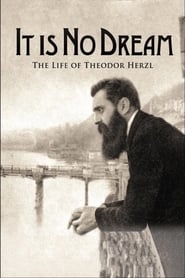
It Is No Dream: The Life Of Theodor Herzl
Pobierz napisy English
Informacje o wydaniu
Tagi
Podgląd napisów English
Pierwsze 200 wierszy.
- The Jewish question still exists.
It would be foolish to deny it.
It is a remnant of the middle ages
which civilized nations do not even yet
seem to be able to shake off try as they will.
Attacks in Parliament, in assemblies, in the press,
in the pulpit, in the street
become daily more numerous.
In countries where we have lived for centuries
we are still cried down as strangers.
Oppression and persecution cannot exterminate us.
No nation on Earth has survived such struggles
and sufferings as we have gone through.
Distress binds us together,
and thus united we suddenly discover our strength.
Yes we are strong enough to form a state,
and indeed a model state.
We possess all human and material resources
necessary for the purpose.
The idea which I have developed in
this pamphlet is a very old one.
It is the restoration of the Jewish state.
The world resounds with outcries against the Jews,
and these outcries have awakened the slumbering idea.
- These words were written in 1895
almost 120 years ago.
They were part of a pamphlet entitled
"The Judenstaat" or "The Jewish State".
The author was a 36 year old Viennese journalist,
and playwright named Theodor Herzl.
In 1895 what Theodor Herzl was proposing
seemed, even to his supporters, an impossible goal.
But to all who insisted it was a fantasy
Theodor Herzl had this to say
if you will it it is no dream.
- Herzl was the first name that I can remember
because the king wrote the truth.
I mean
it was a King without a kingdom,
and a prince without a people.
But it touched the most important thing in Jewish life.
And he said faith,
spirit,
flames, legend.
And it's an honorable story.
- In 1894, Theodor Herzl was living in Paris,
and working as the bureau chief for Vienna's
Neue Freie Presse,
one of Europe's most respected newspapers.
At the moment the big story making headlines
was the criminal trial of Captain Alfred Dreyfus
who'd been arrested on a charge of high treason
for selling military secrets to the Germans.
Dreyfus who came from a prominent Jewish family
that had been living in France for generations
insisted he was innocent.
His supporters maintained that he had been framed
by a group of anti-Semitic officers.
In the days following Dreyfus's arrest
Theodor Herzl, like much of the French public,
believed that he was guilty.
The evidence indicates that
Dreyfus has really committed the ignominious act.
- But as the military trial unfolded
at the Ecole Militaire in Paris throughout December 1894
Herzl's opinion about Dreyfus's guilt began to change.
He became completely convinced that Dreyfus was innocent,
and was being unfairly prosecuted because he was Jewish.
Despite the fact that in 1791 France became
the first country in the world
to emancipate its Jewish population
anti-Semitism was surging among the French
in the years leading up to the Dreyfus case.
In fact, anti-Semitic violence had been
spreading throughout Europe starting
in the 1870s in Germany and Austria.
Then hundreds of Jews were killed
in pogroms in Russia, and the Ukraine.
The situation began turning against French Jews in 1882
with the collapse of the L'Union Generale
the Catholic bank founded with the
blessings of Pope Leo the Thirteenth.
The faithful had invested heavily in L'Union Generale.
Both the aristocracy and the middle class
had their money in the bank
upon the advice of their priests.
When the L'Union Generale collapsed
in the 1882 stock market crash
rich and poor French Catholics were economically devastated.
And the Jews were blamed for it all.
When rival banks, including the house of Rothschild,
came through the crash relatively unscathed.
Edward Drumont, an unknown writer,
soon made his reputation on a two volume book
entitled La France Juive, or Jewish France.
An immediate best seller Drumont's book
exposed what he maintained was
the evil power of Jewish finance.
In the wake of this success Drumont
created the National Anti-Semitic League
dedicated to fighting the clandestine,
and merciless conspiracy of Jewish finance
which jeopardizes daily the welfare,
honor, and security of France.
In 1892 Drummond founded La Libre Parole
which became one of the country's most popular newspapers.
It led a campaign to drive Jewish
officers out of the French army.
After it was discovered that military secrets
had been passed to Germany from a
member of the French general staff
Dreyfus fell under suspicion because he was Jewish,
and disliked by his fellow officers.
But after his arrest no evidence could be found
linking him to the act.
At the Ecole Militaire the officers in charge
of Dreyfus's investigation fabricated
a so-called secret file proving Dreyfus's guilt.
Military authorities then ordered
Dreyfus's immediate court martial.
The proceedings were held in private,
and the secret file kept from the defense.
Throughout the trial proceedings
Drumont continued to fan the flames of anti-Semitism.
The French public took to the streets
not only against Dreyfus
but also the French Jewish community.
Not far from Theodor Herzl's hotel room
en rue Cambon there were nightly demonstrations
in the Place de la Concorde.
Through his windows he could hear the crowd screaming
death to the Jews.
Where was this happening?
Herzl asked himself.
Where?
In France.
In Republican, modern, civilized France.
100 years after the declaration of the rights of man.
Though what troubled
him even more profoundly were the events
that occurred after Dreyfus was pronounced guilty
at the end of December 1894,
and sentenced to life imprisonment on Devil's Island.
Herzl was one of the few journalists
allowed to witness Dreyfus's public
degredation in
January 1895.
It was a bitterly cold January morning.
It happened to be
the Sabbath.
Dreyfus was marched around the Ecole Militaire
in front of the garrison of troops.
He had his uniform, all the buttons on his uniform
were ripped off by this giant of a man
who descended from his horse,
and publicly humiliated Dreyfus.
And the Parisian mob who were behind the railings
that are watching this scene, several thousand people,
they are screaming down with the traitor.
And there are also cries of
death to the Jew.
(speaking foreign language), which come from
this almost hysterical
mob who were baying
for Dreyfus's blood.
Herzl is in the journalist box.
He notes that, twice, as Dreyfus is marched around
he stops where he sees the journalists,
and he shouts I am innocent.
You are convicting an innocent man.
Vive le France!
Long live France.
Vive l'armee.
Long live the army.
That night in a state of
what he would later call strange agitation
Herzl wrote his dispatch for the Neue Freie Presse.
In Vienna the newspaper censored the report
changing his account of the mob
shouting death to the Jews to death to the Judas.
In a later edition the Neue Freie Presse
changed it even further to death to the traitors.
Herzl's editors, themselves Jews,
were worried that the truth would inspire
similar chants to occur in the streets of Vienna.
Although he tried Herzl could
not shake the scenes of the trial,
and the anti-Semitic demonstrations from his mind.
He woke up to the French newspapers
editorializing that Dreyfus's protests of innocence
were even further examples of Jewish duplicity.
He became even more disturbed when
a few days later the French National Assembly
introduced legislation that
would ban Jews from public service.
It was defeated by less than 70 votes,
and news from Vienna, where his family was living,
added to his anxiety.
Anti-Semitic factions had reached a
majority status in the Austrian parliament.
Komentarze
No comments yet. Be the first to leave one.