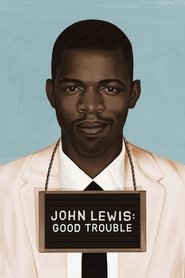
John Lewis: Good Trouble
Pobierz napisy English
Informacje o wydaniu
Tagi
Podgląd napisów English
Pierwsze 200 wierszy.
I feel lucky and blessed
that I'm serving in the Congress...
But there are forces today
trying to take us back
to another time
and another dark period.
We've come so far, we've made so much progress,
but as a nation and as a people,
we're not quite there yet.
We have miles to go.
We do not want our freedom gradually,
but we want to be free now.
We're marching today to dramatize to the world
hundreds and thousands of Negro citizens
denied the right to vote.
For too long, other people been deciding for us.
We must have some control
over our own political destiny.
No police department
will keep us from marching up and down the streets
of the city of Atlanta.
Too many people struggled,
suffered, and died to make it possible
for every American to exercise their right to vote.
I have on my marching shoes.
- That's right! - I'm fired up!
- Fired up! - I'm ready to march!
Let's do it!
Speak up, speak out,
and get in what I call good trouble,
necessary trouble.
Do what is right.
When I was a young boy,
I remember Dr. King,
and I remember this young guy
who was marching with him,
and it was this guy that didn't look much older than me.
I said, "How did he get involved?"
Happy New Year to you, brother.
- Congratulations. - How you doing?
He was always different
than every member of Congress.
Everybody in Congress knew what he had done.
He was John Lewis.
- How you doing? - It's good to see you.
- Good to see you. - Good to see you.
- Good to see you, sir. - How you doing, sir?
- Hey, there, how are you? - Very good.
His voice and his example
are probably needed now
as much as they've ever been since he was a young man.
When I first came here, I ran across the road.
Now we're a little older and a little wiser.
A little older and wiser.
We don't need to run for everything.
We are still in the Civil Rights Movement
because we are still in a civil rights struggle,
and so Congressman Lewis gave us the blueprint,
and the blueprint is to organize,
it is to mobilize, and it is to legislate.
And the reason why he's effective as a leader
is because he's lived it.
For many, many years
in Dallas County,
Selma, Alabama,
black men and women
had tried to become registered voters.
People stood in a unmovable line.
They would fail the so-called literacy tests.
On one occasion, a person was asked
to count the number of bubbles in a bar of soap.
And we must make it clear that we know
when we are denied the right to vote.
Today represents
a marvelous determination
of this drive to register Negro voters
in massive numbers in the state of Alabama.
You got 85 here... there's more. 86?
That's mighty good, mighty good.
You did not follow my orders.
You disobeyed the parade order.
Each and everyone in this line
is under arrest for parading without a permit.
We will continue, definitely,
to get large numbers of people registered
and to point out the injustices
which we continue to face as we seek to register.
People had been beaten, arrested, and jailed.
A young man by the name of Jimmie Lee Jackson
had been murdered.
We made a decision to march
in an orderly, peaceful, nonviolent fashion
from Selma to Montgomery.
We're marching today to dramatize to the nation
and dramatize to the world
that hundreds and thousands of Negro citizens of Alabama,
but particularly here in the Black Belt area,
denied the right to vote,
and we intend to march to Montgomery
to present said grievance to Governor George C. Wallace.
As we approached a bridge,
we saw a sea of blue,
Alabama state troopers.
It'll be detrimental to your safety
to continue this march,
and I'm saying that this is an unlawful assembly.
You are ordered to disperse.
Go home, or go to your church.
This march will not continue.
We said, "Major, may I have a word?"
He said there would be no word.
Troopers here, advance toward the group.
See that they turn around and disperse.
I was hit in the head.
My knees went from under me.
I thought I was going to die on the bridge.
Amid record-breaking early voting
this midterm season,
concerns of voter suppression are at the center
of some of the country's most contested races.
Things like strict voter ID laws,
getting rid of same-day registration,
cutting back on early voting, purging the voting rolls,
eliminating the number of polling places.
When we begin to look
at these voter suppression laws,
overwhelmingly African-American, Latino,
Asian-American, young, and poor,
that's the group that is targeted.
Well, it's a very difficult time
that we're going through in America.
My greatest fear is that one day we may wake up
and our democracy is gone.
We cannot afford to let that happen.
As long as I have breath in my body,
I will do what I can.
- Can I touch him? - Yes, yes.
- Congressman, this... - Can I touch him?
Yes, yes, you can touch me.
Oh, please, someone take my picture.
How are you doing? Good to see you today.
My name is Wanda.
You are... you are one of my biggest,
biggest, biggest heroes.
- Oh, thank you. - You have done so much.
- Well, I just try to help out. - Well, we need you now.
- Yes, ma'am. - We need you now.
Thank you, Mr. Lewis, for everything.
Thank you.
- Wonderful. - Thank you. Great to see you.
Hi, Congressman.
Hi, handsome.
I became a voting rights attorney
because of John Lewis.
- Yeah. - Yes.
He walked across a bridge
so that someday I could run for office.
- Yeah. - Yes.
This man was beaten,
was bloodied,
so people in this country
would have the right to vote.
We've got to make sure that we honor the sacrifice
of everyone who has preceded us here.
Those civil rights marchers...
Willing to risk their lives,
and could we be any more blessed
than to have John Lewis here with us,
in Dallas, Texas?
I would see those signs that said white men,
colored men, white women, colored women,
white waiting, colored waiting,
and I would ask my mother, my father,
my grandparents, and my great-grandparents why.
They would say, "Boy, that's the way it is.
Don't get in the way.
Don't get in trouble."
But in 1955, 15 years old,
the action of Rosa Parks,
the words and leadership of Dr. King,
inspired me to get in trouble,
what I call good trouble, necessary trouble.
It's... it's time for all good people in this state,
here in Dallas, to get in trouble.
You know, I got arrested a few times during the '60s.
Forty times.
- Oh. - Oh.
- Yeah! - Whoo!
And since I've been in Congress,
another five times.
And I'm probably gonna get arrested again for something.
But my philosophy is very simple.
When you see something that is not right,
not fair,
not just, say something!
Do something!
Get in trouble, good trouble, necessary trouble.
We have to save our country,
save our democracy.
I wish you well. Thank you very much.
More English subtitles for John Lewis: Good Trouble
- John Lewis Good Trouble 2020 720p WEB-DL x265 HEVC-HDETG com · 34 downloads · 2021-05-07
- John Lewis Good Trouble 2020 WEBRip x264-ION10 · 26 downloads · 2020-09-06
Komentarze
No comments yet. Be the first to leave one.