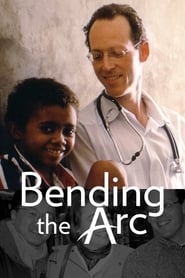
Bending the Arc
Pobierz napisy English
Informacje o wydaniu
Tagi
Podgląd napisów English
Pierwsze 194 wierszy.
Welcome to our world.
Good evening, everyone!
Good evening, Paul!
So, these patients mostly have multi-drug resistant TB.
Notice the ultraviolet lights, that's to kill the bacterium…
The bacterium that causes tuberculosis.
They're watching Silence of the Lambs.
And I just… I just got them Lord of the Rings.
It's a great movie. Lots of action.
Hello my dear. How are you?
How are you feeling?
Compared to before, I feel great.
You know what she just said to me?
I said, "How do you feel?"
She said, "I feel, compared to how I was, I feel great."
She still looks like a skeleton to you,
but she looks like a skeleton with five pounds extra to me.
I'd lost all hope.
She started the 2nd of October on her treatment.
Wow. How much has happened over all these years.
You know, this young woman was at death's door,
and she's getting better.
It wasn't a magic recipe.
It was treatment that's been available for decades and decades.
That… That's all it was.
So, Cynthia wants us to see a patient.
And yet, there were so many more people who should have access
to basic medical healthcare.
But, it didn't have to be this way.
There was a moment in time when it all could've been different.
Colonialism had ended.
And emerging nations planned bright futures.
And, in an almost forgotten historic event,
in a place called Alma-Ata,
the governments of the world came together to make a revolutionary promise.
Full healthcare would be extended to all,
beginning with the poorest on Earth.
Health, which is a state of complete physical, mental, and social well-being,
is a fundamental human right,
whose realization requires the action by all governments.
Health for all is the future.
But, this grand vision never came to be.
Instead, larger forces from wealthier countries
created plans that crippled the once-rising nations.
They ushered in poverty, disease, and chaos.
And that is when we first met, in Haiti.
I arrived there late at night, in January of 1983.
I was 18 and a half.
There was a part of me that felt overwhelmed by it.
Because I was wrenched into the reality
that I quickly realized was much of the world.
I was volunteering for a group, an ophthalmic group, called Eye Care.
They had outreach clinics.
That's when I met Paul.
Paul and I clicked immediately,
and ended up talking about our lives and our families.
I remember that I could see in him this restlessness with the world.
Take this.
I'm just gonna clap in front of your face, sorry.
We have… We have medications for that, so…
I remember this like it was yesterday.
I was 23 years old who hadn't even started medical school.
I already had this deep interest in Haiti, and Haitian culture.
It was my first time outside of North America or Europe,
in a place I really wanted to go.
It was just fascinating.
Certainly, I was, you know, very young and enthusiastic.
But, I didn't know anything.
That's where I met Ophelia.
And, she was even younger than I.
She's still even younger than I.
And he was trying to get a job, um, actually at the Schweitzer hospital.
Which he didn't get.
Paul was helping to assist at this clinic in the middle of Mirebalais.
I wasn't acting as a physician, by the way.
I was just taking vital signs, which I'd been trained to do,
and providing some kind of moral support.
There would be this enormous line, out in front of the clinic.
So, the doctor was about to go out of his mind.
He's got no lab.
He's got no… Nothing.
I mean, you would listen to the complaint,
use the stethoscope like a magic wand, or refer to somewhere else.
And I started thinking,
"We should be referring everyone somewhere else."
And, this was typical, all over Haiti.
And, I was basically learning how not to deliver medical care.
I was settled on being a doctor from the time I was probably 12 or 13.
My father was a school teacher and one year he got a job in Florida.
So, he ended up buying a bus,
which was actually a bus used for screening tuberculosis.
And, as one does with a bus, we went to a campground.
Which was supposed to be temporary.
And, then it wasn't temporary.
I mean, when I left for college, we were still in the bus.
His whole family connected to this very important sense
of being aware of other people who were less fortunate.
So, when Paul arrived in Haiti, he listened very, very carefully
and was eager to learn from those people who were living there.
You gotta use the word, "Serendipity," right?
When I met Father Fritz Lafontant, he said, "Yeah, you can work with us."
Paul was a very young boy when he came to see me in Mirebalais.
He could speak Haitian Creole
and also French,
so we could communicate very easily.
But he knew nothing about the Central Plateau.
Father Lafontant had been working with people
even further out, in a rural area called Cange.
And this was a group of people displaced by a big hydro-electric dam project.
When the valley was flooded, everything they had was gone.
And they were forced up into the hillsides,
where they had nothing.
When I got there, I got to see
what poor planning of a development project
meant to poor people.
I had never seen such abject misery in my life.
What I saw was traumatic.
It has certainly taught me to respect the destructive power of poverty.
Then I thought, "How can we get this fixed?"
So, we wanted to do some kind of assessment
of what the needs were.
I remember Father Fritz said, "Well, you can ask them,
but they're just gonna tell you they want a hospital."
He was right.
"Oh, and proper housing, too.
"And, you know what? We want our kids to be in school."
My husband has been sick for six months.
His name is Daniel.
We knew, right then and there,
that we had to get a plan and build a clinic.
But, we had no money.
Paul told me that he applied to Harvard University.
Fritz handed me my acceptance letter
into Harvard Medical School,
and punched me in the stomach, like, "Here."
He was very excited.
He assumed that it was an acceptance, I didn't know.
He told me he wanted to stay
and work here,
but I didn't agree.
He lectured me sternly about it.
And he was right, you know?
It'd be a lot more effective, having those credentials.
When I left for medical school,
I dreamed of building the clinic, and a hospital.
And we didn't have any resources.
I certainly didn't have the experience, or maturity, or wisdom.
But that doesn't mean it wasn't a good idea.
I met Jim Kim on a snowy night in December 1983.
Paul was dressed almost like a dandy.
He had very fancy clothes, and a nice little scarf,
and I was only later to learn that he'd borrowed every bit of it
from someone else.
We began talking, and I thought, "Wow, this guy is really impressive."
Because he could participate in a seminar as if he was one of the professors.
Jim and I clicked. We were in the same training program.
That's when we really became very close friends.
Paul and I both agreed
that we were going to medical school for reasons of social justice.
Now, let me just stop for a second, this is really important.
Shall we?
During medical school,
we spent many, many late nights, Paul and I,
and Ophelia, talking about fundamental questions.
What is the nature of our responsibility in the world?
Is there something like an area of moral clarity?
There are all these ideas, for example, uh, appropriate technology.
Basically, in the end, they're all used to punish poor people.
Just like every other ideology is, by and large.
So, appropriate technology means, as Fritz, our boss, says,
"That means shit for poor people, and good things for rich people."
It was during those late-night conversations
that I started realizing that these larger forces
had an enormous and terrible impact, on the people that we had gotten to know,
in Cange.
Almost immediately, after Alma-Ata, the world economy had crashed.
Many countries suddenly owed huge debts they couldn't pay.
Enormous institutions like the World Bank, led by the US,
gave new loans to poor countries, to pay their old loans.
But there were strict conditions.
Unless a nation puts its own financial and economic house in order,
no amount of aid will produce progress.
At that time,
World Bank loans actually required the poor countries
to cut investments in education and healthcare,
in order to make sure that the loans were paid back.
I learned about it in Haiti.
Haitians were talking all the time about the American plan.
It was ripping the safety net out from under people,
as they were already falling.
We realized that poor countries weren't poor
because of some kind of moral failing,
and we felt that we needed to use our own opportunities
to do something about it.
Bending the Arc subtitles in other languages
Komentarze
No comments yet. Be the first to leave one.