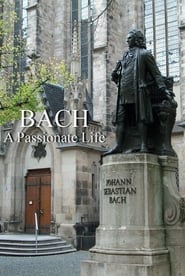
Bach: A Passionate Life
Pobierz napisy English
Informacje o wydaniu
Tagi
Podgląd napisów English
Pierwsze 200 wierszy.
Johann Sebastian Bach is the ultimate composer's composer,
influencing countless others who followed him, from Mozart
to Mendelssohn, Beethoven to Brahms,
and not just in classical music.
From Duke Ellington, to the Beatles.
Musicians in jazz and pop have also fallen under his spell
and learnt from his techniques.
Bach is still the benchmark, a musical gold standard.
We know very little about Bach's life.
There are only a few facts to go on, and our image of him
is skewed by statues and paintings of a stern,
forbidding figure in a frock coat and a powdered wig.
But then there's the music.
# Herr
# Herr
# Herr... #
The music tells us something completely different about him.
It's full of energy, full of dance, full of life.
Over a lifetime of getting to know, singing and conducting Bach's music,
I've formed a series of hunches about his personality and character.
In this film, I want to test them out with fellow Bach enthusiasts
and scholars, and performs some of his most important works, to see
what they can tell us about the extraordinary man who composed them.
He really throws everything at it.
You know, it's just such an overwhelming exploration
of what is to be a human being.
I think he's a scientist at work, and instead of using
the language of mathematics, he's a scientist using music.
The level of inspiration on which he works is, I think,
unparalleled in the rest of music.
Such splendour and wonderfulness, that, on its own,
would convince me that there was a God
if I felt inclined to take that conclusion from it.
In this film, I want to build a new statue of Bach, to see
if we can detect a beating heart
and a more approachable personality underneath the wig.
My own engagement with Bach began as a small child
growing up on a farm in Dorset.
Just before the war,
a refugee from Nazi Germany arrived with a painting in his rucksack,
one that his great-grandfather had bought in a junk shop.
He asked my father to look after it for him.
It was one of only two portraits painted of JS Bach in his lifetime.
So I passed it every day of my life, until I was ten,
when the painting was sold and moved to Princeton, New Jersey.
This is the first time I've seen it since 1953.
What's so striking to me, seeing it again, is the intensity of his gaze.
Those eyes. It's just extraordinary, they're so penetrative.
I still feel there's a division between the upper half
of his face and the bottom half.
The upper half is so intense, it's got that beetle-browed,
slightly myopic look.
Below that, you see somebody quite different,
somebody much more approachable, somebody who enjoyed
the good things of life, a bon viveur, who enjoyed his tobacco
and his wine and his beer,
and there's plenty of records of what he drank.
And the father of 20 children and two wives.
We know pitifully few hard facts about Bach.
There's very little to go on, and only a handful of personal letters.
But, as in any good detective story, it's often the gaps,
the seeming contradictions in the tale,
that are as suggestive and intriguing
as the hard evidence available.
We do know that Johann Sebastian was born on 21 March 1685,
in Eisenach, in the middle of modern-day Germany.
This is the so-called Bachhaus, now a museum devoted to him.
Until recently, it billed itself as the house where Bach was born
and where he grew up. We now know that's definitely not the case.
As with so much of his life,
exactly where Bach was born remains a mystery.
Johann Sebastian was baptised here, at two days old,
in St George's Church in Eisenach.
Later, he sang here in the choir.
As a child, he's said to have had an unusually fine treble voice.
200 years before him, there was another chorister
who stood in exactly the same place.
Now that was Martin Luther.
And Luther created a revolution here in this part of Germany.
Bach's whole life was to be
profoundly influenced by Luther's Reformation.
Luther set in train a new way of worship.
It totally transformed the role of language and music in church.
Bach's own music was filtered through his strongly held
Lutheran beliefs and upbringing.
Luther preached his Reformation here in the Georgenkirche in 1521.
Then he disappeared.
Actually, he hadn't gone far.
In fact, in the greatest of secrecy, Luther was in hiding up here
in the Wartburg, the imposing castle that looms above the town of Eisenach.
His Reformation had made Luther the most wanted man in Europe.
So, this is the little room where Luther lived.
For ten months here he was holed up, imprisoned, really, for his own good,
because he was on the run from the Pope, from the Emperor.
He was desperately constipated.
"The Lord has struck me in the rear," he said.
And he thought that the devil was pelting him
with walnuts from the ceiling.
Luther decided that his best weapon
to use against the devil was black ink.
And, in a matter of weeks, he sat down at this desk
and he wrote a translation, from the Greek,
of the New Testament.
And it wasn't just any old German, he decided that he needed
to amalgamate 18 different dialects and, in effect,
he established the roots of the German language as we know it.
Not only did Luther want the Bible to be in the language of the people,
he also wanted them to be able to join in the music,
something that, in the Catholic church,
was much more the province of trained choirs.
Luther was convinced that music added extra expression
and eloquence to the biblical text.
"The notes make the words come alive," he wrote.
"In fact, without music, man is little more than a stone."
So, the words appealed to the intellect,
and the music appealed to the passions.
And, besides, why should the devil have all the good tunes?
Luther and his followers made sure he didn't.
They choraled secular tunes that everybody knew,
including quite earthy love songs, and then set them to new words
so that the congregation could belt them out in church.
Hymns, or chorales, written by Luther
and his followers became absolutely central to Protestant worship,
and of course to the music of Bach.
The impact of the reformer Luther
on the impressionable young Bach was immeasurable.
It shaped his whole view of the world,
it bolstered his sense of worth
as a craftsman musician, and reinforced his service to the Church.
It's such an announcement,
a proclamation of the arrival on Earth of the Christ child.
Relish the words. Relish them.
So, "Brich an..."
Bach's destiny was to become a musician.
Music was the family business.
In this part of Germany, in the heart of the Thuringian forest,
the Bach family were thick on the ground.
They provided a support system to each other,
and they carved up the different roles of organist and cantor,
and Hausmann - the head of the local wind band - between them.
And, in fact, they became almost
so important here that the word Bach and musician became synonymous.
"Quodlibet, BWV 524" by JS Bach
The Bach clan knew how to let their hair down,
and often got together for raucous family celebrations.
Sebastian, the youngest of eight brothers and sisters, was thus
surrounded by music at home, in church and in school.
I have in my hands what was probably the most precious book of Bach's childhood.
It's certainly the one he used every day of his life
until he left Eisenach.
It's the Eisenachisches Gesangbuch, the songbook used in church
and used in school.
It has wonderful copper engravings which show David and Solomon in the Temple,
surrounded by their temple musicians,
and the connections that Bach
must've made in his mind, between his family
of the most famous musicians in the area, with a long,
dynastic lineage going all the way back to Solomon.
Because he wrote so many masterpieces of sacred music,
in the 19th-century,
religiously-inclined writers
liked to picture Bach as a saintly figure,
a kind of fifth Evangelist
to match the goody two-shoes image of his childhood.
But, in recent years, this picture has started to change.
This is a book containing the records of Bach's school performance,
and it gives us his syllabus of classes that he attended,
and it also shows that, for example, in the third year,
he came 46th out of 89 pupils,
and what's more, it tells us that he missed 96 separate classes.
This is a fascinating document,
because it's somehow slipped under the radar.
It's a report on school conditions in the Latin school
where Bach was a pupil, and it shows the lack of textbooks,
the overcrowding, the cheeking of the masters,
the throwing of bricks through the windows,
all sorts of proto-hooliganism
and it's been, kind of, neatly ironed out of all the biographies,
so it's really interesting to come to light now.
Since the fall of the Berlin Wall and the reunification of Germany,
more documents have come to light that greatly enhance
our knowledge of Bach.
In particular, the Bach Archives in Leipzig have made huge strides
in discovering more about the composer's working methods,
and, for the first time, opened their doors to researchers.
All the significant documents about Bach, many originals,
some copies, are here.
When Bach was 50, he suddenly got a fascination for family roots
and family trees, genealogy,
so, he wanted to give himself legitimacy in some way.
And here's an example, and it shows the whole Bach family,
starting with the legendary figure of Veit Bach,
who arrived from Hungary in the middle of the 16th century,
and it goes all the way through to Bach himself,
who's over here, and then his children, and his grandchildren.
You'll notice every single member of the Bach family is a man.
All blokes, not a single woman.
But mothers, sisters
and aunts must have participated in the family music-making.
So, was it nature or nurture that we have to thank for the genius of Bach?
Bach: A Passionate Life subtitles in other languages
Komentarze
No comments yet. Be the first to leave one.