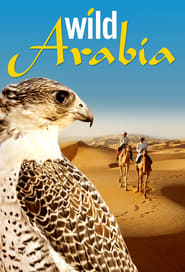
Wild Arabia
Pobierz napisy English
Informacje o wydaniu
Tagi
Podgląd napisów English
Pierwsze 200 wierszy.
The wild places of Arabia are so hot and dry,
that they were virtually untouched by people for thousands of years.
But that ancient balance has shifted in the wake of one dramatic discovery.
Oil, and the wealth it has brought have transformed this land,
bringing the 21st century to the desert.
Arabia's animals now live in a high-tech world.
But Arabia's people are beginning to use their technology to protect nature.
Dawn, at the Al Wathba camel race track,
on the outskirts of the city of Abu Dhabi.
For centuries, the Arabs held
camel races to celebrate special occasions.
But in the last 50 years, camel racing has been transformed,
echoing changes that have swept all across Arabia.
Now, this is one of the richest sports in the world.
The winner of this race stands to win a million dollars.
The prize money at stake means that 21 st-century camel racing
has moved far beyond anything
these camel handlers' grandparents could have imagined.
In today's camel races,
modern technology is in the driving seat.
Literally.
To save on weight, jockeys have been replaced by robots weighing no more than a laptop.
The camel trainers drive alongside.
They scream instructions to their camels
through a speaker on the robot.
The frenzy is added to
by the fevered excitement of the race commentator,
broadcasting live to the nation.
When an extra burst of speed is needed,
each robot carries a whip
which the trainer operates by remote control.
In today's Arabia,
camel training has become a sophisticated business.
Scientific breeding and state-of-the-art training
have turned these camels into elite racing machines.
The average speed of a racehorse in Europe
hasn't changed in half a century.
While the average speed of a racing camel has increased by 30%.
To understand the vast changes
that have swept across Arabia in recent decades,
you have to go back millions of years.
Then, most of the Arabian peninsula was underwater,
forming the seabed of a vast ocean,
the Tethys Sea.
The waters were rich in tiny plants and animals,
which sank to the bottom when they died.
Over millennia,
the decaying bodies of billions of these tiny life forms turned to oil.
Oil was first discovered in the offshore waters
of the Gulf and the Arabian desert in the 1920s.
It was during the Second World War, and the boom years that followed,
that the global demand for oil started to skyrocket.
Arabia had struck it rich.
All across Arabia, the oil men found new supplies of black gold.
Today, close to a third of the world's oil
is supplied by the countries of the Gulf.
That's about three billion litres per day.
Twenty-five major oil terminals lie in Arabia's Gulf coast.
Every year, some 5,000 tankers pass through these waters.
It certainly doesn't look wildlife-friendly.
But in places,
the impact on nature is not as negative as you might think.
The divers who service the platforms
get an exclusive view of some very exotic animals.
The legs of the platforms become encrusted with corals.
These, and the tiny animals associated with them,
in turn provide food for fish.
The rigs are home to dozens of beautiful species.
Like the Longfin pennantfish,
and the half-moon angelfish.
It's not just reef dwellers that are found here.
Fish from the open sea also gather.
Perhaps because the rigs offer shelter
from predatory sharks.
Also, fishing near the rigs is banned,
allowing shoals to grow larger than anywhere else in the Gulf.
This is a popular spawning ground.
The female queenfish swims on her side as she distributes her eggs.
Males jostle behind her to be the first to fertilise them.
In summertime, the water is thick with eggs.
A feast for jellyfish.
This cauliflower jelly is a metre across.
But it's a tiddler,
next to some of the diners attracted to this egg soup.
A whale shark.
At 12 metres plus in length, it's the biggest fish in the world.
A sight to take your breath away.
The diver needn't worry. Whale sharks only have tiny teeth,
and don't eat anything more than a few centimetres long.
Whale sharks feed by filtering food particles from the water.
Though jellyfish are not on the menu.
Every shark is accompanied by a cloud of remoras, or suckerfish,
which are thought to feed largely on the shark's faeces.
For most of their lives, which can be 70 years long,
whale sharks are solitary.
But there is so much food here
that groups of over 100 sharks can gather together.
These sharks are only in Arabian waters for the summer.
Where they go for the rest of the year is unknown.
Even in these waters, much of their life remains a mystery.
They feed for just a few hours every day,
then disappear back into the depths.
What they get up to down there, nobody knows.
The fish life around the oil platforms also provides food for sea birds.
Ninety percent of the world's Socotra cormorants
breed on low-lying islands in the Gulf.
During the breeding season, from March to November,
temperatures on the ground can reach a scorching 70 degrees centigrade.
The cormorants flutter their throats to keep cool.
Despite the heat,
successful colonies like this one off the coast of Bahrain
can be tens of thousands strong.
But appearances can be deceptive.
Although some large colonies do remain,
over half have disappeared
in the last 50 years,
and oil pollution is thought to have played a large role.
The oil industry is a lot cleaner than it was,
but parts of the Gulf remain polluted
because of the legacy of large spills in the past.
This was the site of the world's largest ever oil spill.
During the Gulf War in 1991,
the Iraqi Army set fire to huge numbers of oil wells,
and nearly two billion litres of oil were lost.
No one knows just how many fish and seabirds were killed,
but it certainly had a dramatic impact.
Oil does eventually break down naturally,
but it can take many years for all the toxic chemicals to disperse.
The risk of further oil spills will remain a threat to wildlife
while so much oil passes through the Gulf.
Along the Gulf coast,
the seabed is kept fertile by dust
blowing in from the desert.
That means these shallow waters
are every bit as important for wildlife as the deep seas.
But to exploit the food that's on offer here,
you need the right equipment.
The beak of the lesser flamingo
is the only beak that's built to be used upside down.
It's lined with bristles which filter out prawns and algae from the water.
It's the pigment in this food that turns flamingos pink.
Young birds start white and become pinker with age.
The rhythmic feeding and swallowing looks like a graceful ballet.
But the flamingos aren't above using those beautiful beaks as weapons
to fight over personal space.
And space is a key issue for the Gulf's flamingos.
Many of the lagoons they rely on have been swallowed up
by Arabia's fast-growing cities.
This city centre wetland has been protected by an edict from the very top.
Sheikh Mohammed,
the Ruler of Dubai.
But the pressure on many other wild places
continues to increase.
The population of the United Arab Emirates alone
has risen by nearly 10,000% since the 1960s,
leading to an explosion in construction and trade.
The most extreme expression of the wealth of the Gulf cities
is in Dubai.
Home to more skyscrapers per square mile than anywhere else on Earth.
This forest of concrete, glass and steel
is towered over by the Burj Khalifa.
At half a mile high,
it's 300 metres higher than any other building on Earth.
As well as going up, the Gulf cities are spreading out.
This is The Palm.
It's an extraordinary feat of engineering.
But each frond was created by dredging sand from the seabed.
And on the seabed is a grassland
as rich as the plains of Africa.
The warm, sun-drenched waters are perfect for seagrass,
the only flowering plant in the sea.
Just like the African grasslands,
these underwater plains are home to many predators and prey.
A bluespotted ribbontail ray hunts for buried shellfish.
A blue triggerfish has the same quarry in mind.
Small fish, like this blenny, have to lie low.
An annulated sea snake
two metres long, and one of the most venomous in the world.
The snake can hunt for up to two hours on one breath.
Hole-dwelling blennies are a favourite prey.
Not all the reptiles here are voracious hunters.
Unlike most sea turtles, green turtles prefer a vegetarian diet.
Like the whale sharks, many turtles are accompanied by remoras.
These ones are squabbling over access.
Each remora has a suction pad on its head,
which it can stick to animals to get a free ride.
A turtle shell is easy to stick to, and worth fighting over.
The growth of the Gulf cities threatens the seagrass plains,
and all the weird and wonderful animals that depend on them.
A dugong-
Closest relative, the elephant.
Dugongs eat almost nothing but seagrass.
Using their flexible lips to pull up both the stalk
and the nutritious roots beneath.
A group of remoras are trying to hitch a ride on this dugong.
But he's not tolerating the hangers-on.
Every spring, the Gulf's dugongs gather together
in what are thought to be mass migrations between feeding grounds.
Protecting those feeding grounds from development
would go a long way towards protecting the dugongs.
Wild Arabia subtitles in other languages
More English subtitles for Wild Arabia
- Wild Arabia 2013 S01E02-perfectly resynced · 35 downloads · 2014-12-20
- Wild Arabia 2013 S01E01-perfectly resynced · 34 downloads · 2014-12-20
- BBC Wild Arabia 2013 BluRay 1080p x264-HDL [PublicHD] · 46 downloads · 2014-03-18
- BBC Wild Arabia Ganool · 35 downloads · 2013-08-29
- bbc Wild Arabia 2013 all episode · 34 downloads · 2013-03-09
Komentarze
No comments yet. Be the first to leave one.