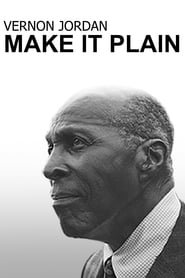
Vernon Jordan: Make it Plain
Pobierz napisy English
Informacje o wydaniu
Tagi
Podgląd napisów English
Pierwsze 200 wierszy.
Vernon Jordan is the Rosa Parks of Wall Street.
The voice of reason or conscience for presidents.
If I ask Vernon,
I'm gonna get something that's meaningful.
I had to listen to how handsome and brilliant and
good he was, you know, it was revolting.
"Vernon Jordan: Make it Plain"
Coming up next.
Funding for "Vernon Jordan: Make it Plain"
was provided by Ford Foundation Just Films.
And by the Andrew W. Mellon foundation.
Good morning, sir.
They got you up early this morning.
Yes, sir.
.
All right.
Call Powell's secretary and see if we're gonna have to respond.
Yeah. All right. I'll talk to you.
Bernard, how you been. Okay?
I'm fine, thank you, sir.
This yesterday's paper? It's all about the election.
Yes.
I'm tired of reading about that.
.
My father was a hard-working man.
He was a mail carrier.
And my father would have been very content
had I finished high school,
married a nice girl, got a job in the post office.
For him that would have been very, a good thing.
And my mother's attitude,
"“That's not good enough for this boy.
He's gonna do things, and he's gonna go places."”
And I believed her.
Our guest today on "“Meet the Press"”
is Vernon E. Jordan, Junior,
President of the National Urban League.
Mr. Jordan has been active in civil rights work
including the NAACP
and the Voters Education Project for twenty-one years.
He survived an assassin's bullet in Fort Wayne, Indiana,
last year.
He has announced his resignation from the Urban League
effective the end of this month to go into private law practice.
But it's obvious today that the civil rights movement is
meeting some kind of resistance or in some way
perhaps has ended.
Is it the same as it used to be?
Is the momentum gone?
Has the civil rights movement ended?
Well, I think that too many people want to measure
the civil rights movement by the drama of the 1960's.
Uh, what has happened is that that drama has changed,
and that drama brought about many,
many significant changes,
it, the Civil Rights Act of '64.
I see Vernon Jordan a little differently than
traditional civil rights leaders.
He understood that you can work to help people
on the ground.
But that work is always going to be operating under an
umbrella of public policy.
You can't help people without changing the
public policies that create the circumstances
in which they live.
We have no full-employment policy.
We have no welfare reform policy.
To paraphrase Winston Churchill,
"“Never have so many expected so much and
received so little."”
.
When I met Hillary in 1971,
first thing she did was tell me about Vernon Jordan.
I had to listen to how handsome and brilliant
and good he was.
You know, it was revolting.
He wanted to make his contribution be part of
the movement but have a unique life.
The advisor to presidents, not just me.
Vernon Jordan was the first person to realize
that a devastatingly effective form of black power would be
top-down integration at the heart of
American capitalism:
Wall Street.
Vernon Jordan has done more to integrate the corridors of
financial power than any African American in history.
Vernon Jordan is the Rosa Parks of Wall Street.
"Rows start chanting, rocking to the same rhythm in
our old rocking chair."
Speech Maker has a big responsibility.
"To the highest aspirations."
It has to be sufficiently entertaining that
people will listen.
But then he has to say something that
makes listening worthwhile...
"Back in the back of his mouth."
Sometimes I sit here trying to figure out what to say,
and I look at my mom, and I say,
"“What do you think about this?"”
Nearly 180,000 illegal immigrants with criminal records
ordered deported from our country are tonight
roaming free to threaten peaceful citizens.
.
Build that wall, Build that wall!
We're waiting on you right now.
Sent you to get me down the stairs.
Everyone sent me to give you the message.
.
So do we have everybody?
Should LB ride with us in the back?
Are you going to drive separate?
Can't you fit three in the, you put three in front?
What?
Nanna, go.
Too many bosses.
.
.
I got the phrase, "Make it Plain" in church.
He said, "“Make it plain, Preacher.
Put it there where we can get it."”
Good morning, Rankin Chapel.
Good morning.
During these times it is tempting to believe that
our problems are particular and that our
situation is unprecedented.
I have come to say to you this morning,
"“We have been here before."”
.
I am reminded of my earliest exposure to American politics.
Growing up in Atlanta, Georgia, in 1943,
there was a gubernatorial race.
And Governor Eugene Talmadge comes on WSB radio,
and he says, "“Fellow Georgians,
I am running for re-election.
I have two planks in my platform: niggers and roads.
I am against the first, and for the second.
This is exactly what President Trump is saying now.
.
Except his two planks are immigrants and jobs.
He's against the first, and claims to be for the second.
So when the executive orders bar people from our shores
based on what they look like or how they worship,
it is hard not to hear the echoes of Strom Thurmond on
the campaign trail in 1948 or George Wallace
in the schoolhouse door in 1963 saying,
"“Segregation today, tomorrow, forever."”
We have been here before.
.
Indeed, because we have been here before,
we know we will endure.
But our journey also teaches us that endurance
is not enough.
Listen. We do not sing, "“We shall endure."”
.
We sing, "“We shall overcome."”
.
A member of the Fulton County Commission
made a speech recently and was quoted in the
Atlanta Constitution as saying that we have to have
annexation so as to prevent
the center city from being governed by, quote,
"“the uneducated and the unfit."”
Now, if that is the basis for annexation,
I'm opposed to it.
Because the uneducated and the unfit that
he's talkin' about is me,
is Maynard, is Leroy, or others of us in the black community
who not only are educated but are well educated
and certainly are well fit to do anything in this
community that any white man can do in this community.
Thank you.
.
Whenever I come to Atlanta,
I come by and say "“hello" ” to my mother.
And now I get to say "“hello" ” to my mother and my brother.
I am proud of having grown up in Atlanta, Georgia.
I grew up in the first public housing project
for black people in America.
My father, very committed to going to work,
gettin' there on time,
and then workin' later that night
as a bartender in my mother's catering business.
Work was a big value in the Jordan family.
I can't remember, after I was twelve years old,
not having a job somewhere.
I was a head dishwasher when I was fifteen years old
at Emory University,
because I was the only one working in the dish room
who could read.
You only came in contact with white people when you got on
the bus and they sat up front and you sat in the back.
I remember catching a streetcar.
And my mother would say,
"“Just because you have to sit back here,
and they have to sit up there,
does not mean that they are better than you.
You are as good as anybody on this streetcar."”
This whole experience, um,
convinced me that, if I got educated,
I could do something about it.
Komentarze
No comments yet. Be the first to leave one.