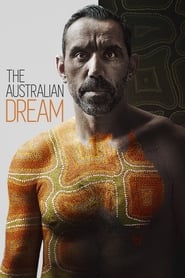
The Australian Dream
Pobierz napisy English
Informacje o wydaniu
Tagi
Podgląd napisów English
Pierwsze 200 wierszy.
Sport has a way of really capturing
the essence of what's happening in society.
'Racism' is a word
that Australians find very hard to deal with.
I decided to stand up last night,
and I'll continue to stand up.
Playing with racial division
is dangerous and stupid.
There's such an uncomfortable truth
in this country,
and yet when we speak about it, people don't like it.
I believe racism is a community issue
which we all need to address,
and that's why racism stops with me.
You don't want to be the person who stands up
and has to fight battles every day of your life.
Who wants that?
And it takes a huge toll.
But it takes a greater toll to walk away.
Every action invites a reaction.
Sometimes that reaction's gonna be extremely nasty.
The force of it was primal.
People didn't want to acknowledge
what was really happening.
He, in the minds of some, had committed the great sin -
the black man who complains.
I can't speak for what lay in the hearts
of the people who booed Adam Goodes,
but I can tell you what we heard.
We heard a howl.
(ON RADIO) Gotta look ourselves
in the mirror here, guys.
We've gotta face our demons as Australians.
We heard a howl of humiliation
that echoes across two centuries
of dispossession, injustice, suffering and survival.
People are not booing you
because you're an Aboriginal.
They're booing you 'cause you're acting like a jerk.
We heard the howl of the Australian dream,
and it said to us again...
.."You're not welcome."
Welcome to sunny Australia Day.
Thousands of proud Aussies
have boarded boats and packed the foreshore,
celebrating on and around Sydney Harbour.
Australians celebrated the big day
in true Aussie style.
It's pretty good to be an Australian.
Happy Australia Day!
You know what? We're very lucky to live in this country.
No better place to live, really.
Every corner of the city marked Australia Day.
We're very fortunate.
It's an amazing place we live, here in Australia.
More than 60,000 people
have celebrated here today.
It's peaceful. It's prosperous.
It's tolerant. It's multicultural.
This is a fantastic place!
The most dedicated among us
have shown plenty of pride
as we celebrate our history, our culture
and our journey as a nation.
Australia Day is Australia's birthday.
I mean, celebrating the best country in the world
and celebrating the day it was organised.
- Having a bloody good time. - Relaxing.
- Yeah. - Yeah.
This is the day that we celebrate
the birth of Australia as you know it now.
But to the Indigenous community,
that's the saddest day for our culture.
(CHANTS) Always was, always will be!
Aboriginal land!
Always was, always will be!
Aboriginal land!
- Always was, always will be! - Aboriginal land!
Dates mark history,
but dates don't tell us necessarily about history.
It's up to you and I!
It's up to every single human being!
Ain't the world sick of all the killing?!
Ain't the world sick of the government
standing over our basic human rights?!
We need to put our focus on uniting!
- Uniting in solidarity! - (APPLAUSE)
Of caring and sharing for one another!
That means we join hands together!
- Thank you. - (CHEERING AND APPLAUSE)
Crazy turnout today.
I think people are getting more and more aware
of what this day actually means to Indigenous people
and there is a need for change in this country,
and it starts with a showing like it is today.
(CHUCKLES) How are you doing, brother?
I was hoping we'd see you here.
(OVER P.A.) I really applaud everybody
who turned up here, both Aboriginal and non-Aboriginal.
We will march under the banner of Invasion Day.
Here we go. One, two, three.
(OVER P.A.) Because you are on the pathway
to telling the truth of history.
And it's when the truth of history is told
that we CAN walk together.
I just wanted to say you're an inspiration to all Australians.
Thanks, mate. Appreciate it.
Ever since what happened when I was playing footy,
I've only ever felt love from community, love from people.
It's great to be able to see those people's faces
and hug them back and say thank you,
because they're the people that have been fighting for me
when people say things about me.
So, yeah, it's nice to be able
to shake their hands, have some photos
and, you know, share the love back.
Yeah, which is good.
Growing up, I knew I was different. I was darker.
I actually didn't know what it meant
to be an Indigenous person.
I did see myself just like everybody else.
It wasn't until high school
where bullies, smart-arses would call me names
that I then went home and asked my mum,
"What does that mean, Mum?"
And Mum goes, "Well, you're Aboriginal.
"They're trying to tease you.
"What I want you to do is whenever they do that,
"you just keep walking away."
My mum is full-blood Indigenous,
my dad is Irish-Scottish,
but I've never really been seen as that white person.
They've always just seen me as, "You're that black kid."
It's a struggle when you're young to be different.
I remember when I was a boy,
sitting in a bath and trying to rub the colour off my skin,
and my mother coming in and asking what I was doing.
I'd say, "I'm trying to rub this black off."
I found out later that's a really common experience
amongst a lot of Aboriginal kids who just want to fit in.
We didn't have much as a family.
Mum was on her own a lot of the time.
When I look back, you realise how tough Mum did do it
with three boys on her own.
We were very energetic young boys too, so...
Mum was strict, that was for sure. She had to be.
We moved around quite a fair bit
to be closer to other relatives,
and then we'd move away from that family
just because Mum just thought it would be best for us boys
not to be around those environments,
which at times were quite toxic.
Every barbecue that we went to,
there was always lots of alcohol
and the adults would always fight,
and we'd always see this physical violence happen
and, you know, it just became accepted.
Our life wasn't the Dreamtime.
It wasn't this idea of some pristine Aboriginal existence.
It was broken glass and mangy dogs.
I think the thing that we have most in common, Adam and I,
was that we were having to make our way in the world
based on what WE could bring to it.
I was such a shy, quiet kid growing up,
who really didn't have a voice.
It would take a long time to make friends,
and then before too long, we'd move away.
But one thing that would help us assimilate
was our love for sports.
My brothers and I, that was the way
that we broke down those barriers every time we moved.
A soccer ball or a tennis ball or a football,
it didn't matter what ball,
it would keep us occupied for, you know, hours on end.
I grew up playing soccer, but when I moved to Victoria,
there wasn't any option to play soccer
in this small country town,
and that's when I had to try out AFL.
Sport in this country really goes to the heart
of what the country is, how the country sees itself.
But here in Australia, the local home-grown sport
of Aussie Rules, or AFL,
it's the thread that binds the nation.
It's a way of life. It's guttural, it's deep.
It's handed down from generation to generation.
There is a tribal nature to it.
It's freestyle, it's challenging,
it's rough-and-tumble, it's courageous
and it's skilful at the same time.
You know, they've got 'the beautiful game', soccer,
you've got rugby, which is 'the game they play in heaven',
but as we say, Australian Rules is the game we play here.
It's said that the game that we now play
was actually an Indigenous game called marngrook.
It's something that our ancestors have played
for thousands and thousands of years.
GILBERT McADAM: It's something that's a part of us.
Whether we like it or not, it's a part of us
just as much as we're a part of it.
I compare it to the land, where they say,
The Australian Dream subtitles in other languages
More English subtitles for The Australian Dream
- The Australian Dream 2019 DVDRip x264-PFa · 20 downloads · 2020-01-22
Komentarze
No comments yet. Be the first to leave one.