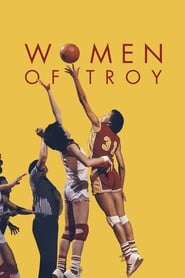
Women of Troy
د English ژباړه ډاونلوډ کړئ
د English سرليکونو مخکتنه
لومړۍ 200 کرښې.
What an incredible room we have here.
Let's give it up for the Superbowl MVP.
Yeah!
You can't overcomplicate everything.
Sometimes, players just gotta make plays.
There are moments when you improv
or even if it's something serious.
What did you improv in Black Panther?
With Kobe, and you knew him a bit, right?
Yeah. That day, I didn't want to play,
but my mom, she was telling me
to play for him and, uh, I hit a shot
I thought I would never hit in my life.
Just felt like he was with me.
By the way, your butt looks great on camera.
-Oh, thank you. -(LAUGHTER)
Announcer: The following is a presentation of HBO Sports.
Doris Sable Burke: So just imagine...
Michael Jordan walks into the Boston Garden.
He puts 63 on the Larry Bird-led Celtics...
and he gets hurt,
and Michael Jordan's career is over.
We have just been teased for what we know is
the formative stages of greatness.
How rare is greatness?
Sustained, exceptional,
outside of anything you've ever seen before in your life.
-(claps) -But Michael hurts himself after that 63,
and we never hear or see from him again.
That's Cheryl Miller.
-(crowd cheering) -Commentator: Cheryl Miller, just a freshman,
perhaps the best female player ever.
Commentator 2: Good afternoon, ladies and gentlemen,
and welcome to Scope
for today's NCAA women's basketball championship
between the Lady Techsters of Louisiana Tech University
and the University of Southern California Trojan women.
For Southern California, at forward
a 6'2" freshman from Riverside, California,
number 31, Cheryl Miller.
Cheryl Miller: I remember being in my early teens,
and I wanted to try out for the boys' team.
The coach wouldn't allow it.
He thought it was kind of interesting or cute.
"Well, if you can beat my son in a game of one-on-one,
I'll, I'll put you on the team."
Well, I beat him one to 21,
and he still wouldn't let me on the team.
Commentator: Cheryl Miller will jump it against Janice Lawrence.
Two all-Americans...
Jackie MacMullan: So part of the evolution
of the women's game is the way you play the game,
and Louisiana Tech played a very traditional style half-court.
And then when you have individual talents come along, like a Cheryl Miller...
Commentator: Cheryl Miller, driving on Jennifer White,
pulls up short...
...that just opens up a whole new realm of possibility.
Commentator: USC in the gold, as Cheryl Miller hits...
Geno Auriemma: That's probably the next evolution
of college women's basketball.
So whatever was before, that's not gonna be good enough anymore.
Commentator: Windham starts to break down the court.
Cheryl Miller, what a jumper. Got it!
Having these two teams clash together, it helped women's basketball.
Commentator: I think these two teams pretty well know
they're the best in college basketball.
This is for all the marbles...
When you look back on that USC team, my goodness.
Cynthia Cooper, the McGee twins, Cheryl Miller--
that's a Hall of Fame lineup right there.
Our team was special, we were kind of a bridge-layer.
We laid the bridge for, for the league,
for the WNBA to come behind us.
We set a standard.
Cynthia Cooper: Every time we stepped out on the court,
we showcased a level of talent
that everybody wanted to be a part of.
We did our part to give these kids an opportunity to pursue a dream
of playing professional basketball.
Commentator: ...the Women of Troy to be number one in the country.
Before the season, they were number one, they dipped to number two...
Female Narrator: The offensive player tries to tap to a player
ready to shoot or pass in for a shot.
Sonja Hogg: It was, at that time,
the powers to be felt that
our girls couldn't take the strenuous activity,
going full court, up and down like the guys.
We started playing, it was half-court,
and you could not cross the center line.
Narrator: Hold the ball in both hands, pushing hand cupped beneath.
As you start to leap, raise the ball...
With men, they started to evolve on their own.
Women, it was up to everybody else
how they could play the game, not them.
Sonja Hogg: It just took time and persistence
and our young girls showin' that,
you know, we could play five-on-five.
Commentator: ...the final game at the AIAW 1973 national tournament.
I grew up in an area outside Philadelphia
where Immaculata College
was really the dynasty in women's basketball.
Commentator: You can hear the crowd.
Boy, are they wild. And Immaculata...
I'm not even sure if anybody, outside the Philadelphia area
in the beginning, knew who Immaculata was,
and then all of a sudden... pew, they became pretty famous.
I think people were like, "Why doesn't it have traction? What is missing?"
Women's tennis was nothing
until that ridiculous publicity stunt
with Bobby Riggs and Billie Jean King
got put on national television.
The feminist thing, uh, how important is that, Billie?
The women's movement is important to me.
The women's movement is really making a better life
for more people other than just women.
The male is king and the male is supreme.
I've said it over and over again, I still feel that way.
Girls play a nice game of tennis for girls,
but when they get out there on a court with a man,
they're gonna be in big trouble.
MacMullan: And then all of a sudden, she won that match.
Crazy right? She was a world-class player and he was a has-been,
but somehow that resonated in our country,
and that vaulted women's tennis into where they are today--
one of the few sports that really does have some, uh, some juice,
if you will, compared to the men.
Well, anytime anything is televised,
that's when you've made it,
and the key is to stay on television--
to earn that spot and to keep it.
And right now, a live basketball game,
a women's basketball game, a new sport in the Olympics.
It's between the United States and Canada.
In '76, I'd been on the very first women's, uh, Olympic team.
That was the first year that they had basketball in the Olympics for women,
and we won silver.
Annie was pretty unbelievable.
I think she's almost four years older than me.
And I remember going to my first try-out camp,
and I asked somebody, I said like, "Who's the best player here?"
And they said, "Her," and "her" was Ann Meyers. She was unbelievable.
Commentator: At UCLA, Ann Meyers was named to the all-America
basketball team four straight years,
the only woman so honored.
But when she signed a contract with the Indiana Pacers
of the NBA last week, some called it a publicity stunt.
Commentator 2: Among most players and veteran observers,
the consensus is that Meyers, dwarfed and outweighed by up to 100 pounds,
is a publicity gimmick.
Ann Meyers Drysdale: I know the media was very harsh.
As much as it was a circus to them ,
uh, it certainly wasn't to me.
Commentator 2: And while she's probably the best female basketball player in the world,
here, that's not good enough.
I had heard that the great players played at Rucker Park.
I was about 12 years old,
and I had put T-shirts in my jacket,
so I would look bigger on the train.
I walked into Rucker Park and some guy came over to me and he goes,
"Little girl, are you lost?" I said, "No, are you?"
And the guy goes, "You sure you know where you are?"
I said, "Yeah. I'm sorry, is your name Rucker?"
And he said, "No." I said, "Good. It ain't your park."
Sable Burke: I remember going out to the park
that happened to be next-door to my house,
and dreaming, for the longest time, of being Kyle Macy.
Commentator: In the corner, Kyle Macy, and he hits again.
Commentator: It's Doris Sable, from Manasquan.
She'll start tonight. Number 11.
Sable Burke: I'd play out an entire game in my head,
whatever you'd see on TV, but I was always a guy,
until I saw Nancy Lieberman,
who was at Old Dominion at the time.
It was the first time an athletic scholarship came into my mind,
because I heard the announcer say,
"These women are on scholarship."
It blew my mind.
I had had over a hundred scholarship offers,
which I needed, because I was that poor kid
who had to get an education.
Of all college sports, none is growing more rapidly than women's basketball,
a game of high scores and high drama.
MacMullan: I think a lot of things changed,
but the most significant thing was Title IX.
And of course, most people think Title IX
was an athletic thing, it wasn't.
It was for equal education.
Broadcaster: It's called Title IX,
the law which cuts off federal funding
to educational institutions
that discriminate against women and minority.
MacMullan: To me, the reason why it took so long
for Title IX to actually kick in was
simply that there weren't enough people that were willing to take a chance
and challenge them to enforce it.
Commentator: It was one year ago in Eugene, Oregon,
that Louisiana Tech celebrated their first women's national championship
by beating the University of Tennessee.
Louisiana Tech, they were the school that you thought,
well, they've really got it figured out.
Women of Troy subtitles in other languages
More English subtitles for Women of Troy
- Women of Troy 2020 AMZN WEB-DL DDP5 1 H 264-NTG · 6 downloads · 2023-08-07
- Web ot blurray,, not sur · 39 downloads · 2022-01-23
تبصرې
No comments yet. Be the first to leave one.