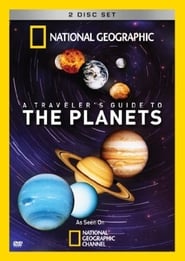
A Traveler's Guide to the Planets
د English ژباړه ډاونلوډ کړئ
د خپرونې معلومات
تګونه
د English سرليکونو مخکتنه
لومړۍ 200 کرښې.
No planet beats Saturn for jaw-dropping
beauty.
Saturn is the most photogenic planet
in all the solar system.
Some of the pictures are to die for.
But the postcards only tell part
of the story.
You know, beauty is only skin deep.
It really is roiling and seething inside.
For ringside action,
soar above the planet with its six-sided storms.
I could just imagine,
what it might be like to like hold a ring particle
in my hand?
Even more mystery surrounds the
impressive Fountains of Enceladus where the
secrets of life might spring from the moons
salty geysers.
CHRIS McKAY: This is the little moon that has it all.
And the samples are coming out in space,
there's a big sign there: Free Samples: Take One.
Then drop by th big orange moon Titan and
descend beneath its smoggy veil.
It would be one of the seven wonders
of the solar system.
Take to Titanian skies for a magical
mystery tour.
The balloon just allows extraordinary
possibilities for exploring Titan.
Drift over propane lakes,
flammable sand dunes and methane streams.
You could actually stand next to a
babbling brook of liquid methane.
I sometimes wonder, what would that sound like?
But nothing is as it seems here.
If you put your hand on a lava flow on
Titan, you wouldn't burn your hand,
you would freeze it.
All this, and more,
and only a billion miles from home.
Ready to take off?
There has never been a better time to venture
where no human has gone before.
To follow in the footsteps of our robot pioneers and
explore the planets of our solar system.
Imagine boarding a flight to Saturn.
What would you need to know before travelling?
The best ringside vantage points?
The must-see moons?
Think of this as your personal guide to the
splendor of the Saturnian system.
A wandering spot of light twice as far as Jupiter
and four times further than the asteroid belt.
Although its a billion miles from home,
Saturn has always commanded our attention.
Saturn is the most
phenomenologically rich planetary system that we
have in our solar system because of its rings and
planet and magnetosphere and an enormous collection
of very diverse moons.
It has it all and I mean even just taking the rings
as an example, in Saturn's rings we find examples of
the other rings around Jupiter,
around Uranus and Neptune, we find them in Saturn's
rings so.
If you wanted to ask fundamental questions
about the solar system in general,
Saturn would be the place you would go.
Narrator: When the Cassini-Huygens spacecraft took off in 1997
for a close encounter with Saturn it was packed
with essential items for long adventure in deep
space: a power generator, extra fuel,
a good antenna, and a moon probe.
Imaging team leader, Carolyn Porco
made sure it took along a pretty good
camera too.
After all, this destination is the pin-up
boy of the solar system.
Saturn might be the second largest planet in the
solar system, but like gas giant neighbor Jupiter,
it's a triumph of show over substance.
Saturn, first of all is a big
giant gas ball, actually it's a big giant ball of
fluid, and the outer parts of it are gases,
atmospheres.
But as you go deeper it gets hotter and hotter and
also gets more pressurized,
and so if you get down deep enough you start
getting sort of fluid effects.
Saturn is a big boy, but pound for pound,
a cosmic lightweight.
It's big enough to swallow 765 Earths,
but as the least dense planet,
it would float on water.
Like Jupiter, this is a world with nowhere to
stand.
With no solid surface, it's hard to measure how
long a day is, though the cloud tops go around about
every 11 hours.
But it's what's up above, not down below,
that will draw the crowds to Saturn.
It's just hard to imagine
anything more beautiful than the ring system.
They're the first thing any kid with a telescope
wants to look at.
Spotting these rings from a backyard
telescope is a treat.
In an instant they can all but disappear when Saturn
tilts toward the sun.
The over whelming thing that you as
a space tourist would be struck by is how
incredibly thin they are.
They are only no thicker than about
one or two stories in a modern day building.
Interested in seeing for yourself?
Strap in Space Travelers, its quite a ride.
After seven years and a billion miles of space,
the Cassini-Huygens spacecraft faces its
greatest challenge on June 30th 2004:
to go into orbit.
First it had to maneuver through an obstacle course
of rings.
The hopes and dreams of thousands of
scientists and engineers are resting on the next
few moments.
Wed been to Saturn twice before with Voyager 1 and
Voyager 2 space craft but rather than these quick
Kodak moments we wanted to take a nice long leisurely
look at the Saturnian system,
the only way to do that was to slow down,
let Saturn's gravity capture us into orbit.
Current speed of the Cassini
Huygens spacecraft is just under
50, 000 miles per hour per hour and increasing as
Saturn's gravity pulls us in.
Cassini presses on,
aiming for the gap between the outer F and G rings,
hopefully clear of orbital debris.
We turned the main high-gain antenna
in the direction the craft would see the ring
particles coming toward it,
so that it would act as a shield.
You are listening to the actual
recording of tiny particles hitting the
spacecraft as it crosses the plane of the rings.
Let's go ahead and switch Canberra over to V two.
So far, so good.
But as Cassini disappears into radio silence behind
Saturn, everything rests on the spacecraft firing
its engine perfectly and slowing down.
Its a nail-biting wait at Mission Control.
Go ahead SOI com.
The Doppler has flattened out!
Ok we have burn complete here for the SOI orbit
insertion burn.
As Cassini emerges proudly from
Saturn's shadow, it turns to cross the ring plane
again.
TODD BARBER MISSION To any potential
inhabitants of the Saturnian system,
your eyes are not deceiving you tonight.
There is a 32nd moon gracing your night sky
tonight and that is the Cassini-Huygens
spacecraft.
With Saturn's 62 known moons ,
Cassini finds itself in good company,
with out of-this-world photo opportunities to
make even a seasoned professional gasp.
Saturn is the most photogenic planet
in all the solar system so I just it, you know,
I mean you couldn't get luckier than me, right?
The ones that, give me shivers, you know,
are Saturn with the rings where Saturn is a crescent
or were looking down on the rings from above and
there's a moon in the background.
They are just artistic compositions.
Here I am leading a team of scientists, our duty,
our job is to take images and we have this
fantastic target.
I kind of have this feeling like I'm the,
you know, standing on the bridge looking out the
window, you know, I have a very strong feeling of
being at the forefront, being out there
exploring myself.
That's the thrill of it for me.
The view from Cassini's bridge exceeds
anything seen before.
Low and behold as we got close
enough it looked like all of the rings dissolved
into all of these individual ringlets like
grooves on a phonograph record for people who
remember phonograph records and it was just
very exciting to try and figure out what was
causing all that structure.
What looked like rather featureless rings in a
telescope now had thousands of features in them.
I was surprised at how surprised
I was at the clarity of the images because I
thought to myself well for Pete's sake, you know,
I've been thinking about this for years,
More English subtitles for A Traveler's Guide to the Planets
- A Travelers Guide To The Planets S01E05 Neptune and Uranus 2010 720p HDTV x264 AC3-AtZLIT · 36 downloads · 2010-08-28
- A Travelers Guide To The Planets S01E03 Jupiter 2010 720p HDTV x264 AC3-AtZLIT · 36 downloads · 2010-08-27
- A Travelers Guide To The Planets S01E01 Venus and Mercury 2010 720p HDTV x264 AC3-AtZLIT · 35 downloads · 2010-08-27
تبصرې
No comments yet. Be the first to leave one.