د English سرليکونو مخکتنه
لومړۍ 200 کرښې.
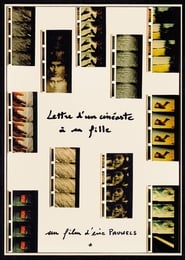
Letter from a Filmmaker to his Daughter
Sound.
Sound rolling.
Image.
Rolling.
Clapper.
Okay.
One day, my daughter asked me...
why I hadn't made a film for her.
...Why I hadn't made a film for children.
I replied to her that I couldn't do it.
It was impossible for me,
because it had been so long
since I had been a kid,
that there was no kid left here any more...
so what would I film?
So I'm embarking on a search mission
to recover it
to try to convey my relationships with others.
Arising from her question and desire
there is a desire to answer her:
to tell her some stories...
stories I had been waiting to tell her.
In Cuba
some filmmaker friends interceded
with the god Eleggua
to help me make this film.
I prepared three small packets
with a little something for each one.
A fish caught in a clothespin,
its eyes pierced through with a needle.
And accompanied with a clove of garlic.
Around the packet,
red and white twine, cinched tight.
Then...
I hid them at day's end
in three nooks along the street
that passes by our house.
As long as they remain,
Eleggua will help you to triumph
over your enemies.
I made a fourth packet
with a key
a sea snail
a chain
these peppercorns
and these dried up raisins.
Wrapped them up in white paper
and hid them away
behind the front door
during that day.
I'd taught you how rivers flow
in the direction of the sea,
thus
I turn them around
in the direction of the South
I marked the spot,
with an arrow
made from eggshell powder.
Finally I lit up a cigar,
its strong smell certain to revive Eleggua
wherever he might be found.
I'm writing to make a film for you.
I'm writing to share with you some images and sounds
that would tell you the stories that I wanted to tell you.
I'm writing to tell you about
the cinema that I love
which is a personal cinema,
very much akin
to painting almost.
A cinema of beholding.
Of thoughtfulness.
Of sharing.
Rather different from the cinema of power
and spectacle.
See this bakery?
I've known this bakery forever
ever since I've been buying bread at this place.
But he doesn't know I make films
because I've never told him.
I'm so ashamed of cinema sometimes
I'd rather be making television.
And his son,
I've known him for a long time,
for as long as his father has run the bakery.
Whereas you,
you met me after I started making films.
Wait!
Wait!
Autumn.
Portrait of Mohamed, the pool boy,
shared for a moment.
Film, for me,
is first of all, looking at another.
The face of another.
But also the traces of others,
as here or elsewhere
in the countryside.
This is where I should film someone who works in the cinema.
So I've made a portrait of Roger.
Though his face has never been seen on the screen,
he spends his time gazing upon others' faces
while he's adjusting their color in the laboratory.
This man,
this doctor whose portrait I made,
was the first man
who touched you.
Held you in his hands.
And when your mother was carrying you,
before our first meeting
and we were shown where you were.
It was a drawing by Leonardo.
The first image of you.
Among all the stories that I want to tell you,
there's the story about the little clay tablet
upon which are inscribed
the first traces of writing.
This was in Sumer
5,000 years ago.
After much searching and
study of
what was written there,
it was finally possible to decipher it:
"Here
there were four goats."
And since the fooprints of birds
left behind in the clay
so closely resembled their writng,
the Sumerians believed that god and the spirits
had left messages behind for them...
...all of which had naturally been scrambled.
"But," they said,
"those who could read these signs are no longer here
"and that's the history of the world."
This glance,
this is the only portrait of the Japanese painter, Utamaro.
The sole image of this man
is hidden behind the woman the painter loved.
Written upon the fan,
the poem tells the story of a snipe,
drawn to the flesh to be found in a shell:
When he sticks in his beak
the shell
snaps itself shut on him
and the bird gets stuck, a prisoner of his own desire.
Then there's also the story of the Sultan
who lived in southern Persia during the tenth century
and who owned
one of the greatest libraries of the epoch:
120,000 books.
Yet since he harbored a nomadic spirit,
he often left his palace
to return to the desert sands.
And since he couldn't bear to be separated from his books,
he loaded all of them onto his camels.
And each one of these camels,
corresponded to a letter of the alphabet.
But what was even more amazing,
was that these camels responded
to the alphabetic names they'd been given.
ا This camel stands for ʾalif
ب This camel stands for bāʾ
ت This camel stands for tāʾ
ث This camel stands for ṯāʾ
ج This camel stands for ǧīm
ح This camel stands for ḥāʾ
خ This camel stands for ḫāʾ
د This camel stands for dāl
ذ This camel stands for ḏāl
ر This camel stands for rāʾ
ز This camel stands for zāy
س This camel stands for sīn
ش This camel stands for šīn
ص This camel stands for ṣād
ض This camel stands for ḍād
ط This camel stands for ṭāʾ
ظ This camel stands for ẓāʾ
ع This camel stands for ʿayn
غ This camel stands for ġayn
ف This camel stands for fāʾ
ق This camel stands for qāf
ك This camel stands for kāf
ل This camel stands for lām
م This camel stands for mīm
ن This camel stands for nūn
ه This camel stands for hāʾ
و This camel stands for wāw
ي This camel stands for yāʾ
More than one hundred years ago,
in the Ural plains
close to the little village of Tabory,
a gigantic meteorite fell.
Weighing more than 4,000 kilos,
the famous meteorite
from Okhansk
has today utterly disappeared.
Once the scientific research had been completed,
there was almost nothing left to discover.
For the next century,
bit by bit,
Letter from a Filmmaker to His Daughter subtitles in other languages
تبصرې
No comments yet. Be the first to leave one.