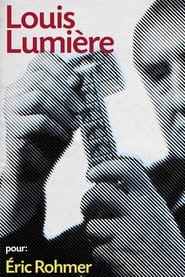
Louis Lumière
د English ژباړه ډاونلوډ کړئ
د English سرليکونو مخکتنه
لومړۍ 200 کرښې.
Jean Renoir, we have just finished watching projections
of a certain number of Lumiere films. Were you already familiar with them?
When I was a young boy I saw some of Lumiere's films,
but I'm not sure they were the same ones we just saw.
In other words, I knew what to expect,
but it's entirely possible that I was watching these for the first time.
In fact, I find them that much more interesting
because at the moment, and I'm not sure exactly why,
other than personal interest, I'm re-reading a rather exhaustive history of France
at the end of the 19th century.
And this book on the history of France, which is also about world history,
is full of illustrations.
There are many excellent photographs.
This includes photographs
of everything that was part of painting and the plastic arts
over the second half of the 19th century.
I must say that the "impression of the era"
that I have felt just now is much greater
than everything I've experienced through reading this history text.
I'm under the impression that the cinema,
and especially a cinema conceived by a man with a very broad vision like Lumiere,
a vision that may very well have been unconscious,
but that's another issue,
but conceived by a visionary like Lumiere,
gives us an impression of history that is irreplaceable.
ROME Wedding Procession of the Prince of Naples
So you are basically in agreement with Lumiere's contemporaries
who thought that cinema was first and foremost a means of reproduction, of transmission,
of creating consciousness, as it were.
No, I believe that my idea goes much further than that.
I have to say that I, too, was almost born at the same time as the cinematograph.
I was born in 1894, and Louis Lumiere built
his first machine for recording moving pictures
in 1895.
So I was basically born with the cinematograph, and I understood very well
what it was going to be, from the start.
I will always remember
when I was seven or eight years old, going to school.
And at this school, a religious school, Catholic,
the headmaster of the school projected films for us on Sundays.
And I'll never forget one in particular, Automaboule.
Automaboule was a comedian.
He had a car that would never start, and when it finally started, there would be explosions.
And then he had a goat skin
that had been starched so that it looked like a hedgehog. And it was very funny.
It made us laugh a lot. But personally, I was amazed.
I was very impressed.
I was really convinced
that I was witnessing a great change
in the history of the transmission of human thought.
And so I never thought that the cinematograph's use was limited
to a simple recording of the present for the future.
I believe I'm going further than that.
Even in cases where the filming is purely documentary, as in Lumiere's case,
there is a sort of recreation of the atmosphere of the period
that seems to fit the description of what today we call a work of art.
Bowls Competition
Game of Bowls
Bathing in the Sea
Shower After the Bath
Sack Race
LONDON - Negroes Dancing in the Streets
LONDON - Women Street Dancers
MEXICO - Spanish Street Dance
Take the Greek civilisation long before the advent of Jesus Christ,
and look at the objects found at Mycenae.
They're all magnificent. Genius.
But no one will convince me
that the least of the Mycenaean potters was a genius.
I'm sure some potters were skilled, some not, some were idiots and others were prodigies.
Nonetheless, everything they made was exceptional.
If you look at something a little closer to us, the first films,
when you look at the first silent films in the history of cinema,
they're almost all amazing. They're almost all...
One is tempted to use the word "genius" when watching them.
But it can't be said that all the directors of those films were geniuses.
No, I simply believe that they were aided
by the fact that the technology was still difficult to use.
The Little Girl and Her Cat
There is genius in cinema, and it is very hard to define.
There are many definitions.
I know that, personally, I wake up each morning with a different definition.
One moment I say to myself that it is simply
an extraordinary means for representing the life of our times.
Sometimes I believe the opposite, that it's a means
of expressing what we have in our imagination.
In the end, I believe cinema is a little bit of everything.
You very clearly defined the two possible approaches in cinema.
The Lumiere approach, which would be a way of expressing our time,
and on the other hand, the fictional art film approach,
which seeks to express our feelings and who we are inside.
Yes, but what seems interesting to me is that the Lumiere approach,
though it seeks to simply reproduce reality,
nevertheless leaves the door open to the wildest imagination.
I believe that there is more fantasy
in certain of the images we've seen projected
than in certain paintings that claim to be works of fantasy.
I find that Lumiere's images somehow remind me
of what Le Douanier Rousseau represents in painting.
That is, they share a very sincere desire
to copy reality, without adding or removing anything,
but in fact, the end result is the creation of a world,
a world that exists in reality,
but which also exists, perhaps with even greater power,
in the imagination of Le Douanier Rousseau or in the imagination of the operators
who went to film the Tsar in Saint Petersburg or the Pope in Rome.
And yet, in these films, there are no elements
of what we would usually call the language of film.
Definitely not. But isn't the language of film a convenient invention
that helps us explain our desires and dreams?
But, for example, there is no choice involved in the framing of a close-up or a long shot.
Everything is from a single perspective.
- How can we be sure of that? - I don't agree.
How can we be sure? Just because the operator,
who seeks to humbly serve reality,
set up his camera without a list of shots
doesn't mean that his choice of angle
wasn't the result of his talent, albeit unconsciously.
In the history of art, it seems to me very important to realise
that many masterpieces were created without foreknowledge of their greatness.
I'll go a step further. Today, when you or I shoot a film,
if we succeed, if the film is acceptable, it's in spite of ourselves.
I'll play the devil's advocate.
When I was little, I read Le Sapeur Camember by Christophe.
And at the end of Le Sapeur Camember, there's a comic strip
called "The Sprinkler Sprinkled".
I don't know if it came before or after Lumire's film, but it doesn't matter.
This comic strip is divided into frames like a contemporary film,
and it's sort of composed of shots.
But we can criticise Lumire's film,
both versions of it, since there are two,
The Sprinkler Sprinkled
for not using these different shots.
The Sprinkler and the Sprinkled
Yes, but personally it doesn't bother me.
This lack of multiple shots doesn't bother me at all.
It's simply a result of the artist's submission
to the facts, the circumstances.
Lumiere's The Sprinkler Sprinkled had to be filmed in one shot
because at that time it was very impractical to reload the film, to change the shot,
because no one had thought of cutting and saying, "We'll start again from this spot
"to continue the story,"
whereas in comics,
it was so much simpler technically because all you needed was a pen or pencil
and a piece of paper to do it.
But I believe that this...
In this case I would choose Lumiere's version
because the technique was more difficult and complicated,
so he was obliged to try harder to make it work.
He is less free. Freedom in art is very dangerous.
But really, cinema began developing historically from the moment
we discovered that the close-up was more expressive than the long shot,
or at least meant something different, and it was decided
that the art of cinema was essentially a sequence of shots.
Of course, because the world evolves, grows older.
We've been having a very pleasant conversation
for the last 15 minutes.
Neither of us is the same as we were 15 minutes ago.
We've learnt a lot of things about each other. We know each other much better.
The Earth has turned, and the world has progressed.
And it's the same thing in every field.
It's impossible to create a film today using the same technique as Lumiere.
Louis Lumiere used a technique, I'm sorry for repeating myself,
which corresponded to the time of horse-drawn busses
and women in long skirts and corsets.
I see Henri Langlois protesting what I said to Jean Renoir,
what I stated to Jean Renoir
about Louis Lumiere not thinking about composition.
I think it's simply an illusion.
An illusion based on the fact
that, currently, films are 1,500 metres in length, or 100 metres, 250 metres,
and we connect pieces end to end.
The problem faced when cinema was first discovered
was that they only had a certain length of film.
And so you had to compose something using only a certain number of metres of film.
When you study Lumiere's films very closely,
they look very spontaneous.
The camera is set up on the street, we see everyone going by,
and if there's anything touching or impressive in the film,
we say it must be chance. But it is not the product of chance,
because, for example, there are takes by Lumiere where it is obvious.
When you see, for example, in one of Lumiere's films, by chance...
There's the question of timing.
The film has to be a certain length because that is how long the take is.
And so at the beginning, seemingly by chance, a tram enters the frame
from the right.
Then there's a lot of movement.
And then it ends with a tram entering the shot from the left.
Do you think that's by chance? Not at all. They scouted it out,
watched for a while to see how things happened,
they chose the best angle for the take,
and they achieved something so extraordinary, something we have forgotten,
that in those few seconds
they managed, without moving the camera, to fit into a single take
the greatest number of types of shots.
There are long shots, close-ups, American shots, distant shots
and movement to bring them all together.
And that is not chance, it's science.
Another take to explain this to you. They set up the camera.
There's a carriage. It's an inauguration. The carriage stops.
تبصرې
No comments yet. Be the first to leave one.