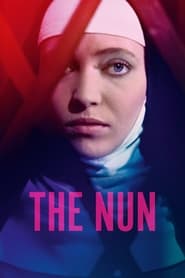
The Nun (La Religieuse)
د English ژباړه ډاونلوډ کړئ
د خپرونې معلومات
تګونه
د English سرليکونو مخکتنه
لومړۍ 200 کرښې.
Restored and digitized with the support of the
Technical means
This film was restored by
in conjunction with La Cinémathèque française
backed by the Franco-American cultural fund
Loosely based on a controversial book
by Diderot with the same title,
this film is a work of imagination.
It does not claim to paint a true picture
of religious institutions,
even in the 18th century.
The audience will themselves place it
in that double fictional
and historical perspective
and refuse any hasty, unfair
and of course indefensible generalisations.
1760.
Denis Diderot was 47 years old.
The editor of the Encyclopédie wrote La Religieuse in just a few weeks.
In the 18th century, convent life often retained
only the outer signs of a truly religious life.
In exchange for a boarding fee, many bourgeois and aristocrats
shut their girls up in convents until they wed.
Widows and single women would often retire there.
Abbeys were bought as notarial practices are today.
They call that a "living".
Superiors were mostly chosen for their noble birth.
Very young abbesses
20, or even younger - were sometimes in charge of large households.
In many convents,
receptions and shows were frequent.
Rules were loosened
or lost meaning through contact with that worldly life.
Diderot took inspiration from real characters for his novel:
Louise Adelaide of Orleans, daughter of Philippe the Regent,
who acquired the title of Abbess of Chelles in 1719,
served as a model for the Mother Superior of Saint Eutrope.
As for Suzanne Simonin, the nun, she is the image of Marguerite Delamarre
sent to a convent at the age of three to increase her father's fortune.
Having appealed against her forced orders in 1752,
she lost her case and remained cloistered until her death
in the Abbey of Longchamp which is in Diderot's story.
And surely La Religieuse is like the comment
on these words by Bossuet:
"Do not enter rashly into such a high calling.
"And if you don't feel extreme disgust with the world,
"sister, leave that enclosure."
Setting the girl up would cost money:
that is reason enough
to devote her to religion.
She shows no sign of a calling:
the opportunities given by the situation
and necessity will have to suffice.
We lead the victim to the Temple;
we present her to the Priest
and she becomes a sacrifice which,
far from glorifying God and pleasing Him,
becomes execrable in His eyes
and excites his vengeance...
Georges de Beauregard introduces
Denis Diderot's La Religieuse
Marie-Suzanne Simonin, do you promise to speak the truth?
I promise.
Are you here of your own free will?
Yes.
Marie-Suzanne Simonin,
do you promise poverty, chastity and obedience to God?
No, Monsieur.
Marie-Suzanne Simonin,
do you promise God poverty, chastity and obedience?
No, Monsieur, no.
My child, listen to me.
My Lord, you ask me if I promise God
chastity, poverty and obedience.
I heard you. My answer is no.
Ladies and gentlemen, and especially you, my parents,
you are my witnesses.
I am here under duress.
I pretended to go along with my parents' will,
in order to protest publicly against the violence done to me.
I have no vocation. I do not wish to obey my parents.
Dear parents, do whatever you will with me, anything...
except a nun!
I don't want to be one and I won't!
No! No!
I am still your child.
Let go, Suzanne.
Let go.
You weep
but you behave ungratefully.
You know what we have lost.
Your sisters are in trouble;
marrying them off ruined us.
Your father is a good lawyer, but not a banker.
We cannot give you a decent dowry.
You took the veil;
you entering the convent was more expense.
Everyone heard about your profession of faith.
Your public refusal caused a scandal.
Well?
Nothing to say?
What will you do with me?
Follow me.
Father, you have been our confessor for 20 years.
Please talk to her.
I have never taken people into religion.
Only you can convince her.
God calls us to this state;
it is dangerous to add our voices to His.
Have you found the judgement?
I am looking.
For three months, Suzanne has been shut in her room.
She knows there is no hope.
I'll be done with this.
Will I see my mother today?
Can I ask to speak to my father?
May I at least write to them?
You know you cannot.
What day is it?
Second Monday of the month.
Let's be frank.
I gave everything for this one.
I do not see what I can do now for the other.
She must reflect.
What can I do with that girl?
She cannot work with her hands.
What freedom would she have in the world?
Even less than in religion.
You know what happens today to unmarried and penniless girls.
- A hospice. - Or prison, or an asylum.
I am only asking you to see her, you know.
I shall speak to her.
Come here, my child.
Do not be afraid to open your heart.
Come here.
I have nothing to say.
I took orders late in life.
I might understand you.
My mother hates me.
My child, pity your mother more than you blame her.
She is a good soul.
- It is against her... - Who is forcing her?
She brought me into the world.
Why am I different from my sisters?
- You are. - What do you mean?
Come on. Try to be patient about your fate.
Sit down.
Let us be silent for a moment.
No. No, Father. I cannot pray any more.
- I have tried and tried, but... - My child.
I was prettier than my sisters.
It distressed my parents.
I was nearly 15.
A young man was courting my sister.
I realised he liked me.
I warned my mother.
Four days later, I was sent to the convent.
I stayed there for two years, until my profession of faith.
They say my mother and father are decent people.
People like them, respect them.
So why, for me...?
Daughter,
I see there are things you need to be told.
For a long time, I urged your mother
to tell you the secret; she never resolved to.
You know how she is.
She believed she could convince you anyway; she was wrong.
She asked me to tell you
that you are not Mr Simonin's daughter.
I thought not.
Given that, Miss,
how can you have the same place
as children who are not your sisters?
If she can confess to your father...
Who is my father?
That, I have not been told.
Your sisters have been greatly favoured.
Everything was done to reduce your fortune to nothing.
If you lose your parents, you will no longer be much.
You reject the convent.
Maybe you will regret not being there.
I ask for nothing.
I have said what I had to say.
Now it is up to you to think it over and decide.
Father...
One more question.
- Do my sisters know this? - No, they do not.
And they took everything from their sister?
That is who they think I am.
I do not advise you to count on them.
They have children, that will be an honest pretext
to reduce you to begging.
And the bread you are given is hard.
If you will hear me,
make your peace with your parents.
Do what your mother expects of you
and enter into religion.
You will have a small allowance.
Your days will be, if not happy, at least bearable.
Go along, my child. You are sensible and good.
The Nun subtitles in other languages
More English subtitles for The Nun
- La Religieuse 1966 Eng · 99 downloads · 2024-08-26
- La Religieuse 1966 1080p JPN Blu-ray AVC LPCM 2 0-SEV · 110 downloads · 2016-02-20
- The Nun (La religieuse) 25 000 FPS DVD · 47 downloads · 2013-05-12
- La Religieuse · 53 downloads · 2008-10-11
تبصرې
No comments yet. Be the first to leave one.