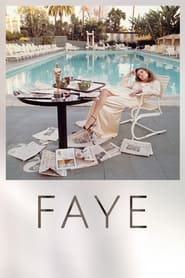
Faye
د English ژباړه ډاونلوډ کړئ
د خپرونې معلومات
تګونه
د English سرليکونو مخکتنه
لومړۍ 200 کرښې.
Can we shoot?
We need to shoot! I'm here now, come on!
I really would like to shoot. I really... I'm sitting here,
- I really would like to shoot. - Laurent Bouzereau: Yes, we are.
Okay. Uh,
- you tell me when you're ready, Faye. - Ready.
Are we rolling?
We're rolling.
Here's the amazing thing.
Today is March 29th.
Now, on March 29, 1977,
- you took this picture. - Oh, wow.
Yeah.
Show the picture to camera.
It's exactly 45 years ago.
Wow. It's an awfully long time.
When you look at this picture today,
what do you see?
Well, I remember the moment.
I had won the Oscar for "Network" the night before,
and closer to 5 o'clock,
Terry O'Neill tried to persuade me
to come to the pool at dawn when the sun came up
because he didn't want a traditional kind of picture
with the actress standing with the Oscar and that.
But he staged this.
What I loved is that,
"Is that all there is?" was kind of the theme to it.
Because at my feet are all of the morning newspapers
announcing the wins and also a posthumous Peter Finch Oscar
because he passed away three months earlier.
So, it was bittersweet and this is a classic place,
Beverly Hills Hotel and swimming pool.
So anyway, it was an amazing night.
It was really crazy.
Very, very, um, memorable.
Do you know me?
Well, uh,
I think I would've remembered.
Have we ever met?
Faye Dunaway in one word...
"un-dismissible."
Well, I'm Miss Bonnie Parker,
and this here is Mr. Clyde Barrow.
We rob banks.
Faye's a legend, an inspiration,
a force of nature,
a literal
and absolute genius
of an acting artist.
And Faye is my chum.
It's a funny, dirty, little job.
Alchemy.
It's the relationship between a lens and a face.
You can't pigeonhole her as a movie star.
You see a Faye Dunaway movie,
and you see something completely different.
You don't see Faye Dunaway. You see Bonnie Parker.
You see Laura Mars.
You see Wanda Wilcox. You see Joan Crawford.
Hollywood royalty.
Mesmerizing.
You know, it's very rare that you get somebody
who's so striking-looking that's got acting chops.
And she had a confidence because Faye knew she could bring it.
- I'm scared! - So am I!
- What are you scared for? You've got the gun! - Yes!
My mom is a very strong woman,
and I think that's one of the reasons
why she was so good at acting
is because she would keep her emotions inside.
And then when she had to act a scene, she would let it out.
I told him, Lou!
I've been telling him every day for a week!
I am sick of telling him! Now, you tell him!
If you go back
and you watch all of my mom's movies,
I think she's all of her characters in one,
in real life because she put a little bit of herself
into every character,
and she put a little bit of her character into herself.
I was never arrogant that way.
I knew I needed a look, and I got one.
Faye Dunaway in one word?
Complicated.
Who's one of the worst people you know in Hollywood?
That I worked with?
Or that you wouldn't wanna work with again. If...
One million dollars, Faye Dunaway.
Everybody you can put into this chair
will tell you exactly the same thing.
You will read people
with their superficial comments about Faye.
She's volatile, she's difficult, temperamental,
aggressive. Yeah, well,
that's also true.
But she's equally fastidious,
caring, deeply caring,
and she has an eye
and a temperament for detail that I think tips that balance
into what people call difficult.
And I think before you start to make superficial judgments
about someone like Faye,
you have to look deeper at the artist.
This is the worst seat in the world.
I'm not happy with anything here.
I wanna sit at an angle.
I don't wanna sit straight on.
So the shoulders are there? Does that look better, darling,
- or shall I come straight like that? - No, looks nice.
It's the work, you know? It takes what it takes.
People think it's simple and, "Oh, this and that. Be real."
But there's so many details.
I do a makeup, and I do a hair.
You know, you have to get there early enough
till you have the exact time. So, if you get there there,
and you don't have the time, you're nervous and frantic.
If you come early you have your preparation,
you have an organization. It's just a lot of stuff
that has to fit together like a puzzle.
I need a glass of water, not a bottle!
Got it. Hold on.
And it's supposed to liberate you.
And it's difficult because it's tense, all of it.
- Alright, Faye, put down the book. - Speaker: Put down the book.
In a minute!
So, now you see what it is
about me.
Not easy.
It's not easy, but it gets the results.
We'll see, we'll see.
I just seem to always have wanted to be an actress,
or I always knew that that's what I wanted to pursue anyway,
you know, from a very early age in the South
when I was 5, 6 years old. And I'd always grown up
feeling that I could achieve
what I wanted to achieve if I worked hard enough.
I mean that is, in fact, the American dream, isn't it?
I was born Dorothy Faye Dunaway
on January 14, 1941.
Dorothy Faye is the little girl with brown hair
who stood in the middle of a dirt road in Bascom, Florida
and played hopscotch and mother-may-I.
But I haven't been Dorothy Faye for a long time.
She might've been written out of the script.
We hope not, right? She hasn't been.
She's very important to me,
and that's who I wanna go back to sometimes.
But, Faye is someone that perhaps I have created.
It's a persona that is related very much to my work.
It's specific to my career.
That's the actress, I suppose.
And Dorothy Faye is that little girl from the South.
That still is a deep part of me,
and I have to stay close to
because she's, you know, integral to who I am.
My mother and my father,
they were young when they married,
and I don't think they had a very good relationship
because he had the disease of alcoholism.
True, serious illness,
and he wasn't bringing money home.
He might've been drinking too much even then.
So, my mother sent a letter to the War Department,
asking them to draft my father, and they did.
He was a cook. He worked in the kitchen.
And they sent the check to her every month,
and we were able to pay off bills and pay off the house.
But, my mother had a great sense of doing things right
and also taking things into her own hands
when they didn't work. That's what I learned
by being with her and seeing how she operated.
And that's what it takes to make things work.
My mom was very close to Grace,
and we would go to her little farm in South Carolina,
and my mom was always trying to, like, take care of her.
I've always been close with her.
I mean, she taught me everything.
She had backbone, and she fought very hard
in a very difficult life with very little money,
and difficulties with my father.
And my mother always wanted more.
So, she taught me to achieve.
She taught me to do the best, to get straight A's,
to work hard, no matter what.
And I'm glad that she did.
But it was also pretty demanding.
I was trained to be the best, and I was.
I got some... an idea in my mind,
and I was gonna try to achieve it. That's my mother.
- We'll start with that guy. - Oh Lord.
Well, this is me and my beloved brother, Mac,
the sweetest boy in the world, except for Liam.
I always thought he was so sweet,
and I was such a kind of go-getter, after my mother,
that I felt guilty and I felt I wish I were more like him.
My brother, his name was Mac Simmion Dunaway,
and he's younger than me, two years younger,
and he was, I thought, a lot sweeter than me.
But I envied that.
Faye subtitles in other languages
تبصرې
No comments yet. Be the first to leave one.