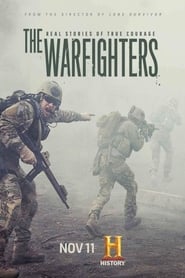
The Warfighters
د English ژباړه ډاونلوډ کړئ
د خپرونې معلومات
تګونه
د English سرليکونو مخکتنه
لومړۍ 200 کرښې.
Sometimes I get asked,
"What does it take to win?"
And that is, will.
You have to have the will to kill
because you cannot win without killing the enemy.
And the other side of that coin
is that you have to have the will to die.
If you're gonna go to war, you've got to make sure
that you have those two types of will
in the deepest part of your soul.
But if you believe in what you're doing,
and the will is there,
then victory is always possible.
And in fact,
if you have the true will and the true belief,
victory is imminent and undeniable.
Insurgents and Jihadists have found a home
in Iraq's sprawling Anbar Province.
and have turned it into a hotbed of violence.
My name is Leif Babin. I was a lieutenant,
a platoon commander of Charlie Platoon
that SEAL Team 3 Task Unit Bruiser.
Right away, we wanted to take our performance to the next level,
and so we trained harder than anybody.
Every, every type of operation you could think of
out in the deserts, you know, shooting our weapons,
patrolling on foot, jumping out of planes,
and we had an awesome group of guys
that, that were just fired up,
ready to go get after it.
We just had a, a solid level of trust
across the board, up and down the chain of command.
It's not about actually doing the skills
and all the, the tactics perfectly.
It's about knowing each other,
and that's where, where everything really gels.
When you're with these guys 24/7,
for months at a time,
it's, it is family, it's the same thing.
It's a group of friends that hang out together,
live together, work together,
work out together, go out together,
and do everything together.
That's, that's what a SEAL platoon is.
Marc Lee joined our platoon
after we'd been working together for about six months.
Right away you could tell he a presence about him.
You knew he was a smart guy, a hard worker,
a very strong Christian guy. His faith was very important to him.
He came in, and he's just a big dude, quiet, humble
and pretty fun loving, you know,
liked to have a good time.
Me and Marc, we were in the same boat crew
going through BUD/S and Hell Week
and all of that stuff.
You really get to know people
when people are mad and tired and hungry.
He would always be making jokes.
Didn't matter how much we were hurting.
He was just absolutely hilarious.
He liked to push the envelope on stuff.
Marc showed up to Charlie platoon,
he very boldly stated that, "I've never been choked out before."
And so Chris Kyle and a couple of other guys
immediately helped him out to make sure that that, that was not the case.
Marc immediately was one of us
and a big part of our platoon.
We did a trip, where we were up and around Las Vegas.
And when he would gamble, he would get everyone all riled up.
He would always be the loud one at the table.
You know, when you're playing Blackjack,
the dealer busts, and everybody else wins.
If the dealer busted, Marc would just throw up his arms
and, "Everybody is a winner! "
Everybody is a winner!
Everybody's a winner
when, you know, when the dealer busts.
Then they bring in another dealer because like,
we're winning, we gotta bring another dealer in.
And he was like, "They're bringing the iceman in."
He would start clapping and cheering, and he would get everyone all riled up,
and people would start betting more money,
and it was just create, create a lot of fun.
And, that's, you know, that's kind of what Marc was like.
I remember so much Marc trying
to explain to me the brotherhood.
Like "Yeah, yeah, I get it, you're close to these guys.
But as close as your brother you grew up with for 28 years?"
"Yeah, mom, I'm that close."
You know, Marc had a thing about him.
Everybody loved Marc.
He was completely compassionate
to everybody.
He was that personality that was bigger than life,
not that, you know, we didn't go through our share of trials and tragedies,
but he could just take a situation in life and make it funny.
Two years in a row his friends voted him Class Clown.
He always brought joy and humor
into the people that he knew.
He had a lot of layers.
He was funny and silly. He was very serious at times,
athletic, like he, he looked like a Greek god.
He loved soccer. He actually played professionally
before he blew out his knee.
And then he went to school to become a pastor.
So, he was a very religious man.
And then he realized, "no, I want to become a Navy SEAL."
We were completely in love. We knew we wanted to spend
the rest of our lives with one another.
I remember when he told me
that he was going to Ramadi, Iraq.
It was just this feeling of, of sadness.
It's a six-month deployment,
and the truth of the matter is,
is that they're gonna be in harm's way.
But he believed so much in what he was doing.
And as much as Marc felt invincible,
there is always this back,
back, you know, burning,
burning feeling of, of like as, you know,
is this gonna be the last?
From Iraq tonight, we have an exclusive look
at what has become the single most dangerous city
in that country for US forces.
An hour west of Baghdad,
terrorists hold the city of Ramadi in a deadly grip,
fueling the insurgency and taking a terrible toll
on the several thousand American troops
who are trying to hold them at bay.
In 2006, Ramadi was the worst part of Iraq.
It's the capital of Al Anbar Province,
the biggest state in Iraq.
It was a total war zone.
We were facing, in what I would deem,
as evil an enemy as the US has, has ever faced.
Back then, the enemy was identified as AQI, Al-Qaeda, Iraq.
You're talking about, you know,
some of the same people who are now ISIS.
When you see the kind of things
that they do to people and,
and just the torture and rape and murder,
talking people into becoming suicide bombers.
Anyone that stood against them,
I mean, they're gonna cut their head off
and make an example out of them,
and, and they're absolutely brutal and ruthless.
And Ramadi was kinda the epicenter
of their insurgency.
The Marine Corps and Army units that were there,
they were doing their utmost to beat back insurgent attacks
and defend their bases,
but they certainly took a huge amount of casualties.
I think they had 94 guys killed in action
and several hundred wounded, you know,
in the 15 months that they spent there.
The guys that were there fighting before us,
they had kind of surrounded the city.
but there was no major combat outposts inside the city.
The conventional forces,
all the things they wanted to do
building COPs, you know, combat outposts.
And forging relationships with the local populace
and the sheikhs and all that, that's kinda hard to do
when you have an untouched enemy force
who is just running rampant
throughout that area.
The other problem is the urban environment.
The enemy can fade in and out of the populace in a split second.
All they have to do is put down their weapon, and they're a civilian.
The IED threat is completely,
you know, horrible.
Improvised Explosive Device. It's a roadside bomb.
In an urban environment,
everything is man-made, so anything could be an IED.
They would make IEDs look like curbs
and look like brick walls
and look like mailboxes or whatever.
Among military commanders, there is a growing sense
that defeating the enemy there
may be impossible.
There was a Marine Corps intelligence report
that was leaked to the press
in the spring of, of 2006.
US forces are militarily incapable
of defeating the insurgency in Ramadi and Al Anbar.
It was described as a, as an unwinnable situation.
What other people see as impossible is possible
with the right folks who believe in the mission.
Guys like Marc Lee really believed in this mission,
that we can, we were trying to liberate the Iraqi people
from an evil insurgency.
I, I totally believed in what we were doing there.
I mean, you know, somebody has to kill the bad guys.
And I think we were the best suited for that.
- When we showed up, - Ramadi,
was a violent terrorist stronghold, a total war zone.
TIME Magazine had called it,
I think, the most dangerous place in the world at the time.
It was bad there,
but I remember the smell a lot.
More English subtitles for The Warfighters
- The Warfighters S01E09 HDTV x264-W4F · 8 downloads · 2017-11-15
- The Warfighters S01E09 HDTV x264-W4F · 10 downloads · 2017-11-15
- The Warfighters S01E06 HDTV H264-W4F · 37 downloads · 2016-11-13
- The Warfighters S01E05 HDTV H264-W4F · 24 downloads · 2016-11-13
- The Warfighters S01E03 HDTV H264-W4F · 32 downloads · 2016-11-13
- The Warfighters S01E02 HDTV H264-W4F · 38 downloads · 2016-11-13
- The Warfighters S01E01 HDTV H264-W4F · 38 downloads · 2016-11-13
تبصرې
No comments yet. Be the first to leave one.