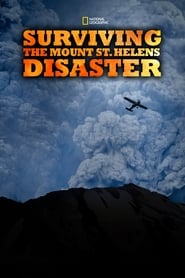
Surviving the Mount St. Helens Disaster
د English ژباړه ډاونلوډ کړئ
د خپرونې معلومات
تګونه
د English سرليکونو مخکتنه
لومړۍ 200 کرښې.
Narrator: An unforgettable day in america's history.
Officer: We had a major eruption occurring at 8:32
Approximately this morning on mount st. Helens.
Man: The top of the mountain seems to have been blown away.
Man: This was a game changer.
Narrator: The eruption of mount st. Helens
Was the first of its kind ever filmed.
The volcano unleashed four super-sized cataclysms.
First, the world's largest landslide ever recorded.
Then, an explosion equivalent to 500 hiroshima bombs.
Man: It was like you were being cremated alive.
Narrator: Lethal mudflows.
Sheriff: Get off the bridge!
Come on! Get over here!
Narrator: And enough ash to cover 12 states.
40 years on, digitally remastered archive,
Eyewitness accounts, and animated photographs
Reveal why this was the usa's deadliest volcano.
Man: I really believed I had no chance of living through this.
Narrator: Welcome to mount st. Helens, before 1980.
Announcer: A haven for recreational activities
And youth camps.
A place as close to heaven as one could get.
Narrator: The snow-capped giant
Had slumbered for over a century,
But that was about to change.
Anchorman: There are rumblings of something big
About to happen in washington state.
Narrator: Deep beneath the northwest corner of the u.S.,
The giant was slowly waking.
Reporter: An earthquake hitting 4.3 on the richter scale
Shook the mountain.
Reporter: The volcano is spewing a steady stream
Of ash, smoke, and steam.
Reporter: And experts say a major explosion is overdue.
Narrator: The question was,
When would the big eruption arrive?
Don swanson, a volcanologist
With the u.S. Geological survey,
Was sent in to assess the danger.
Don swanson: We're really sort of fumbling
As to exactly what this means.
You could see that there were cracks surrounding the crater,
Where the summit had collapsed.
The top of the volcano was a very unstable place,
And it was breaking up.
Narrator: Mount st. Helens had erupted before.
It lies on one of the earth's most geologically active zones.
Announcer: A huge linear fault system
Melts millions of tons of rock.
Announcer: Every so often, magma rises up into the mountain,
And the mountain is ready to erupt.
Narrator: Within a day of the first sign of ash,
Scientists were monitoring the volcano around the clock.
A state of emergency was declared.
Dixy lee ray: Don't go to mount st. Helens.
Don't try to get as close to the mountain as possible.
Reporter: Roadblocks have been set up.
The public is prohibited from entering.
Woman: How would you feel?
We're paying taxes, and we'd like to use our property.
I'm not afraid!
Narrator: Deputy sheriff george barker was on duty.
George barker: Right now people are coming in at their own risk,
And they're signing in and out at this checkpoint.
I was a brand-new deputy, and now all of a sudden
They were talking about eruption and poison gases
And lava and this kind of thing.
It was all unknown, and it was like, wow,
A real adventure.
Narrator: Authorities marked out a restriction zone
And evacuated hundreds of people.
Man: You're gonna have to go, and the faster, the better.
One time, you gotta go!
Narrator: But one resident wouldn't budge--harry truman.
He lived at spirit lake, inside the restriction zone.
Harry truman: Spirit lake and mount st. Helens is my life.
Folks, I've lived there 50 years.
It's a part of me.
Barker: Truman thought, this is gonna be lava
Coming rolling down the side of the mountain.
You simply run away from it, you drive away from it.
Truman: I'll get in my yacht
And get out on the lake,
Get away from that lava
If it ever comes down this far, yeah.
Narrator: Most of the world's volcanoes erupt upwards,
Out of the top.
But instead, mount st. Helens would erupt
In a way rarely witnessed before.
On the north face, geologists noticed an ominous bulge.
In a matter of weeks, it would expand by 450 feet.
Swanson: These changes were unprecedented.
There was more and more magma intruding into the volcano
And pushing the north side outward.
It was a really hectic time.
Narrator: Don's team included a young geologist
Called david johnston.
David johnston: Its historic eruptions
Have been very explosive.
The initial phases would produce ashfall
All over southwestern washington.
Narrator: David would monitor the bulge
From a ridge called south coldwater.
Swanson: We were hoping that our monitoring
Would show an increase in rate of the bulge movement
Or something that we could use to say
That the volcano was really building up to a culmination,
But we never saw that.
Narrator: For five weeks,
The volcano intermittently rumbled
And spewed gases and ash.
Reporter: As scientists fumble for the truth,
Everyone else is fumbling to get in on the act
And make a fast buck.
Reporter: It draws people of all sorts.
They come filled with wonder.
Man: That was just unbelievable!
Man: I wanna see it blow.
it'd be great.
Reporter: Sightseers crowded remote logging roads for a view.
Those who tried hard enough could always find a way in.
Narrator: The eruption would arrive with little warning
And reach far beyond the restriction zone.
Geologist dorothy stoffel headed into the sky,
Towards mount st. Helens.
Dorothy stoffel: It was just a beautiful day.
It was so serene.
Narrator: She'd been granted permission
To photograph the volcano from the air.
Stoffel: I thought, it's become dormant again,
And we missed all the activity.
But on the north side of the mountain,
We could see water from melting snow and ice,
As though the mountain was weeping on the north side.
We just had no sense of anything going to happen.
Narrator: The meltwater had fast-tracked the volcano
To its deadly destiny.
On the ground, 7,000 feet below dorothy,
A student, catherine hickson,
And her husband had been camping.
Catherine hickson: We just had this beautiful panoramic view
Of the volcano.
Really not much was going on.
The volcano was very quiet,
But the dogs acted very strangely.
You often hear about how animals react
Prior to either an earthquake or an eruption or whatnot.
Narrator: Catherine and her husband
Were nine miles to the east of the volcano.
Resident harry truman was at his home on spirit lake.
David johnston monitored the bulge
From south coldwater ridge.
David and catherine were
Outside the restriction zone.
Harry was inside it.
The u.S. Geological survey in washington state.
Swanson: Suddenly the seismographs went bonkers.
The needles just started jumping all over the place.
Narrator: An earthquake hitting 5.1 on the richter scale
Ripped through the volcano's core.
Swanson: I'm not sure I've ever been so excited before.
Narrator: The quake set off a chain of life-changing events,
All of them unstoppable.
The volcanic monster had woken.
Making one last pass in her plane,
Dorothy photographed the first moments of disaster.
Stoffel: Nothing is happening, and then all of a sudden,
The ice began to fall into the summit.
And I got so excited.
Narrator: But dorothy was right above a volcano
About to unleash its first cataclysm.
Stoffel: The instant that I took that second picture,
The most bizarre thing happened.
We could see this fracture opening up.
Narrator: She photographed the moment of collapse.
Meltwater had penetrated the north face,
Helping to destabilize the bulge.
Stoffel: The whole north side of the mountain,
It became almost fluid,
Like someone was slicing the mountain in half.
Narrator: Catherine hickson's husband also took pictures.
They reveal the start of the largest recorded landslide
On earth.
Hickson: The landslide was an amazing event.
The mountain is disintegrating and is moving.
It was like watching, on a grand scale,
This giant wave.
Essentially the mountain falling apart before our eyes.
Narrator: 3.3 billion cubic yards of rock and ice
Hurtled down the volcano.
Stoffel: You expect mountains to erupt.
You don't expect mountains to fall apart.
Narrator: The landslide triggered
Something far more powerful.
Stoffel: I thought we were dead.
Narrator: An explosion burst out of the north face.
Stoffel: I was looking directly down on the blast coming up.
I really thought we were going to be blown apart.
Narrator: Photographers captured the instantaneous
Surviving the Mount St. Helens Disaster subtitles in other languages
More English subtitles for Surviving the Mount St. Helens Disaster
- Surviving the Mount St Helens Disaster 2020 WEB-DL DSNP · 7 downloads · 2022-04-29
تبصرې
No comments yet. Be the first to leave one.