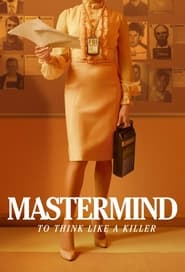
Mastermind: To Think Like a Killer
د English ژباړه ډاونلوډ کړئ
د خپرونې معلومات
تګونه
Download English Subtitle Files for Mobile (2)
د English سرليکونو مخکتنه
لومړۍ 200 کرښې.
My earliest memory is
my mother working on that typewriter.
And its keys were, like, super loud.
It was just a blur of machine gun sound, like...
Typing, typing, typing, typing, typing.
-It was... -Just like...
-No... -No.
You'd never know in the house growing up what she did for work.
Good morning, Mrs. Burgess. Nice to have you with us.
Dr. Ann Burgess.
Dr. Burgess, it was my experience...
Well, I guess I knew that my mother did things that were different.
You know, we would have FBI agents come over to the house.
I remember some magazines,
certainly the TV shows.
A professor of psychiatric nursing.
...the minute any type of violence occurs.
For the offender, it gives him a record.
Her books are in the house.
Book on sexual assault, child molestation, a nursing book,
crime classification manual,
book on homicide.
Like, I knew all that.
But it really wasn't until late high school
that I learned she was working with serial murderers.
Severing the human head, two of 'em...
It's in a tourniquet, so it cut off the air.
I stabbed her i-i-in the back.
This is the person you grew up with
who brings dinner to the table,
and when you're crying she wipes your tears.
I was, like, shocked to know that she was involved
in trying to solve these crimes.
Oh, yes.
Police believe they may have a serial killer on their hands.
No one knows what is driving them to kill.
Murders of 13 girls...
-Killed as many as 21... -Thirty-six women...
We are a violent people in a violent country.
Getting inside the mind of evil
to help them solve serial killings.
The state's top law enforcement officer
called a press conference tonight in the ski mask rape case.
Fits the pattern of some 20 rape cases in the past two years.
The rapist would sneak into a house through an open window
or door to surprise his victim.
Police are advising women to be very, very careful.
Well, I'm very, very scared.
I have all the windows locked.
The nine states where ski mask rapes have occurred
may just be the tip of the iceberg.
The FBI needs to change their tactics
if agents want to catch the Ski Mask Rapist.
There are approximately four million girls
who will be going out within the next few years
to make careers for themselves
in a busy and toughly competitive world.
When I graduated from high school,
there were three options for women.
To be a teacher,
to be a secretary,
or to be a nurse.
I said, "Well, I can be a nurse 'cause I can ask everybody how they feel.
That's what I'll learn."
I'm always interested in how people feel.
But in academe, in terms of nursing,
nobody else cared about how they felt.
They said, "You should research physical illness only."
That was the mindset at that time.
"You're not gonna get anywhere with this."
But if I wanted to do something, I was going to do it.
I began to talk to the patients with traumatic experiences.
It is very hard for people to listen
to what has happened to another human being.
It makes them feel helpless,
and they don't realize that listening is a very powerful strategy to help.
In '78, I was a professor of nursing at Boston College.
I also had four young children.
One day my, uh, research assistant is looking very sheepish in the doorway
saying, "You've got a phone call." I'm saying, "Take it, Anna."
And she says, "I think you'd better. It's the, um, FBI."
You know, somethin' with my taxes or something?
Why are they calling me? You know, what did I do?
And he says he'd like to invite me down
to talk about the book that I wrote.
50% of the time, women ask for it.
If I'm on top and you say, "Alright, yeah, yeah."
Then a couple minutes later they say, "Oh, stop, stop." I ain't gonna stop.
If a woman wants to get even with her husband after an argument,
just yell rape.
They would blame the victim.
"Why weren't you taking care of your kids?
What are you doing out at night?"
I-I remember I was being pushed on the bed,
and then he put a sheet over my face.
At that time, I felt that my whole frame of reference for the world
had sort of fallen apart.
When Lynda Holmstrom and I started studying the problem of rape,
I was told, "Pick another topic.
Rape is not a problem."
And it was, but nobody was paying attention to it.
I believe that every woman has a story.
I certainly had some.
We lived in the nurse's dorm,
and I wanted to go to my sorority meeting.
The college was up this big hill.
I got up there and then they said, "Oh, just stand over there by that road,
and lots of people go down, you can just hitch a ride."
This car picked me up
and got me about halfway down and he pulled off.
I knew I was in trouble.
I was really, really scared.
I hit the horn and I said, "I'll get out, I'll walk the rest of the way."
Luckily, he took off.
When they would say, "Rape is not a problem,"
I didn't believe that.
I thought, "We've got to get people aware of this problem."
When the FBI called,
rape cases weren't being looked at.
They were just being put in the shelf.
The cases are going cold.
She was somebody who had this set of knowledge
that nobody else had.
She had spoken to those victims,
and she could go and teach the men of the FBI
everything that she had learned about rape and trauma and sexual assault.
When you're looking for who can you influence
to change a broken system,
the FBI was the top of the list.
So I felt I could make a difference.
Being down at Quantico was very much a culture shock.
The firing range opened at00.
They loved their guns.
FBI agents were kinda like these mythical cowboy figures,
sort of classic Americana.
And that was the image Hoover wanted to cultivate,
was the FBI as superheroes.
The special agent must be a good marksman
and have the courage to shoot it out
with the most venomous of public enemies.
If law enforcement in general was this boys club,
the FBI was kind of the cool kids of the boys club.
Ann thought, "Great, there's these saviors of America
"ready to learn from me
and to help do something about this immense issue."
I'm Ann Burgess,
and I'd just like to again personally welcome all of you.
You all have been selected for your expertise in a wide area.
She looked out at this audience of 40 FBI agents
who were all men,
and she started talking about rape,
and there were some snickers in the audience.
Her sort of whole view of these lofty, high-minded G-men suddenly crashed.
And of course, the one question they would always say to me, "Were you raped?"
Wow, what a question to come from the audience.
You know, here's all these men.
There are few other female agents teaching at that time.
There clearly was discrimination.
...no current connection...
They would be very confrontational in their questions.
Not about, "Well, how did the victim feel?"
I mean, you would hope that they would ask more,
"Tell me more about being a victim in-- from your lecture."
All of my research is in the area of victims
and the impact of victimization on...
They thought rape was just sex.
"Women secretly wanted it
or they were out there and asked for it."
I hope that many of you will be able to listen to what has...
The problem with the other side of the story
is they don't want to hear it.
You've gotta be very...
kind of resourceful in how you bring it in.
She used that first session to really show sexual assault
as it actually occurs.
Once she was able to get the agents to understand the severity of the issue,
they did start paying a lot of attention,
and they did start asking her questions
and they did see the value of being able to intervene and to help victims.
Throughout those early days,
Roy Hazelwood, who had been the one to initially invite her down,
he would introduce her to other agents.
Sometimes they took an interest,
a lot of times they didn't 'cause she wasn't there in any official capacity.
She wasn't even, you know, fully consulting yet.
So, when Ann came as this outsider,
the one group that would accept her were the other outsiders.
The Behavioral Science Unit
was a small part of the academic branch of the FBI.
The agents were all working on these sort of not-by-the-book projects,
some of which were approved,
some of which were not so approved.
It kinda didn't matter 'cause they were in the basement of Quantico
where no one was really paying them attention anyway.
I remember the first time going,
and you get on that elevator that doesn't have any numbers,
and then you get down two floors and there are no windows.
It's a bomb shelter, literally.
She started to learn more about two agents in particular,
John Douglas and Rob Ressler.
Mastermind: To Think Like a Killer subtitles in other languages
More English subtitles for Mastermind: To Think Like a Killer
- Mastermind To Think Like a Killer S01E03-EN+ · 29 downloads · 2025-04-06
- Mastermind To Think Like a Killer S01E02-EN+ · 37 downloads · 2025-04-06
تبصرې
No comments yet. Be the first to leave one.