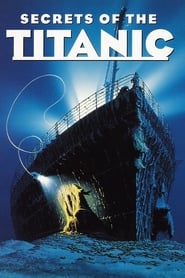
Secrets of the Titanic
د English ژباړه ډاونلوډ کړئ
د English سرليکونو مخکتنه
لومړۍ 200 کرښې.
It began here in ireiand at the Harland and Wolff shipyard in Belfast.
Three thousand men would labor here for more than 2 years.
They were building a monster
the largest ship the world had ever seen.
In the spring of 1909
a mountain of steel began to rise against the sky.
The ship would weigh 66,000 tons her hull would span 4 city blocks,
each of her colossal steam engines was the size of a 3-story house.
The huge scale of these things was a source of delight.
It was a scene out of Gulliver's Travels when
20 draft horses were needed to haul the ship's anchor
through the streets of Belfast.
Some few observers found this giant threatening
and wrote of her nightmare scale.
But their forebodings fell short of the event,
for the fate of this ship still fascinates the world
and her name is a synonym for tragedy.
In 1910 the huge ship taking shape in Belfast was a supreme wonder
in world accustomed to miracles.
Every day it seemed something bigger or better was invented.
Never had so many people been so prosperous,
never had they taken such delight in showing off
so this was called, "The Gildde Age."
This was a time when horses still got most people around.
But things were rapidly changing thanks to the machines of a new age
everything from rubber bands to radios
from lightbuibs to automobiles.
Progress and prosperity money and machines,
almost anything seemed possible and often it was.
May 31st, 1911,
the Roual Mail Ship Titanic, slipped gracefully into Belfast harbor.
It was the largest moving object ever made by man.
The Titanic was designed for the rich passenger trade
on the North Atlantic.
It was not only the biggest ocean liner
it was by far the most luxurious.
Aboard Titanic it was hard to remember that this was indeed a ship.
Advertising the delights it offered the White Star Line called Titanic,
"a floating palace."
So confident were Titanic's builders that her trial vouage
lasted just 8 hours.
Almost as an afterthought she was said to be, "unsinkable."
On April 10th, 1912, Titanic's maiden vouage began.
With their maids valets and chauffeurs
their mountains of baggage the rich traveled in a style almost unknown today.
In an age that worshipped wealth the 325 first class passengers
were an awesome assembly.
Titanic was like a time capsule laden with the splendors of the gilded Age.
In 1912 these films were shown in theaters to a public eager
for any glimpse of Titanic
in fact, this is actually Titanic's smaller sister ship the Olympic.
But the excitement and spectacle were true to the event
and many people couldn't tell the difference.
Titanic sailed from Southampton at noon,
she was expected to reach New York just 7days,
with 2,228 people aboard her.
There are a few authentic pictures taken aboard Titanic
on her first and last voyage.
A vacationing priest Father Francis Brown,
caught these poignant snapshots of his fellow passengers.
Most of them on a voyage to eternity.
The next day Titanic made her last stop
pausing off the coast at Queenstown, Ireland.
Here tenders brought out the last passengers,
mostly Irish immigrants headed for new homes in America,
and here the lucky Father Brown disembarked,
taking these pictures on his way.
Father Brown caught Captain Smith peering down from Titanic's bridge
poised on the brink of destiny.
Then Titanic sailed into the twilight zone of legend
she would not be photographed again for 73 years,
vanished in all but human memory.
The event of Titanic's last hours have not faded with the passage of time.
The tragedy irony and sheer terror of this night
still seize the imagination.
A British film, made in 1929
was one of the first of many Titanic movies:
Full ahead.
Full ahead, sir.
Despite radioed warnings, Titanic struck an iceberg.
She carried only enough lifeboats for about 1.200 people
and not even that many were saved.
In 1986 a new chapter in the Titanic's story began.
The men and machines involved did not even exist when Titanic went down.
From the Woods Hole Oceanographic institution
came the research submarine Alvin and Dr. Robert Ballard
a geologist and undersea explorer.
For decades Ballard had dreamed of being the man
to explore the Titanic wreck.
Now, if all goes well he may succeed within a few days.
On July 9th, Ballard's expedition backed by the U.S. Navy
and drawing on proven underwater technology
puts to sea from Woods Hole.
One seven five.
One seven five.
The research vessel, Atlantis II heads for Titanic's resting place
about 1,000 miles due east.
A rare alchemy of talent desire and circumstance,
has led Ballard to this adventure.
Many led Ballard to this adventure.
Many have called it foolish and at any rate, impossible,
it's been a hard sell.
No one person, no one organization on one shared my dream.
There was pieces of it the technology part,
the ship part, the submarine part.
It's very much like Cinderella going to the ball.
So I had to go around and get the shoes from somebody
and the dress from somebody and the coach and the coachman
and then I knew everything by midnight,
I'd turn back into a big pumpkin so I had a sense of urgency
to get it done before I ran out of time.
The year before a joint French American expedition
with Ballard as co-leader sought to locate Titanic.
A 150 square mile area was searched by sonar devices and remote TV cameras
towed along the bottom over 2 miles down.
But Titanic and not lie where she was thought to be.
TV pictures revealed only a monotonous plain of sediment
sometimes enlivened by a sluggish fish or empty beer bottle.
Days of futile search dragged on.
It is 1 a.m., September 1st, 1985.
The search has been going on for 56 days.
#1:Wreckage. Bingo. Yeah!
#2:Somebody ought to go get Bob.
#3:Bob's gone love this.
#4:This is it! Look at that thing.
All: Oh, alright! Yahoo!
#1:What is it?
#2:I don't know but it's manmade.
#3:There's more stuff coming.
#4:lt's the boiler!
#1: Yes, yes, that's fantastic!
#1:I'll be goddam.
The sucker exists! Gooddam!
#2:Has Cathy got the champagne?
There was an immediate outpouring of excitement
a bunch of kids yelling and screaming and jumping up and down,
very unprofessional.
And then the whole force of actually being at the very spot
where this tragedy had taken place and seeing the ship,
it was very... everyone just cracked.
Emotionally everyone just went down into a big trough.
And we had a simple quiet service on the fantail.
We felt better and it was that time realized that
I was deeply affected by it.
When we came back I wouldn't talk about the Titanic for 4 months.
I just wouldn't talk about it with anybody.
I just went and hid.
But Ballard's Woods Hole laboratory soon
recaptured the thrill of discovery.
Reviewing pictures taken by remote cameras,
Ballard was eager to get a closer look.
Ballard was confident that the submarine Alvin couldn reach the wreck
and the U.S. Navy agreed to sponsor an expedition.
They say the name of the ship is on one of the capstans.
Oh, it is?
On the top, yeah.
It should be visible.
We'll have to go and take a look.
A tiny TV camera serves as the single eye of Jason Jr.,
a robot submarine developed for the navy in Ballard's lab.
Jason is ideal for exploring wrecks;
getting TV pictures in places too confined and dangerous
for manned submarines.
Preparing for the Titanic expedition Jason and his operator, Martin Bowen,
go into intensive training.
Jason is powered by 4 electric motors.
He can venture as far as 200 feet away from Alvin, the manned submarine.
Jason is much like a dog on a long leash,
moving on commands from his master.
Here in the lab it's easy to navigate but deep on the Titanic wreck,
in pitch darkness it will be another matter.
Often Martin's only viewpoint will be Jason's electronic eye.
Now some 11months after Ballard discovered Titanic's resting place
he is returning aboard Atlantis II.
It's clear by now
that no one knew Titanic's precise location when she sank.
This original confusion explains why the wreck was so difficult to locate.
There are no landmarks
the coast of Nova Scotia is some 350 miles away.
The sea tolerates no gravestones or monuments
only the knowledge of what lies 21/2 miles below
gives this place identity.
When you're out at sea it's just a big, monstrousthing.
It has no dimensions.
You tend to wander around in the ocean and not feel that you're
any where at any on time.
Then when you find the Titanic it rivets you to that one spot.
You know exactly where you are and you know exactly what took place
right where you are and that's eerie.
You want to see lifeboats or people in the water that you can
take drowned right around you.
Yeah, you hear them, you feel it.
Very much so.
The grey down of April 15th,1912
revealed a scattered fleet of life boats.
Hundreds of bodies floated in the surrounding waters.
The boats contained just 705 survivors.
Aboard the liner Carpathia amazed passengers took these snapshots
as the survivors were rescued.
Her compliment of passengers doubled Carpathia raced for New York.
Secrets of the Titanic subtitles in other languages
تبصرې
No comments yet. Be the first to leave one.