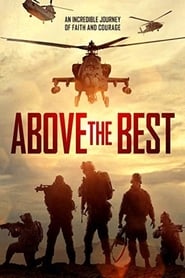
Above the Best
د English ژباړه ډاونلوډ کړئ
د خپرونې معلومات
تګونه
د English سرليکونو مخکتنه
لومړۍ 200 کرښې.
Eight, nine, ten...
Colossal 31, it was an NVG mission,
night vision goggles, which means we're flying at night time
using nothing but the, uh, binoculars that we had.
- 4143, you're in the group. - South.
We had a Chinook unit that was attached to us
called the Washington Air National Guard,
who had been going in and out of the same LZ
during the day time, weeks prior.
So when they heard that we were gonna be coming out of Bagram
doing it under NVGs, they kinda called us up and said,
"Don't do it, because it's really high on the ridgeline,
very high winds, and a very steep valley".
But the Ground Force Commander wanted to be exfilled under NVGs.
So with that being said, we put our most experienced pilot
in command on board, we put our most experienced PI,
and we put four crew members in the back, not just three.
You got a bad filter? Hold your fort.
- Hold her down. - Roger that.
Dropping back down to about 500 AGO.
- Maintain it at 81. - Okay.
Copy that, 06. Looks like we're about two clicks from the LZ.
We've only got 364 days to go.
The winds were pretty high, the landing zone was essentially
a rock ledge that was probably 20 meters wide.
Colossal 31, be careful on the approach,
I see a lot of trees on that ridge line.
What the pilots were trying to do was back in with the ramp down,
put the lip of the ramp on the rock, uh, ledge, have the LRAS team,
I believe was seven people, uh, come onto
the Chinook and then, uh, fly away.
They had to do a tailgate landing.
It's something we'd practiced, it's in our ATM, this is what we do.
Alright, I'm bringing her down.
Keep it steady, keep it steady.
So, we were tearing there.
They kinda started drifting aft.
It's coming awful close to that tree line, Colossal 31.
We're right on the ridge.
A massive, 31. Come in, come in.
Back at Bagram, probably about eleven o'clock at night,
our SP knocked on the doors and said that, uh,
Eric Totten's aircraft went down.
The aft rotor system hit a tree,
causing the forward and the aft rotor system
to collide and completely tore apart the entire helicopter.
Nobody survived, we lost all ten.
There was nothing but burning embers at the bottom of the valley.
We were in disbelief that like, "This cannot be happening right now."
We were all listening.
We were listening for our friends to come home.
And they never came home.
What happened with the Apache? They left our friends.
So, this is all the stuff I have from Afghanistan
and, and my time of active duty in the army.
This is the actual patch that we had on our flight suits,
it says, "Ugly but well hung".
This is 10th Mountain's, a patch they gave to us.
The Apache, the Hawk and the, and the Chinook right there.
So, they came in that night,
we're standing in between our B Huts outside,
it was already getting dark
and the captain starts telling us about what happened.
He starts telling us that,
"I guess you heard, the Chinook crashed last night.
And those guys pretty much killed themselves and everybody on board",
and he came across blaming them.
Sat there for... what seemed like forever, I think, "What, what the hell?
That's... that's horrible."
And he said, "No, that's not the worst of it."
You know, you... "What do you mean that's not the worst of it?"
So, he goes, "10th Mountain's blaming us, the Apaches, for leaving them.
Your buddies left them." At that point he said like,
"If y'all hear anything from 10th Mountain
bad about us, just ignore them.
They don't know what they're talking about."
And at that point,
my blood pressure was through the roof.
I pointed at the captain and told him,
"Who the fuck are you
to bad-mouth American troops like that?
Who the hell are you to leave American troops on that mountain.
Don't you ever do that. How dare you leave our guys like that?"
I read that every now and then to remind me also that
you gotta watch out for everybody else in life.
"He called upon us all the sum of his knowledge and made a judgement.
He believed in it so strongly that he knowingly bet his life on it.
That he was mistaken in his judgement is a tragedy, not stupidity.
Every supervisor and contemporary who ever spoke
to him, had an opportunity to influence his judgement,
so a little bit of all of us goes in with every troop we lose."
Now, gotta read that, every now and then.
I haven't been up here since these guys started shooting and stuff.
- Oh really? - Yeah.
Won't be surprised if we find some RPGs in that woodpile down there.
Stay to the right here, till we can get over this thing, if not we can make
a left turn. Don't descend unless you have to, alright?
- Roger. - Keep the altitude that we got.
What we were being told to expect coming into Afghanistan
was that the insurgency was ba... basically broken.
Roger and over.
So we'd turn on the lights, we found a lot of Taliban and Al-Qaeda,
and all of a sudden, we were in contact just about everywhere.
Shit.
I'm taking fire. Just ...
Yeah, pick up your speed as fast as you can. It's really not good up here.
Nobody up here.
We just received fire
about two clicks east of the Lumberyard...
That looked to be a direct hit, good shooting, Deadwood.
We were not making friends when we first started, so...
God help us. We've got ten months left,
and it will be brutal.
We had to be perfect.
On this day, it was a day mission, we were just to follow several Chinooks
as they made it to the different FOBs dropping off different things and people.
Yeah, Deadwood 6-3, uh, coming in from the West.
We'd like to uh, open up their range, give it a sweep here.
Roger that.
We're flying across the Gardez Desert.
I was looking around and just at that point...
...I was thinking, "Jesus, what is wrong?" It was like a solid rush of heat.
Something's going wrong here,
something... I wanna get out of the helicopter.
The Apache helicopter went down
while trying to land at the Montgomery County Airport.
Jeez, we're roasting across the desert floor at 120 knots.
If I just get out of here, all I gotta do,
all I gotta do is just...
Maybe just open the door and jump out... jump out.
Daniel Flores' chopper went down.
I got a hotspot under my helmet, I gotta change my helmet here.
I gotta move my helmet around.
Jesus, I gotta get out of here.
How did I even drive home?
My wife will wake me up any minute now.
And I'm like Jesus.
Just take a deep breath. Just take a deep breath.
I gotta get out of here. This is...
Just take a deep breath.
That was my first bout of what would later become claustrophobia,
anxiety and anxiety attacks that go with it.
That was the first time I'd ever experienced something like that.
Somewhere in the crumpled metal of the Apache helicopter
lies a clue as to what made it fall from the sky.
We set up to do traffic patterns.
I was doing the flying from the front seat.
Just as I was about to reduce power to land
to the approach end of runway 1-4,
a Learjet calls up on the radio saying,
"Montgomery County traffic, this is Learjet 6-5 Charlie.
We are four mile final for runway 1-4."
I was thinking, "Yeah, this guy is gonna be bearing down on us pretty fast".
So as I'm starting to slow down, even more to land,
Tommy's thinking the same thing. He took the flight controls,
and we went forward a little bit.
That's the last thing I remember.
Less than five minutes after take-off,
the chopper fell to the ground, it's landing gear mired in the mud.
Chief warrant officers, Daniel Flores and Thomas Einhorn were shaken up in the crash.
Both were taken to Medical Center Hospital in Conroe,
put under observation, then released.
How did I survive? Literally by the grace of God.
That was in August when I had that first bout of anxiety.
I went and saw the flight surgeon.
He... I told him what was going on.
He worked with me a little bit, not much. He just said, "You, uh,
you gotta learn to live with it, or you want me to take you off flight status?"
And there was no way I could do that. So...
I did what we all do in the military.
I fought through it.
On that day, early October 2006, we had already set the aircraft up,
as we call them, we cocked them up for the QRF, quick reaction force.
We'd just sit around and wait for the radios to come alive, to go help somebody.
We were in the chow hall and our Icom radios came to life.
The Apache crew Deadwood launch the QRF right now.
We all looked at the radio, going like,
"Are they serious? This has never happened before."
We ran across the flight line. The other Apache on the QRF,
they were already sitting at 100 percent RPMs, waiting for me.
Clear right, clear left. Clear.
We were stationed at Bagram at the time.
Most of our QRF missions were just escorting Medivacs.
So, it was a little odd that we were actually dispatched
to a firefight in the Tagab valley, because as far as we know,
at the time, the Tagab was quiet.
October 14th was our first mission
to roll down through the Valley of Tagab,
and meet with the senior members of the village, and conduct a jirga.
And we were also taking along a donation of, um, school supplies,
that we were gonna pass along to the children of the village.
I had turned 50 in 2006.
And I arrived in Afghanistan. I was not assigned to a unit.
I was a forces command fill,
because they needed embedded tactical trainers, ETTs.
The job as an ETT, as an embedded tactical trainer is...
you're supposed to embed with the Afghan army,
and you... you liaise between the US military
and the Afghan military.
We were two-man teams, one officer and one senior enlisted.
Above the Best subtitles in other languages
More English subtitles for Above the Best
- Above The Best 2019 REPACK BDRip x264-ROVERS · 20 downloads · 2019-07-30
- Above the Best 2019 HDRip XviD AC3-EVO · 28 downloads · 2019-07-02
- Above the Best 2019 HDRip XviD AC3-EVO · 30 downloads · 2019-07-02
تبصرې
No comments yet. Be the first to leave one.