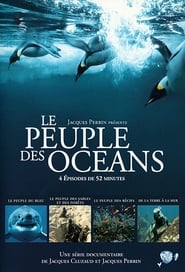
Kingdom of the Oceans (Le peuple des océans)
د English ژباړه ډاونلوډ کړئ
د خپرونې معلومات
تګونه
Download English Subtitle Files for Mobile (4)
د English سرليکونو مخکتنه
لومړۍ 146 کرښې.
Nearly three-quarters of our planet lies underwater.
Now, venture beneath the waves, and enter an astonishing world.
The sea is a realm ruled by giants,
stalked by hunters;
an arena for epic battles.
This is the kingdom of the oceans.
***** subs by HC *****
Off the Pacific coast of Central America,
an enormous school of lantern fish.
They are trapped near the surface.
Spinner dolphins block their retreat.
And, the spinners won't pass up this windfall.
Other predators are eager to claim their share.
Frigate birds rarely dive for fish...
but these fish are just below the surface.
Yellowfin tuna rush to the scene.
Hunting in close formation, yellowfins overwhelm their prey.
The dolphins don't mind the company.
There's plenty to go around.
This feast is far from over.
Devil rays are just arriving.
Sleek acrobats, the rays seem to fly, instead of swim.
Their mouths are framed with a pair of fins that create a funnel.
Ideal for scooping up prey.
Even with all these attackers,
the school is too big to be wiped out.
The survivors can finally escape,
and the satisfied hunters take their leave.
Food is less abundant farther from shore,
and hungry creatures must travel a lot farther to find it.
They depend on currents,
or on their mysterious powers of navigation,
as they journey over the trackless deep.
But, they have to cover a lot of ground.
A mako shark can swim 2000 kilometres a month as it searches for prey.
The swordfish, too, is a lonely hunter.
A green turtle undertakes her epic journey,
not for food, but to reproduce.
She seeks the distant beach where she was hatched,
and where she'll return to lay her own eggs.
Here, where prey is hard to find,
a great white shark stays on the move.
Its keen senses can pick up an odor, a vibration;
even the electrical field generated by its next meal.
One of the strangest of these voyagers is the ocean sunfish.
It's about the size of a pickup truck,
and it seems to defy the rules of marine biology.
The sunfish can swim either upright, or on its side.
It's equally at home basking on the surface,
or diving to depths of nearly 500 metres.
When it comes to deep-water giants,
nothing compares to the blue whale.
Stretching up to 30 metres, and weighing in at more than 100 tons,
the blue whale is the largest animal that's ever lived.
But, it's sustained by one of the smallest: ....
Krill.
These shrimp-like crustaceans, each the size of a jelly-bean,
gather in enormous schools for mutual protection.
Swarms of krill can stretch for several kilometres, ...
but they can't avoid being preyed on.
Not just by whales, but by, almost, any creature bigger than they are.
In the dense swarm, it's hard for small fish to find a target.
Each krill seeks safety by trying to reach the centre.
This causes the whole school to twist and turn.
Forming a school is a common survival strategy in the ocean,
but it's no defence against a really big predator.
The blue whale doesn't need teeth to feed on krill.
She just opens wide.
In a single gulp, she can take in more than 80000 litres of water,
along with countless krill.
Given the chance, a blue whale will gorge on krill,
eating nearly 4 tons a day.
And, no wonder.
This is a creature whose heart weighs nearly 500 kilograms.
Her tongue is the size of an elephant.
It takes a lot of krill to satisfy her appetite,
but no one knows exactly how
blue whales locate their food in the vastness of the ocean.
Finding a mate is an even bigger challenge.
During the last century,
whalers killed off 99% of the population.
Today, there may be as few as 5000 blue whales.
Blue whales were once prized by human hunters,
but their greatest value may be to the ocean, itself.
The whales' waste is rich in iron from the krill in their diet.
Dissolved in sea water, combined with sunlight,
the iron fertilises blooms of marine algae.
The algae, in turn, nourish tiny creatures called plankton.
They're even smaller than krill.
Plankton are crucial for life in the oceans.
They form the bottom of the food chain.
In the barren, mid-ocean realm, food is scarce.
A blue shark always keeps his eyes open for opportunities.
A mass of kelp has drifted far from the coast, where it normally grows.
It could be harbouring a meal, but it's too tangled,
and the shark can't make its way inside to find out.
Frustrated, he moves on.
But, the shark was right.
Out here, there aren't many places for small fish to hide.
For horse mackerel and half-moon fish,
the floating kelp is a welcome retreat.
The raft harbours other little travellers.
Coastal residents that came along for the ride. Rockfish, ...
and even pipefish, a cousin of the seahorse.
But, they didn't evolve for survival on the high seas.
If their kelp island breaks up and sinks,
they will likely perish, along with it.
'Til then, they make the most of what they find.
A ring of salp, a kind of barrel-shaped plankton, will suffice for dinner.
This whale shark doesn't need to visit a spa.
The world's largest fish, up to 10 metres long,
he travels with his own skin-care specialists.
The little hitchhikers are remoras,
They attach themselves to their host using suckers on the tops of their heads.
They do the whale shark a favour, by eating any parasites they find.
In return, they get to travel, and see the world.
Their destination? Anywhere the whale shark wants to go.
There's plenty of hospitality on the high seas.
A huge jellyfish provides a safe haven for dozens of young fry.
The little fish are immune to the jelly's toxic sting,
so, this is a good place for them to hang out,
until they're big enough to fend for themselves.
The whale shark, meanwhile, has a new entourage:
a school of sardines.
He barely notices them.
Still, it's wise to stay well back of the giant's jaws,
just in case.
A hungry mahi-mahi is much more interested in the sardines.
When schools of small fish face an attack,
they tend to react in the same way.
At first, they panic and scatter.
Then, they cluster together for safety, all swimming in the same direction.
That forms a spear, called a bait ball.
Some predators respond with a direct approach,
strafing the ball to break it apart.
Others use a different strategy.
They push the bait ball up against the surface, where it begins to unravel.
For a small school of fish, a bait ball doesn't provide much cover.
Their only defence is flight.
But sailfish are too fast, and too agile.
Unfurling their dorsal fins make them look bigger,
and helps them herd prey.
Skilled swordsmen, they pick off their victims, one by one.
The dazed survivors flee towards the surface,
only to face a new threat.
Alert sea birds are not about to pass up the chance for an easy meal.
تبصرې
No comments yet. Be the first to leave one.