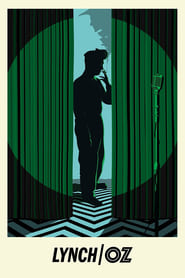
Lynch/Oz
د English ژباړه ډاونلوډ کړئ
د خپرونې معلومات
تګونه
د English سرليکونو مخکتنه
لومړۍ 199 کرښې.
Ladies and gentlemen.
"Lynch.
Oz."
When you look at the grand scope
of American storytelling...
in this strange,
mixed-up, argumentative, polarised country...
...finding a story we can all agree on
is next to impossible.
There's these two very similar films
that are famous in film history
because they share the same story beats,
the same trajectory.
They were both flops when they came out.
The first one is "The Wizard of Oz,"
and the second one is Frank Capra's
"It's A Wonderful Life."
I'm shaking the dust of this crummy little town off my feet,
and I'm going to see the world.
Get me back!
Get me back! I don't care what happens to me.
There's no place like home.
There's no place like home.
And a curious thing happened with both of them.
They went away for a few years,
and then they were re-presented on TV
and they were kind of put forth as special events.
50% of the television sets in America
were tuned to "The Wizard of Oz."
And then "Oz" did so well in the numbers
that the network brought it back
and it eventually settled into a pattern.
Always the same time of year. Always the same moment.
It's right there, and it's special and it's precious.
If "The Wizard of Oz" is not
the quintessentially American fairy tale,
I really don't know what is.
It's one of the first movies
I think most children are introduced to
as "Hello, you are a child. Welcome to the world of movies.
Let me open up the curtain of what cinema is."
But even beyond that, what makes it special
is this is a movie that we've had
that every generation of kids has watched for eight decades.
There's just something in the shared
candy-coloured musical universe of "The Wizard of Oz"
that I find so remarkable,
so visually and sonically influential.
We've all been to Oz.
One is starved for Technicolor up there.
And the thing is, it has not aged at all
because it's a film that takes place so squarely
in the world of musical and fantasy.
You can never underestimate the power of
when a movie that is extensively taking place
in a normal universe breaks out into song.
Because that is the moment
when the film looks at the audience and it says,
"Are you in?"
It makes me think of the moment early on
in "Wild at Heart."
Nicolas Cage takes Laura Dern to a metal bar,
and suddenly in the middle of this metal bar,
he begins to sing Elvis.
And the band magically knows the notes
and everybody else who's also at this metal bar
magically sings along.
David Lynch must have been four or five years old
that first year they put "The Wizard of Oz" on TV.
I do see the story of "The Wizard of Oz"
as the story of David Lynch himself becoming a filmmaker.
I feel like I see him in it
more than I even see his individual films.
Despite all the references,
despite all the red shoes and the curtains.
He's a guy from the Plains.
Missoula doesn't look too different
than the Kansas in this movie.
And so he goes on this journey himself.
He's always talking about consciousness and transcendence.
And he takes us there through his films.
There's an ocean of pure,
vibrant consciousness inside each one of us.
The stream flows, the wind blows,
the cloud fleets, the heart beats.
And it's right at the source and base of mind,
right at the source of thought,
and it's also at the source of all matter.
You, uh -- You'd better close your eyes,
my child, for a moment, in order to be
better in tune with the infinite.
And I think that's what Dorothy does in this film.
She transcends and she goes to this other world
and she goes on this journey where she winds up
finding herself and knowing her own powers,
which to me is the David Lynch story above everything.
There's no place like home.
He talks about his movies like "Lost Highway,"
for example, as being what he calls psychogenic fugues,
where a character gets knocked upside by trauma
and they wind up slipping into this other dimension
almost as a way of trying to find stability.
I mean, whether or not you believe Oz is real,
you know that Dorothy got hit on the head,
that something very bad happened to her
and that she was unconscious for a long time...
that she went to another place,
that she had this near-death experience
in the middle of a tornado.
Shit.
Got this damn sticky stuff in my hair.
There's this very small detail
at the opening of "The Wizard of Oz."
Right when the title comes up onscreen,
you hear this gust of wind,
but it's not a sound effect.
It is humans sounding like a gust of wind.
They're going "Woooh."
That human wind sets up this mood for the whole film,
you know, a whole film that winds up being defined by wind.
And then when the house starts to swirl around,
it is an absolute cacophony inside of this tornado.
And then she lands and this entire movie
goes silent for the first time.
And that silence clears the table for the audience.
And then the music kicks in
and you start to hear the Oz theme,
and you get a little gust of that human wind sound again.
And you have to wonder if those same winds
are the ones we hear in David's films.
Woooh! Woooh!
I was painting a painting
about four-foot square.
And I was sitting back,
probably taking a smoke,
and looking at it.
And from the painting, I heard a wind.
I've heard David Lynch say that
when he wants something special from his actors,
he says "More wind,"
which means put more mystery in their performance.
He, too, has that love of rooms
that seem filled with wind that you can hear,
even if a room seems like it should be completely airless.
And I love that he talks about wind as the source of mystery
when that is exactly what happens in "Oz."
Wind is the source that rolls the girl around
and it puts her somewhere new.
The camera work in that scene
helps set this really ominous sense about Oz.
And it sets up this vibration of this land is beautiful,
but you need to watch your back.
Something with poison in it, I think.
With poison in it, but attractive to the eye.
I think there is a sense in a David Lynch film
where he trains you really early on
as the audience to never be content
to just take things at surface value.
He is always interested in what's underneath the surface,
and he is pushing underneath that,
and he is the person who would say,
"Do you think that group of apple trees
just looks like apple trees? I would look again.
That grove of apple trees is actually alive."
Ouch!
There's violence
where you're not expecting to see it.
"The Wizard of Oz" is absolutely darker under the surface
than the movie forces you to acknowledge.
I mean, Dorothy enters Oz killing somebody.
And that's all that's left of the Wicked Witch of the East.
Two powerful women die in "The Wizard of Oz"
at the hands of a young girl who is pretty okay with it.
Like, does Alice go into Wonderland
and just start murdering people left and right?
I'm melting! Melting!
She's dead. You killed her.
And it's funny because Frank Baum
looked across the ocean at Hans Christian Andersen
and the Brothers Grimm,
who were writing really grisly, gory stuff.
And he thought, "I'm going to write a story
that does not have that horror."
But he didn't really do that.
I think if there is a driving question or driving goal
that really connects David Lynch in all of his films,
it is that nothing should be taken for granted
and that nothing is exactly what it is.
Fred?
I'm not me.
I'm not.
I'm not me.
I'm not. I'm not me.
And that we all contain within ourselves
a deep truth of who we are
and the power to be the person that we want to be.
100%.
It's interesting because every time
I see David Lynch, I see a man who has done a lot of work
تبصرې
No comments yet. Be the first to leave one.