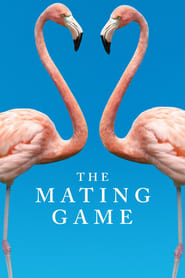
The Mating Game
د English ژباړه ډاونلوډ کړئ
د خپرونې معلومات
تګونه
Download English Subtitle Files for Mobile (5)
د English سرليکونو مخکتنه
لومړۍ 200 کرښې.
One challenge faces almost all animals on Earth,
the need to find a partner.
It's a drama that is played out in every corner of the planet.
For some, it's conducted on an immense scale.
Others need to put on a show.
And for many, it involves intense, even lethal battles.
This series will reveal the extraordinary strategies
that animals employ to succeed in The Mating Game.
Those that win will have a stake in the greatest competition of all...
the creation of a new generation.
Namibia in Southwest Africa.
An ancient landscape that has shaped the mating game of its residents.
Ostriches.
The rules of their mating game have been refined and elaborated
over some 60 million years and are now very well established.
During their breeding season,
each flock is dominated by a single male.
His territory, and the females that come with it is a hard-won asset.
So his leadership is only challenged by the brave or the foolhardy.
This young male is low in the flock's pecking order.
He has spent five years preparing for this moment,
and now he needs to breed.
The resident females seem interested.
He starts to show off.
And their attention encourages him.
But the current leader does not tolerate competition.
The kick of an ostrich is powerful enough to kill a lion.
And the young male is risking an end to his breeding season
before it's even started.
In a matter of moments, the young challenger
has been cast out of his flock.
It's a disastrous start to his campaign, but it comes with a valuable lesson.
Out here in the open,
the mating game is exposed for all to see.
The young male now faces a major challenge.
There are not many ostriches on these dry plains
and females are hard to come by.
It could take him several months to find one.
He does, however, have a way of bringing them to him.
He inflates a sack in his throat
and produces a boom that carries for miles.
And it attracts unaccompanied females.
But that is the easy bit.
Female ostriches are very choosy.
With the largest eyes of any land-living animal,
they assess his every detail.
The pinkness of his shins, the shininess of his black feathers,
both indicate his sexual quality.
But he has yet to pass a crucial test.
The females lead him on a chase, testing his stamina.
And they can run at speeds of 40 miles an hour.
All he has to do is to keep up.
One of the females slows,
and once again he tries to win her over.
But again, she seems indifferent.
Now he has only one trick left.
At last he seems to be getting some attention.
She flicks her wings, a sign that she is impressed.
So with little to lose, cautiously, he performs his final trick.
It's not perfect...
but he gives the performance of his life.
With that achieved, he will now go on and mate with several more females
before the season is over.
Provided, that is,
he can maintain their interest.
He now has a final task.
He must take every female with whom he mates this season
to his chosen nest site,
and there, incubate all their eggs for the next two months.
Only if they hatch
will he know that he has truly succeeded in his mating game.
Where grass grows abundantly,
mating, for many, Is rather more competitive.
This zebra stallion has spent several years
assembling a group of females, his harem.
And he'll do anything he can to retain them all.
Some of his mares are already pregnant,
and he leads them on the never-ending search for food.
Every March, they come here to the Serengeti,
one of the most extensive natural grasslands left on Earth.
Such rich grazing attracts herds 30,000 strong.
His family has good reason to join this huge assembly.
There is safety in numbers, and predators here are awaiting them.
Hyenas.
Small harems are the most at risk.
The herds will provide the safety that the stallion needs,
and right now, his family is particularly vulnerable.
Here, his new-born foals can get a good start in life.
Soon after birth, their mothers become ready to mate again.
But being in a big herd causes a problem for the stallion.
Bachelor males are quick to detect the scent of a newly receptive mare.
And they will try to separate one
from the rest of his harem whether she is willing or not.
If a stallion doesn't drive off the bachelors,
his group will be broken up in a matter of minutes.
But if he's going to keep his family together, he will have to fight.
A well-placed bite to the bottom is enough to see off weaker rivals.
But with challenges coming from all sides,
he's in danger of losing control.
Pushed to his very limits, he must now use greater violence.
Victory.
His family is still together... For now.
But his right to breed isn't guaranteed.
His females will still have the deciding say in that matter.
Competition between males for a mate is common throughout the natural world.
But females may also play a deciding part in the mating game.
One such is so efficient at doing that
that her species has become one of the most successful
of any on the planet.
Here on the grasslands of Africa,
their castles of clay are a familiar sight.
Each one is ruled by an extraordinary all-powerful queen.
Her domain can stretch for many miles underground
and is maintained by armies of her subjects,
most of whom implicitly obey her instructions,
but never even meet her.
Everything in this community is under her control.
She can live for 50 years,
longer than any other insect in the world.
Meet the termite queen.
Her devoted partner, the king,
has been at her side throughout her life.
He mates with her frequently, but his role is limited to that.
It is his gigantic queen who dominates the colony.
Her bloated body contains huge ovaries
which produce eggs non-stop.
She lays one every three seconds,
24 hours a day for 25 years,
a productivity unmatched in the natural world.
All in the colony are her offspring
and all are dependent on her success.
They clean her tirelessly and keep her well-fed.
Some remove the eggs and store them, a seemingly never-ending job.
In her lifetime, she will produce over a quarter of a billion offspring.
As each egg emerges, it's taken away to another chamber.
Here, the workers toil
to create the perfect conditions for their development.
Some chambers serve as gardens.
Here, the workers cultivate balls of white fungus
with which to feed the Queen.
But not all young termites remain equal.
Their future will be determined by the queen.
In response to the needs of the moment,
she will produce chemical instructions that determine the role
each of her offspring will play in the community.
And once a year,
she changes the behaviour of the entire colony.
As the rainy season approaches,
she orders her workers to open new gateways
in the outside walls of their castle.
They are preparing
the most important and dramatic happening in their year.
Exactly why the rains trigger this event is still unknown,
but it will not begin without them.
What happens next occurs on only a few days in a year.
But the future of her entire kingdom depends on it.
As a consequence of a chemical signal from her,
some of her subjects have developed wings.
Each of these winged termites Is a potential queen or king.
And one morning, at first light,
they emerge in millions.
Attempting to get as far away as possible
and start their own community.
But their journey is beset by danger.
Such a multitude of edible insects does not go unnoticed.
Emerging in these vast numbers Is part of termite strategy.
The loss of a few thousand individuals amongst millions is insignificant.
Eventually, even the greediest predators will have had as much as they can eat.
The surviving termites, males and females, find partners,
shed their wings,
and each partnership then digs a new colony together.
So, if things go well,
more clay castles will appear on the African plains.
A lifelong partnership between male and female
can certainly lead to great rewards.
But in fact such a simple strategy is rare.
Delaying finding a mate until one reaches one's physical prime
is a more common tactic,
but it does have its problems.
These are the meadows of Southern Australia.
Here, sheer physical size can make a significant difference.
Male grey kangaroos battle for access to the females.
The biggest nearly always wins.
As a result the males have become very big indeed.
At 2.5 metres tall
they're more than twice the size of the females.
These battles are nearly always won by the biggest male.
But it will be the female who will decide
exactly when he will be allowed to claim his reward.
A female can conceive at any time,
so there is no rush as far as she is concerned.
But a male kangaroo has to fight whenever he's challenged,
so he is keen to mate Just as soon as he can.
The longer the delay,
the greater the chance that another male will displace him.
Rival males show off to make clear how very big they are.
So the victor keeps her close by him while he still has the upper hand.
She, however, continues to explore her options.
No matter what the victor does to impress her...
She is still reluctant to commit.
The Mating Game subtitles in other languages
More English subtitles for The Mating Game
- BBC The Mating Game Parts01to05 1080p x265 AAC MVGroup org · 35 downloads · 2022-03-22
- The Mating Game S01 iP WEB-DL-NTb · 53 downloads · 2021-11-02
- The Mating Game S01 iP WEB-DL-playWEB · 53 downloads · 2021-11-02
تبصرې
No comments yet. Be the first to leave one.