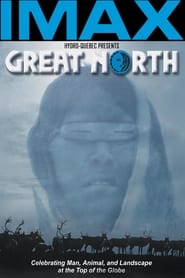
Great North
د English ژباړه ډاونلوډ کړئ
د خپرونې معلومات
تګونه
د English سرليکونو مخکتنه
لومړۍ 146 کرښې.
My father used to tell me the story of "ajagutak" —
What you call "The rainbow".
It is a story from way back in time,
passed down from one storyteller to the next.
My father told me the rainbow holds up the sky.
It is the earth's walking stick.
This place is very special to me.
My father brought me here when I was a boy,
as his father brought him.
My name is Adamie Inukpuk.
I have lived in this land for 5,000 years.
Some stones are made to tell you things —
where to hunt,
where it is safe to travel.
They hold the knowledge of my people.
We call these stones "inukshuit".
It means "that which takes the place of man."
My grandfather had much knowledge.
The world called him "Nanook of the north".
But to me,
he was just Nanook, my father's father.
People still like to tell stories about him.
Without our stories,
what would we know of our past,
and what would we pass on to our children?
That is why, for us,
the great storyteller is just as important ...
as the great hunter.
We Inuit have more stories ...
about the caribou than any other animal.
We call them tuktui, "The wandering ones."
We followed them to this land thousands of years ago.
They are everything for us —
Our meat and our magic.
Like his grandfather Nanook,
Adamie Inukpuk has a strong bond ...
with his land, its history, and its animals.
The caribou are so vital to Inuit life ...
that they define the calendar.
"Nurraliut" is the word for spring.
It means "The time when the caribou calves are born."
Until recently,
the great migrations of the caribou ...
were shrouded in mystery.
The wandering ones would simply disappear in winter ...
and then re-appear the following spring.
Minutes after a calf is born,
It will learn to know its mother.
Her smell and her call will stay with the calf so strongly ...
that she'll be recognized ...
even in a group of tens of thousands.
This bond will last ...
Until the young caribou is old enough to fend for itself.
This spring,
close to half a million calves will be born in this herd.
Unlike wolf cubs, who are born blind ...
and don't open their eyes for almost two weeks,
this young calf must be strong enough ...
to run with the herd within 48 hours.
Wolves, bears, even eagles prey on the young caribou,
but the worst of the predators is the tiny mosquito.
As much as a million liters of blood a week ...
will be drained from the caribou into the mosquitos.
Soon after the calves are born,
the caribou start gathering.
Small bands flow together, finally forming massive herds.
Over a million strong,
the George and Leaf river herds of northern Quebec and Labrador ...
are the largest assembly of migrating mammals on earth.
During the short weeks of the northern summer,
the herd will wander ...
from desolate coastline to mountainous highlands,
feeding their young ...
and fattening up for the hard winter ahead.
On the other side of the arctic circle ...
In northern Sweden,
The "Sami" have lives not unlike their neighbors, the "Inuit".
At the center of Sami culture is herding reindeer,
The caribou's close cousin.
The epic stories and legends of the Sami ...
are told in song.
Apmut Kuoljok comes from a family ...
of herders and epic singers.
With no written language until recently,
singers like Apmut ...
are the history books of their people.
My song praises a mountain,
the reindeer, and our tradition.
Autumn is my favorite season,
the time when I see my friends and my family —
A time for the Sami people
to help each other and to live in the ancient way.
When I was a boy, we were still nomads.
We lived with the reindeer all the time ...
and followed the herd everywhere.
My father had reindeer that worked for us,
but I think we really worked for the reindeer.
Looking after them wasn't always so easy,
but I can still hear the music from their bells.
Today I sang to the reindeer.
I hope they heard me calling.
I hope my song worked.
The Sami haven't let time pass them by.
Reindeer are still at the center of their culture,
and the roundup is as important as ever.
But they take what they need from modern technology —
Helicopters and horses, singing and cellphones —
whatever works best.
This year, Apmut's song to the reindeer ...
must have worked its magic.
The Sami gathered together 5,000 animals ...
from out of the woods and mountains,
but getting the reindeer into the corral ...
is only half the job.
Oh, the reindeer this time is very big,
so a little higher.
Hhow much you want me to go?
Up to 5,000 feet.
There is no roundup in the canadian north,
and no one's ever tamed a caribou.
You just can't call them out of the mountains with a song.
Today the caribou can be tracked using radio transmitters.
For the last year and a half,
biologists have been following a female caribou ...
they fitted out with a radio collar.
For the first year, they traced her ...
as she traveled for more than 6,000 kilometers.
Since last April,
she's gone almost half that distance again.
This was her last known position.
You might think it would be easy to spot 10,000 caribou,
but not when they're wandering a territory ...
roughly twice the size of France.
Okay.
Straight in front of you, there's a big bunch here.
I think it would be good for the capture.
Okay.
Go down.
Go down — faster!
The one with the answer.
Go down.
Okay, that one, that one.
Yes, sir!
Roll her a bit on the side.
Adamie and biologist Serge Couturier ...
hope that with a new radio collar,
Great North subtitles in other languages
تبصرې
No comments yet. Be the first to leave one.