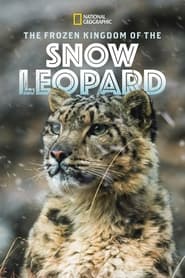
The Frozen Kingdom of the Snow Leopard (Le royaume glacé de la panthère des neiges)
د English ژباړه ډاونلوډ کړئ
د خپرونې معلومات
تګونه
د English سرليکونو مخکتنه
لومړۍ 158 کرښې.
Below the airless peaks of the Chinese mountains
lies a secret valley, hidden from the outside world.
Home to snow leopards.
A pregnant female settles in.
But a fierce male has already staked his claim.
She will need strength, and stamina,
to outwit the rivals in a crowded valley.
But a mother’s love is fierce.
Her devotion, strong.
This is a snow leopard’s story.
Rarely seen,
never before told.
This is the roof of the world.
China’s Qinghai Tibetan Plateau.
It’s a vast expanse,
home to snow leopards.
It’s February in China’s Qhinghai Mountains.
A herd of Himalayan blue sheep, or bharal,
moves through the rocky landscape,
tracked by a hungry, pregnant female.
The bharal are hungry too,
scratching for frozen grass beneath the snow.
The sheep seem like easy targets.
But the bleak landscape offers little cover for an ambush,
and the bharal are nimble.
Even with her snowshoe paws, hunting is hard work.
Still, she presses on, searching for her next meal.
Her pregnant belly hangs low.
Soon she’ll need to find shelter where she can safely give birth.
But this is unfamiliar territory.
She loses the bharal in a snowstorm.
When it clears, she finds herself on the edge of a hidden valley.
A gateway to a new world.
Tucked between the peaks sits a lonely outpost,
with signs of life.
It’s a yak farm.
Hunger drives her to investigate.
People here have raised yaks for generations
and depend on the beasts for everything.
Tibetan Mastiffs guard the livestock.
These dogs aren’t pets.
And they’ve never met a brush.
They live a feral life, shepherding the yaks.
Guns are prohibited here,
and killing snow leopards is forbidden.
So the dogs trail the yaks through the steep meadows, crusted with snow.
Bharal graze here, too.
The dogs sniff out a familiar enemy.
A male snow leopard is finishing his recent kill.
This valley is his.
He rules over this frozen kingdom,
defending it against pirates, including the dogs.
The valley holds both opportunity and danger for the female snow leopard.
She’ll need to avoid the dogs and the male leopard if she stays.
By March, she’s made her choice.
High in the cliffs above the farm, she searches for a den to give birth.
For the next hundred days,
she’ll stay hidden, emerging only to hunt.
By August, the valley has transformed.
The female has rejoined the world.
She’s now a mother,
with two brand-new cubs in tow.
One is already bold, and curious.
The twins will have summer to grow stronger
and learn about their valley home.
But this is a treacherous place.
For the next eighteen months,
their mother will struggle to keep them alive.
Half a mile below,
the yaks meander up the river valley.
The herd is mostly females with calves.
The old male has them in his sights.
This is his hunting ground
and he’s got the scars to prove it.
Yak handlebar horns can be deadly.
From her lofty post, the mother watches.
The yaks stay close together
but the veteran male is patient,
he’s even got time for a nap.
Snow leopards can spend 18 of 24 hours resting.
But the shrill cries of a redstart interrupt his dreams.
The yaks are still oblivious to his presence,
so he gets ready to roll.
It’s all about stealth.
He’s the master of this game,
and his avian audience applauds.
Within a few days,
the old boy has devoured most of the yak.
He tops off his meal with pure spring water,
naturally filtered through the rocks.
He’s left the paltry remains up for grabs.
Lammergeier vultures swallow bones whole.
They make up 80% of the birds’ diet.
The dogs are always hungry, too.
Despite being employed to guard the yaks,
they readily scavenge whatever they can.
High above the valley floor, the three-month-old cubs are thriving.
It’s September and they’re growing fast.
Satisfied that they’re safe,
their mother is free to search for food.
A few hundred feet below the snow leopard den,
Tibetan foxes have hidden their twins, too.
They were born at the same time as the cubs.
All of the youngsters are waiting for their parents to return.
After sneaking into the valley,
the mother cat has a bead on a herd of blue sheep.
She’s an ambush predator,
but can sprint at 40 miles per hour.
It was a valiant attempt.
With two cubs depending on her,
she can’t quit.
When night falls, she renews her efforts.
The bharal are wary.
They’re expert mountaineers able to dart straight up or down cliffs.
Morning reveals she’s had a successful night.
But her job isn’t done.
She must move her prize closer to her cubs.
It’s a struggle.
The carcass is awkward and heavy.
Every time she stops to rest,
she attracts attention.
The magpies will alert other carnivores and stir up the locals.
The noisy crowd attracts one of the semi-feral dogs.
It heads over to investigate.
Dogs have a legendary sense of smell
but the wind’s in her favor.
And her ability to remain motionless foils this one.
The mother will drag carcasses to where her cubs wait,
when she can.
She introduces them to meat for the first time.
Soon, they’ll no longer be nursing.
The family can’t eat in peace.
It’s impossible to keep food a secret from the vultures.
And the dog is back,
with a friend.
She’s not about to turn her precious kill over to these bandits.
The cubs escape to the cliffs where the dogs can’t follow.
While Mom stays behind to defend the carcass.
It’s two against one,
but she’s fighting for her family.
When the dogs give up, she recalls her cubs.
They will all have full bellies today.
In October, nights are freezing.
But the days are still hot.
Over the course of the summer,
the yaks have moved to higher ground to escape the heat.
The old male has followed them.
Adult snow leopards need to make a kill about every ten days.
He becomes part of the landscape,
creeping closer.
The yak smells him,
but even with their excellent vision,
they don’t see him.
He sets his sights on a youngster that’s wandered away.
The herd scatters.
The leopard won’t let go.
Then, the calf’s mother rushes in,
risking her own life to save her offspring.
The Frozen Kingdom of the Snow Leopard subtitles in other languages
تبصرې
No comments yet. Be the first to leave one.