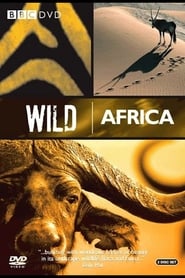
Wild Africa
د English ژباړه ډاونلوډ کړئ
د خپرونې معلومات
تګونه
د English سرليکونو مخکتنه
لومړۍ 171 کرښې.
Africa is a parched continent...
...where the driving force of life is fresh water.
Often sparse - but sometimes torrential
water is an architect of landscapes...
and a catalyst for some of the most dazzling wildlife spectacles.
This is the story of Africa's most precious commodity...
and of the many enchanting worlds it has created.
The source of all of Africa's fresh water are rain-bearing clouds,
rising off the warm oceans which surround the continent.
Washing over the land, their destination is uncertain...
and ruled by fickle winds.
But it's Africa's high ground the hills and mountains
which catch most of their precious cargo.
The contours of the land...
the troughs and valleys first channel the flow of water...
Gathering in volume and strength,
water increasingly takes control... carving its own path.
Victoria Falls in Zimbabwe...
the greatest single curtain of water in the world...
little wonder, the local tribes call it 'the smoke that thunders.'
With thousands of streams now channelled into one powerful river...
the waters become their own natural architect.
Boulders hammer at the river bed...
making the Falls ever higher, the gorges deeper.
This body of water has a name... the Zambezi River.
As the land levels out,
the river becomes a frontier of opportunity...
The waters are calmer... warmer...
rich with oxygen and dissolved minerals... crucial ingredients for life.
And the fishing's good!
The reed cormorant is beautifully streamlined to pursue catfish...
Fish is also the staple of the local Tokaleya people.
From its source over a thousand kilometres away,
the Zambezi waters are now tamed...
gentle and rich enough to support life.
The Zambezi is one of four major rivers
which originate in equatorial Africa and branch out
like giant arteries across the continent.
Clearly visible from space,
the Congo drains over 3 million square kilometres of tropical rainforest.
The Nile is the world's longest river...
flowing almost 7000 kilometres to the Mediterranean.
And the mighty Niger...
bringing life to West Africa's Sahel desert.
Feeding these great rivers are a myriad of tributaries...
branching like capillaries across the face of Africa.
Tributaries yes - but by any standards still great rivers.
Like the Luangwa, which feeds the Zambezi.
Winding its way from the high ground,
the Luangwa has slowed and collected silt...
which it now sheds... to form a near-desert landscape.
For land animals,
the river is one of the few places to get a much-needed drink.
Here - as in most of Africa the rains are sparse and unpredictable.
The drought can last 8 months or more...
the Luangwa a dwindling resource.
Though 57 million tonnes of rain falls on the African continent every day,
as much as 80o/o of it is lost by evaporation or absorbed by the ground...
so the rest is precious...
Such is the demand for water,
that all sorts of takers crowd the riverbank...
assuming a temporary truce.
But quenching a thirst is not without risk.
The Nile crocodile... a creature older than Africa itself...
its hunting skills honed over 200 million years.
Using extreme stealth,
the crocodile needs to get within a metre of its prey.
Desperate to drink, the buffalo seem blind to the danger.
...just too much for a croc out of water...
...but they'll be another chance.
The dry season brings plenty of opportunity for crocodiles,
but it's a real problem
for Africa's other large freshwater animal the hippopotamus.
Hippos need deep water to protect their skin from the harsh sun.
And when the river falls to a critically low level,
the males become fired with aggression...
These brutal battles are all about winning deep-water territory,
which the females prefer.
For the victors the rewards of deep water
and numerous females will be enormous...
The lives of hippos are ruled by the ebb and flow of the seasons,
but these small savannah finches known as "quelea"
are totally nomadic,
instinctively finding water from hundreds of kilometres away.
Like locusts, they swarm in their millions,
forming flocks up to 4kms wide.
Quelea - like many birds in subtropical Africa
breed when food and rainfall are plentiful.
But here in Luangwa, one spectacular bird does the opposite.
Carmine bee-eaters breed at the hottest time of the year,
when the sandy banks of the river are exposed by the low water.
He's not banging his head against a brick wall
but excavating a nest chamber.
It's a yearly chore,
as the river is always reshaping the banks.
The steepest cliffs are most in demand because they're safest from predators.
Some bee-eaters will try anything to get what they want...
But owning a nest doesn't guarantee a mate...
she must also be seduced with a gift.
He offers her a bee to seal the bond.
In a crowded colony like this, parasites and ticks are rife,
so carmine bee-eaters take time out to burn them off in the sun.
But they can't afford to relax...
the racket of breeding birds always attracts trouble.
Enter the dragon.
Monitor lizards are formidable scavengers and competent swimmers
quite at ease along Africa's rivers.
The bee-eaters are powerless to stop this determined egg thief.
But by breeding in huge numbers
only a small proportion of the nests are raided.
And many of the eggs are out of reach.
It's not just monitor lizards that the bee-eaters need to fear.
Along the banks of the Luangwa is a far greater threat.
...the African fish eagle...
...also partial to birds.
For male hippos it's the drought that can be a killer.
Under baking skies, those wounded and exhausted from battle can easily succumb.
And waiting in the wings... the patient undertaker.
Though their diet is usually small fish,
crocodiles can get by on just one big meal a year...
...and a large male hippo carries more than two tonnes of flesh.
A crocodile's stomach juices are more acidic than any other animal
strong enough to digest every part of the carcass - even hooves, bones and skin.
Despite their massive jaws, crocodiles can't chew,
but they can tear off large chunks of meat by gripping the carcass and spinning.
The largest crocs can gorge nearly half a tonne of flesh.
Under such an assault the carcass can vanish in a matter of hours.
Africa's rivers are vital lifelines,
bringing relief to the harshest of places,
yet they hold only a fraction of the continent's fresh water.
Over the last 20 million years
Africa has been tearing apart along the Great Rift Valley,
creating new basins which have since filled with water.
The result is a string of giant lakes...
such as Tanganyika, Kivu... and Malawi.
Lake Malawi is an ocean of permanent fresh water...
nearly a kilometre deep and 600 kms long.
The birth of this great lake brought with it a rapid explosion of life.
More than 700 types of cichlid fish have evolved from a single species
which first entered the lake from nearby rivers.
Through competition for food and space,
each type of cichlid has developed its own special habits.
Many feed on algae
each evolved to harvest different types of rock face.
But not all cichlids are vegetarians.
Stalking the mid-water shoals is a fish which is fast as lightning...
...the barracuda of Lake Malawi.
And lurking beneath, the only fish in the world who plays dead.
This cichlid lures prey by mimicking a rotting corpse.
In such a dangerous world, young cichlids need cover.
Many Malawi mothers protect their brood in their mouths.
It works fine until the youngsters get too big...
When that happens, these particular cichlids swim deep...
Fifty metres down they find new child minders...
a pair of catfish.
The catfish already have a large brood of their own,
yet they tolerate adopting hundreds of young cichlids.
This remarkable behaviour is so new to science that no one yet knows how
or why it has evolved.
Lake Malawi is a stable body of water,
where life is sheltered from extremes of climate...
but the arrival of the rains has a profound influence
on all its inhabitants.
Erupting from the lake surface, billions of flies...
forming clouds 2 kms high and 5 kms wide.
No-one knows what triggers this event...
the cycle of the moon...
or maybe the hammering of raindrops on water.
For the flies, the journey from the lake bed is perilous...
Their larvae must ascend 40m...
running the gauntlet of a thousand mouths.
Wild Africa subtitles in other languages
More English subtitles for Wild Africa
- NL PAL DVD9 · 44 downloads · 2020-12-07
- Part 4of6 Coast Xvid AC3 www mvgroup org ENG · 21 downloads · 2007-08-26
- Part 3of6 Deserts Xvid AC3 www mvgroup org ENG · 15 downloads · 2007-08-26
- Part 5of6 Jungle Xvid AC3 www mvgroup org ENG · 19 downloads · 2007-08-26
- Part 2of6 Savannah Xvid AC3 www mvgroup org ENG · 18 downloads · 2007-08-26
- Part 1of6 Mountains Xvid AC3 www mvgroup org ENG · 13 downloads · 2007-08-26
- -=complete=- Xvid AC3 www mvgroup org ENG · 20 downloads · 2007-08-26
تبصرې
No comments yet. Be the first to leave one.