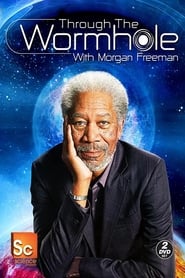
Through the Wormhole
د English ژباړه ډاونلوډ کړئ
د خپرونې معلومات
تګونه
د English سرليکونو مخکتنه
لومړۍ 200 کرښې.
It's one of the great mysteries of science --
a mystery that if solved
will force us to rethink our place in the universe.
Is life on Earth unique?
Or is it spread throughout the cosmos?
If we share the stars with aliens,
why haven't we heard from them?
Or are we truly alone?
Space, time, life itself.
The secrets of the cosmos lie through the wormhole.
We've all done it --
stared into the night sky,
gazed at the vast canopy of stars
and wondered what or who is out there?
Is there other life in the universe?
Maybe on a planet like ours with water and air?
Or on some other kind of planet or moon
supporting an alien form of life?
As a young boy growing up in the Mississippi delta,
I'd sit on the porch in the evening with my family,
and we'd talk about things.
When it was cloudy, it was very dark --
pitch black.
We would think we were all alone,
and then sometimes people would just appear out of the darkness.
Who you see coming, Morgan?
It's Devon and Travis.
Hi, boys!
Could our universe be just as deceiving?
Might other sentient life-forms just appear
out of the seeming darkness of space?
There are more stars in the universe
than all the grains of sand on every beach on Earth,
and countless planets orbit those stars.
So it would be arrogant to think
that we are the only creatures in the cosmos.
I think it's easy to imagine life on other worlds,
and I'm not alone.
A whole category of scientists investigate alien life.
They're called Astrobiologists.
Lynn Rothschild of the NASA Ames Research Center
is one of them.
I am so lucky that I have a job
that is so incredibly fascinating
because, to me,
it's impossible not to be fascinated
with the potential for life.
To me, looking for the bizarre, the extreme, the exceptions,
and some of it's here on Earth,
but there may even be some of it elsewhere,
and, I mean, that's the sort of thing
that just absolutely blows your mind.
We form theories about alien life
by first looking at life on Earth.
Our planet is filled
with an incredible diversity of creatures
uniquely tailored to their environment
by billions of years of evolution.
A normal condition for life, what we see,
is all lovely,
and it's just sort of these medium temperatures and so on,
but it only describes a very tiny slice
of where life can actually survive.
We need to have liquid water,
but there are organisms that can beat the odds
and live above the boiling temperature of water
and below the freezing temperature.
We have to be in a certain environment
that's not too acidic and not too basic,
and yet there are organisms
that can live down incredibly acidic conditions.
Life on Earth can survive in extreme environments,
but can life survive on other worlds?
It's a mystery set in space...
And that makes it tough to investigate
because the human race has barely left Earth.
Searching for clues is incredibly difficult.
Fortunately, sometimes the clues come to us.
In 1969,
a 220-pound meteorite crashed into Murchison, Australia.
The Murchison meteorite was more
than just a piece of rock floating through space.
It was a doorway to alien life.
A piece of the meteorite is kept here
at the California Academy of Sciences.
The reason this is so exciting to scientists is
that it's as old as the solar system,
and yet we found that it contains
the building blocks of life --
things like amino acids and other sorts of chemicals
that we use to make our own bodies and all life on Earth.
So what it shows is
that these building blocks were around in our solar system
before life arose on the Earth.
Life may have come to Earth in a meteorite like this,
and life similar to ours
may be spread through the universe in the same way,
as meteorites act like seeds,
raining down the ingredients for life on fertile planets.
So what does this mean for our hunt for E.T.?
For one thing,
if the common elements of life as we know it
are spread throughout the universe,
then life on other planets might be similar to life on Earth.
If we look at enough Sci-Fi movies,
there are all sorts of weird and wonderful aliens out there,
but what we're really interested in
is what these organisms are built from.
And if you look at life on Earth,
we're all built on a form of carbon chemistry
called organic chemistry,
and this seems to be the language of life.
If you look out into the interstellar medium,
the same compounds are there as on Earth.
If you look at what we're made of secondarily, it's water.
There's water all over the universe.
So in terms of our biochemistry,
life everywhere I think would be very similar to Earth
in terms of its biochemistry.
But alien life
would not necessarily look like human life.
Life evolves to suit its environment.
One of the big things
that would affect what life looks like on another planet,
particularly if you're starting to look at large life,
macroscopic life like us, is what the gravity's like.
Now, on Earth, we've all evolved under 1g, 1 gravity.
But if we evolved on a planet with 2g or 5g, for example,
we would have to have correspondingly thicker legs.
We would have to have much stronger limbs
to hold up our weight,
and maybe at some point,
we'd be pushed so were basically flat on the ground
because we couldn't hold up any weight at all.
But conversely,
if we had evolved on a planet that, say, had 1/2g,
maybe we'd be tall and thin and avatar-like --
you know, creatures and not the way we are today.
So gravity is something we don't tend to think about,
but that really is one of the things that shapes life.
If there are aliens out there,
finding them will be incredibly difficult.
Astrobiologists are like detectives
that can't get near the crime scene.
They're limited by our technology,
which, so far, can barely send probes to nearby planets.
These probes tell us that Earth harbors
the only currently known sentient life
in our solar system,
which doesn't mean there isn't any life out there.
NASA is optimistic about someday finding simple forms of life
on one or more of our neighbors.
Microbes may live in the Martian soil
or float in the clouds of Venus.
Strange creatures could swim in the icy waters
of Saturn's moons.
If we find alien microbes outside the Earth
or even Earth microbes thriving on other worlds,
it greatly raises the odds
that life is scattered across the universe.
E.T. probably isn't in our neighborhood,
but the universe is unimaginably large.
He, she, or it may be out there somewhere.
So around the world,
science detectives have sent out an all-points bulletin
for extraterrestrial life.
They're listening to the stars...
...Staking out possible lairs...
Putting together composite sketches...
And looking for clues it may have left behind.
The hunt is on.
And now we're discovering the incredible truth.
We don't have proof
that we share the universe with other intelligent species,
but many scientists believe that they are out there,
proof or not.
Perhaps extraterrestrials are watching us right now.
Maybe they just sent us a message.
Or maybe they have no idea that we're here,
and they're talking among themselves.
We'll never know the truth unless we listen.
For half a century, the SETI Project,
the Search for Extraterrestrial Intelligence,
has done just that.
SETI combs the sky with radio telescopes,
hoping to hear alien transmissions.
They're trying to wiretap E.T.,
but they don't have his phone number.
So, much as the CIA hunts for terrorist chatter,
SETI tries to listen to everything out there.
It's a daunting task.
For starters, how can we tell the difference
between a natural signal from the stars
and an intelligent signal sent by strange alien beings?
Dr. Jill Tarter is SETI's chief alien hunter.
If you'd like to listen to the cosmos,
take an old-fashioned radio like this, an analog radio,
and tune the radio between stations.
And you hear that hiss?
About 10% of that noise
Through the Wormhole subtitles in other languages
More English subtitles for Through the Wormhole
- Through the Wormhole S02E06 Are there parallel universes · 51 downloads · 2018-02-08
- through the wormhole s08e04 is gun crime a virus internal 720p HDTV x264-DHD · 67 downloads · 2017-05-17
- through the wormhole s08e03 can we hack the planet internal 720p HDTV x264-DHD · 56 downloads · 2017-05-10
- through the wormhole s08e02 can we cheat death internal 720p HDTV x264-DHD · 64 downloads · 2017-05-04
- through the wormhole s08e01 is the force with us internal 720p HDTV x264-DHD · 69 downloads · 2017-04-26
- Through the Wormhole S07E04 Can We All Become Geniuses 720p WEB-DL x264-Sleepless · 72 downloads · 2016-10-10
- Through the Wormhole S07E04 Can We All Become Geniuses 720p HDTV x264-DHD · 50 downloads · 2016-09-22
- Through the Wormhole S07E04 720p HDTV x264-DHD Can We All Become Geniuses? · 54 downloads · 2016-09-21
تبصرې
No comments yet. Be the first to leave one.