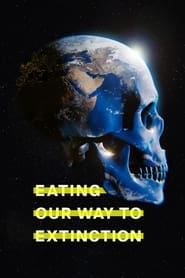
Eating Our Way to Extinction
د English ژباړه ډاونلوډ کړئ
د خپرونې معلومات
تګونه
د English سرليکونو مخکتنه
لومړۍ 178 کرښې.
But surely you must realize that this is their home.
These Indigenous tribes have been living on this land
for hundreds of years.
Our Earth...
She is ever in flow and motion.
A dynamic symphony of forces all working together,
breathing life into the four corners of the world.
And for millennia, cultures the world over
have called her their mother.
We live on an incredibly beautiful planet.
A home that we will hopefully pass on to generations to come.
But as the years go by, it's becoming
increasingly hard to imagine
what kind of a world we're leaving behind us.
We've spent the last four years traveling around the world
filming the stark reality that people now face
from the threat of ecological collapse.
It's now become very clear to us
that there's one thing driving the destruction
of our ecosystems faster than anything else.
Let us show you how this very same thing
might just also be our salvation.
Climate and environmental scientists
warn that we are fast approaching
the point of no return
if we don't make a substantial course reversal.
We'll see really serious catastrophic effects
in the next few years, certainly in the next decade or two.
The world will be completely different
from the way it is now.
Since 1900, we have seen a dramatic increase
in worldwide weather related disasters.
There have now been four times more weather related disasters
in the last 50 years than in the previous 100.
We began to work together to move
this issue onto the global center stage.
There was a lot of discussion about the contribution
from buildings and from industrial factories,
but I became aware during that same period of time
that there was another factor that was going undiscussed,
and that is the role of animal agriculture, which I could see was playing
some significant role around the planet.
But this was the elephant in the room no one wanted to talk about.
Whatever environmental issue you want to look at
from species loss to water pollution,
to water use, to climate change, animal agriculture
is one of the top causes.
The critical, widespread negative impact
of animal agriculture on our planet is undeniable.
Severe global crises
from climate change
and environmental damage to species extinction,
hunger, poverty, disease and antibiotic resistance,
all of these have direct connections
to animal agriculture
and the massive inefficiency
of our current food production systems.
A report published by WikiLeaks as far back as 2009,
exposed the conversations between Nestlé executives
and U.S. officials called "The Tour D'Horizon."
The Nestlé executives said that their own research had shown
that the world was set to run out of fresh water
within the next 30 years.
It stated that one of the greatest reasons
for our detour down this catastrophic path
is the global demand for meat products.
If you look at the impact that food choice has on--
on global warming, it's very significant.
Eating meat is huge for global climate,
and that's something where personal choice is the determining factor.
So there's the only case I can think of
where individual human choice
would have a big effect, would be food.
We're now over the line.
And the idea that we're going to double meat production
between now and 2050,
this is just unsustainable.
This is going to have to give.
Our diet is taking us to an abyss.
A significant reason why livestock production
has been having such a huge impact on greenhouse gas emissions
is because of the large surfaces
of forests that have been destroyed
in order to make room for pastures and for the growth
of soybean and maize for feedstock production.
Our forests were once full of the most incredible life.
In more recent years, we began to grow an insatiable appetite
for meat and dairy, and as our demand for more meat grew,
we needed more and more land.
So we slashed and burned our way through the pristine forests,
destroying everything in our paths
to make way for the animals we desired to eat.
As these animals weren't allowed to roam free
as they naturally do in the wild,
their grazing areas soon became empty,
and so, of course, we needed to feed them,
so again, we slashed and burned our way
through more and more forests,
sowed the ground with genetically enhanced corn and soya,
and then dowsed it in pesticides,
herbicides and synthetic chemical fertilizer.
Animal agriculture has literally changed the face of our planet.
The green land is used for human crops.
A great area that spans the globe.
And yet the land we use for animal agriculture,
shown in red, now occupies vast amounts of our Earth's land,
a far greater area than that used for human crops.
Almost all the Earth's surface has-- now bears the mark
of some kind of human impact,
and most of that is livestock production.
Agriculture has transformed the planet like nothing else.
To produce milk, we farm an area about the size of Brazil.
To produce beef, we farm an area about the size of Canada,
the United States, the whole of Central America,
Venezuela, Colombia and Ecuador combined.
To produce eggs, we farm an area the size of Sweden.
To produce aquaculture feed, an area about the size of the UK.
A plant-based diet would reduce the amount of land required
to produce our food by 3.1 billion hectares.
That's an area the size of the entire African continent.
The Amazon is the world's largest tropical rainforest.
This ancient and richly biodiverse world
is slowly being replaced.
It is often assumed that much of the soy
being planted in Brazil is for human consumption.
In fact, less than six percent of the soy
grown across the globe is fed to humans.
The vast majority is grown to create
animal feed for livestock.
The soy is exported all around the world
and fed to the billions of chickens, farmed fish,
pigs and cows that we eat each day.
The forests are not only home to millions
of species of wildlife and plants,
but are also great regulators of our planet's atmosphere.
Day by day, they slowly breathe in the carbon dioxide
whilst producing billions of tons of fresh oxygen
for our air.
Each year, an estimated 18 million
acres of forest are lost,
which is roughly the size of the country of Panama.
It is thought that about half of the Earth's
mature tropical forests have now been destroyed,
and some scientists have predicted
that unless significant measures are taken on a worldwide basis,
by 2030, only ten percent of the forests will remain.
One of the most precious things we have in the world is our rainforests.
The rainforests are literally being chewed away,
um, by farmers who know they can make money
by cutting another acre, and then another acre,
and then another acre for meat.
Each year, hundreds of tribespeople,
indigenous to the Amazon rainforest,
have their villages burned to the ground.
They have been forcibly removed from their land,
with many of them murdered by the agribusiness paramilitary
who seek to turn their jungle home
into farmland for growing soy for livestock feed.
One of the worst affected tribes is the Guarani Kaiowá
in Mato Grosso do Sul.
So there was actually a report that came out in 2018,
and they found that the world's top five livestock corporations
now release more annual greenhouse gas emissions
than ExxonMobil, Shell and BP.
It is crazy when you think about it
because the EU is spending £24 billion
of taxpayers' money on livestock farming each year,
and this is at a time when we are facing
an ecological collapse, and we drastically need to reduce
greenhouse gas emissions.
So it's no surprise that people are asking
a lot of questions now about the fact that there seem to be
some serious conflicts of interest going on here.
There's some very heavy lobbying going on of government,
and I think that happens throughout the world,
and it's just a historic thing
that needs to be, I think, rebalanced.
Today, democracy does not always function
Eating Our Way to Extinction subtitles in other languages
تبصرې
No comments yet. Be the first to leave one.