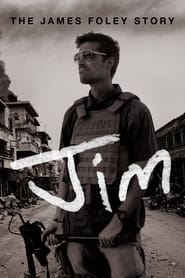
Jim: The James Foley Story
د English ژباړه ډاونلوډ کړئ
د خپرونې معلومات
تګونه
Download English Subtitle Files for Mobile (2)
د English سرليکونو مخکتنه
لومړۍ 200 کرښې.
I was in my office at work and I got a call
from an international number. I always an...
Through the last three years, when it was an international call, I would answer it.
And it was a reporter in Dublin, wanted a reaction for the story.
I said, "Reaction for what?"
And then they were really caught back by that question obviously,
and they said "Uh, I'll call you back in five minutes." And so then I went online
and saw the picture.
It's not the way you want to find out.
I never, ever imagined that it would end in that fashion, right?
For days, that first week, I just would constantly see that image and...
It's been, uh... It's been tough.
You go through those emotional swings and, you know, why the hell did you go back,
you know that second time? And then...
But I keep coming back to the same answer.
Name the sports newspaper that hit US newsstands in 1990.
- - James.
- The National. - It was.
Ladies and gentlemen, please help me welcome, Mr. James Foley.
Thanks for that generous... Overly generous introduction.
And I'm definitely not a hero or noble or anything. I'm just, uh...
Trying to do my work and got into a little bit of trouble.
I arrived in Benghazi in mid March, and the night I arrived,
I heard nothing but bombs and gunfire.
I wondered, "What's going on?" Another journalist said,
"The bombs, that's gelatina, that's how they fish."
Blow the fish up. "And the gunfire, no, that's celebratory gunfire."
If Gadhafi comes to Benghazi, are you guys prepared to fight?
I think in some ways, Libya was a turning point for Jim.
You know, I was starting to see his
trying to figure out where he belonged in the world.
You know he tried the Teach for America, and then in Chicago, he worked at the Cook County Jail.
He anguished over his teaching. He didn't think he was a good enough teacher.
And he wanted to write and he loved people and liked to interact,
tell people stories. So when Jim decided he wanted to go into journalism from teaching,
at first we thought, "That would be good, maybe that'll be a better fit, Jim."
But when he decided to do conflict journalism...
You know, that was a whole different deal.
Well, he didn't exactly tell us.
He graduated from Medill, and we said "Jim, well, what're you gonna do?"
And he said, "Well, I'm working on it."
So the next thing we knew, he was gonna go to Iraq embedded with the Indiana National Guard.
Well, I guess I'm a conflict journalist at this point, so that's how we found out.
It's an all out sprint, an exhilarating and dangerous run for cover.
Got 'em.
When Jim started the journalism path, we did have some heated discussions on...
views and the military and what not.
My views are a little bit more conservative... than Jim's.
I would say a little bit more liberal.
But when he did his embed, I think, is where we came closer together.
As soon as the shooting died down,
the platoon discovered a body limp on the roof.
- Do they know who the guy is? - Yes. These are the family members.
- These are the family? - Yeah.
And he came back to my house and he told me... He was like,
"Hey, John, I'm thinking about going to Libya."
I'm like, "Jim, that's a horrible idea. That is absolutely a horrible idea.
If you go over there... no one's coming for you.
Why would you put your life in danger? We're dropping bombs over there.
And God forbid if you go over there and we accidentally kill you.
I mean, why? Why?
Libya was very exciting as a journalist because you had this chance to talk directly
to the people, to see exactly what was going on.
There was no U.S. soldiers anymore, no organized army anymore,
telling you what you should and shouldn't do.
But it was also extremely dangerous.
I was actually talking to one of my buddies, Bostey about my brother Jim, and how, you know,
he's this journalist and is like super crazy,
but like badass at the same time, you know? I was like, yeah,
my brother's a badass, you know? He's crazy, he's awesome.
I also was very naive myself. I didn't know exactly what that would mean.
I didn't know he was actually gonna be immersed in actual, like, crossfire.
There's snipers in this building about one kilometer away.
Tank. The groups decided to go in.
Little bit of heavy fighting. Heavy casualties, about 30 wounded, two dead out of the 40.
There's one video that always stands out to me. It's like when he's standing in the square.
There does seem to be a strong sense that they won't give up the fight
and that there are a force of young fighting men,
although unorganized, there's plenty of will to hold out here.
How does my guy know this stuff? Like, how does Jim Foley, like...
He's just my meathead friend, you know?
And it was so foreign to me in terms of an experience.
I'm like, well, how do you get into Libya?
Oh, you're a freelancer, like who wants this? Are you getting paid?
This is Jim Foley reporting from downtown Benghazi, Revolutionary Square, Global Post.
Jim was there at the early stage of this movement of there being more freelancers
in conflict areas.
The world has changed so much in terms of digital publishing
and newspapers started to eliminate things that they didn't see as essential.
International coverage dwindled down to very little.
So we saw an opportunity to fill that void and we needed to work with freelancers.
Freelancers decide to work together just on the basis of this...
initial quick read chemistry.
I saw this new guy who I hadn't met before. He looked friendly enough, so I said,
"Hey, what's up?" He said, "Oh, not much, going to the front line."
And he'd heard a lot about Libya and the fact that it was very cheap to work.
Rebels and protesters were eager to show us their side of the story.
You know, they were driving us all over for free. They were translating for us for free.
Many of us never really experienced the luxury of journalism in its heyday.
What we do is journalism on a shoestring budget.
So we've had to be a lot more resourceful in a way and just more street savvy.
I think in a sense, the way we all got to know each other was the Africa hotel in Benghazi.
It was the cheapest hotel and the crappiest and we were all staying there.
I'd seen Jim talking to, you know, a few other journalists
and he was just really friendly with everybody.
It was unusual in a place like that. You know, there's still an edge of competitiveness
in that environment, whereas Jim was just like, "Yeah, whatever."
He gave off a really good first impression and, you know,
it helps that he's like a super good-looking guy, and I was just like, "Who is this guy?
Who are you?"
Just that jaw man, like, just fucking cut cheese with that thing.
There wasn't anything mundane about the man whatsoever.
He never really like, projected himself onto a situation and he dealt well with people.
Who are the Libyan rebels determined to overthrow 42 years of dictatorship?
Welder? Off-shore welding?
- Platform, yeah. - Okay, dangerous job.
They're brave as individuals, but many show a dangerous lack of weapons training.
There were so many freelancers who came in
at that point in time who were so new,
Jim and I among them, and I found out only later that there were a number
of much more experienced photo-journalists
who'd made one or two trips to the front line
and said "Fuck it, this is way too dangerous."
Jim had a high tolerance for danger.
- Shit! - I mean, sure, he was drawn to that. All of us are in a way.
He was cool as a cucumber as well. Hey, like wearing this little like,
tiny vest that he used to wear.
The fact that he stayed so calm made it easy to feel calm in that situation,
but, of course, sometimes, I was just like, "Well, that's crazy, I'm not going there with you."
I would come back to Benghazi and there was stuff going on there.
There was families and they were out there in the protest,
and they were out there maybe handling medical supplies,
which is probably more important to what this revolutionary movement was...
but then being called out to that front line again like some kind of siren song.
It was one of those mornings where we decided we were gonna get out there early.
We wanted to get a fresh look at the front lines.
It was myself, Clare Gillis, Manu Brabo and Anton Hammerl,
a South African photo-journalist.
- Meet my new friend. Anton. - Anton.
And what it was really was just a highway, a coastal highway going all across Libya,
and this is where the battle was going on.
So it was kind of like a Mad Max type war.
Now this was something common that some reporters did.
Freelancers like myself didn't have big budgets, we'd jump in with the rebels.
And it was at your own risk if you wanted to go further or not.
We got to the points where we saw another group of rebels
saying Gadhafi forces are 300 meters away.
And myself looking at Clare, like, that's impossible.
And I remember, you know, Anton turning to me and saying "Hey, this isn't safe."
But we didn't turn around, and we said, "Well, let's get off the road anyways."
Well, that was the exact wrong thing to do.
Two heavily armed Gadhafi pickup trucks came over that rise firing.
I remember so clearly the sound of it,
the volume of it, the sound of something eating metal...
and I remember hoping against hope that there would be some kind of out, out of this,
there was some kind of trap door in time.
I crawled back to the sand dune, Anton was at the other sand dune in front of me,
I heard him call for help.
It appeared he was cut across the midsection with AK fire
and it was a serious amount of blood. He had already lost consciousness
and probably already died.
A group of young soldiers approached me and we were thrown in the back of a truck.
I remember getting photographed with a cell phone,
and thinking, you know, this is where they find all these photographs
that are evidence of war crimes some day, and realizing this is me now.
I was with my mother.
We were out to lunch and I received a phone call,
and, um, that's how we first heard, you know?
I think I was in denial about how dangerous this really was, Brian.
I was furious, just furious.
Scared for him, furious.
I hate to revisit it, but it's just like... I told you, Jim.
I think we all went through the stages of total shock, you know, and then just...
What are we gonna do, and then anger. After all we're family, you know?
You're so humble. You lost everything,
your freedom, your control, your ability to talk to anybody and tell anybody you're okay,
thinking one minute, "Oh, yeah, I'm a foreign correspondent,
and the next minute somebody who you respect killed, and you have nothing."
Jim was concerned that his own competitiveness
with Manu, with Anton, with himself, his own, sort of macho aggressiveness
had driven him to make decisions that were not the best decisions.
We were all questioning our judgment.
One of the main things that affected all of us is that Anton had kids
and none of us do.
Every day I have to deal with the fact that Anton is not
going to ever see his three kids anymore,
and I was part of that decision-making process... that took him away,
that took him away from his kids, and his wife.
And I had a lot of time to play over those moments,
especially that one day when we were captured.
I tried to question myself, "What are your reporting on, what is this all about?"
It was quickly apparent that this was about being what
you think is an authentic conflict correspondent,
seeing the front line and it not being enough to just see it
from a distance, but to push it to the next level.
You were basically waiting to get shelled and the question is, why?
You know, why are you doing this?
A lot of us were just scratching our head, right? There's no money.
Maybe you get a story here or there that you sell.
You know I used to "loan him money."
Jim: The James Foley Story subtitles in other languages
More English subtitles for Jim: The James Foley Story
- Jim The James Foley Story 2016 1080p WEB h264-OPUS · 23 downloads · 2021-10-07
- Jim The James Foley Story 2016 1080p WEB h264-OPUS · 24 downloads · 2021-10-07
- Jim The James Foley Story 2016 WEB-DL x264-RARBG · 30 downloads · 2017-02-22
تبصرې
No comments yet. Be the first to leave one.