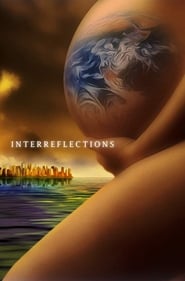
Interreflections
د English ژباړه ډاونلوډ کړئ
د خپرونې معلومات
تګونه
د English سرليکونو مخکتنه
لومړۍ 159 کرښې.
[increasing high-pitched ringing]
[propeller increasingly rumbling]
What I call the World Game now is an exercise
that I have been following through for a great many years.
Can you hear me in the back alright?
And it started with my being in the United States Navy.
The time of World War One. At that time,
the Navy's represented investment of all the science,
all the chemistry, all the physics, all the mathematics
known about our universe.
And I was shocked that it was only going
in this negative thing of killing.
We have this extraordinary technology.
Men would not doing anything with that kind of accuracy
on the land in relation to try to make man a success.
It became very quickly apparent that the fundamental
raison d'etre in all of our state craft
was based on Thomas Malthus.
Now Thomas Malthus was the scientific servant
of the masters of the earth of the time.
He the first economist in the history of man to receive
the total Vital Statistics from around the spherical earth
and in 1800, he wrote his first book,
which he said apparently man was reproducing himself
much more rapidly than producing good to support himself.
Therefore, very sad, but man is supposed to be a failure.
Shall we inform the whole world,
the whole world of that time being
more than 90% illiterate and unable to then even read
any information if it was sent to them.
Should we try to inform the whole world? There is nowhere
nearly enough to go around. If we divide up evenly
all die slowly together.
And that, that, that, that didn't seem logical to them at all.
They said, "What we can do is a following:
all these people out here are ignorant of what we know about
and because they're ignorant, they think they have some hope.
And we know they don't have hope most of them.
Why, why eliminate their hope? They're going to die poor characters,
and might as well let them die in ignorance."
Ignorance and hope.
This is the kindest thing to do.
And that's exactly what they did do.
How's it going?
Everything seems to be on pace. But, you know,
there's only so much we can be sure of since its theoretical.
- Think it's going to work? - I have no idea.
- Hey, any word about John yet? - Glad you asked,
actually, yes, John just made the evening news.
And it appears Simon
wants to gloat about it.
They call themselves Concordia, after the ancient Roman
goddess of harmony. The pro-revolution hacktivist
group world famous after a decade of subversion
suffered a major blow this week.
With the capture of leader John Taylor.
Once a high-ranking military engineer,
Taylor is being held in an undisclosed location
by the UN's Global Security Agency.
And with us to discuss is GSA director,
General Simon Devoe.
- Simon, thanks for being here. - My pleasure.
So let's step back if you don't mind.
Who are these people
and how have they operated with such impunity
after all these years?
Concordia was formed by a group of cyber warfare
experts that defected from their military positions
around 2050.
And in the process, a great deal
of classified information
and advanced technologies were stolen.
What kind of technologies?
Mostly communications,
cloaking, encryption, surveillance.
Hence why they remain so elusive.
But the GSA's core concern is the theft of some highly
experimental warfare technology.
Advancements in biochemistry
and molecular science that have dramatic potential
- for large-scale harm. - Aside from all the hacks,
leaks and other things that have made them so famous.
Yes, they certainly enjoy being disruptive.
Disruptive indeed. Just last year they breached the accounts
of the world's richest CEOs extracting almost
two trillion dollars, moving that money
into virtually traceless charity donations worldwide.
Hmm! I tell you the warm fuzzy feeling I got
from that one has yet to go away.
Delicious.
Before that were the notorious email leaks
revealing major Wall Street firms had lobbied CIA,
MI9 and Mossad to help gain monopoly control
of rare earth metals in Asia.
Yeah, too bad I didn't do a damn thing.
Corporate terrorism just gets worse.
Exposure media does very little these days.
It just sets a tone.
And in 2054 they jammed both Chinese
and American defense systems during the Saudi Annex Crisis
disabling thousands of warheads.
A move Concordian sympathizers claim
might have stopped World War III.
And speaking of sympathizers,
what do you make of the support?
Legions of followers worldwide.
Troubling, but I get it.
Lots of problems out there.
The food, water crisis. Refugee migration.
Automation-driven unemployment, serious ecological decline.
I get it and it's natural to be angry,
but anger doesn't solve problems or justify unlawful acts.
This Robin Hood savior appeal of Concordia
- is just an immature fad. - A passing trend?
I think so. As cinematic as the idea is of Concordia,
the radical yet benevolent protagonist,
fighting for their utopian revolution
against the evil establishment,
last I checked this is reality not a movie.
Seems that way.
So I encourage people to regain trust in our time-tested
institutions and democratic process.
Not tear it all down as Concordia
would like to see.
Now, in regards to John Taylor.
I understand you once worked together.
Starting in Special Forces, yes.
I even considered him a good friend at one time.
Have you had contact with him since his capture?
Not yet.
But I must say I am very much looking forward
to speaking with my old associate.
So are we, Simon.
Well, I wish I could be a fly on the wall for that.
Thanks for being here, Simon, always a pleasure.
So, can I get you anything before we get started?
I think I'm good.
Alright, feel free to take a seat.
How we doing on tech?
- Almost there? - All right.
Well, let's, let's go ahead and roll for basic info
and we'll, uh, we'll just, we'll tweak it as we go.
- Sound. - Speed.
And rolling.
All right, so, please go ahead
and introduce yourself and state your work.
My name is Malikan Soyenka and I'm a professor of history
at Columbia University.
My specialty of interest surrounds what most historians
call today the Great Transition.
That period of time between the 21st
and early 22nd century where global society
underwent a rather spectacular social revolution.
That's a good question. I guess time will tell.
All right. Let's, let's inch into this.
Please state your name, vocation and how you found
interest in economics.
I'm Cynthia Floris and I received
an interdisciplinary degree in systems ecology and economics
Interreflections subtitles in other languages
More English subtitles for Interreflections
- Interreflections 2020 1080p WEBRip x264-RARBG · 41 downloads · 2020-10-13
- Interreflections 2020 WEBRip XviD MP3-XVID · 35 downloads · 2020-10-08
تبصرې
No comments yet. Be the first to leave one.