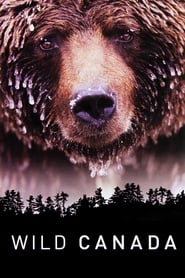
Wild Canada
Скачать English субтитры
Информация о релизе
Теги
Предпросмотр субтитров (English)
Первые 200 строк.
: Canada has some
of the most remarkable wilderness
found anywhere in the world...
And some of the planet's most iconic wildlife.
It has the longest coastline of any country in the world.
It has more surface freshwater
than any other nation on Earth...
And the largest intact forest left on the planet.
And yet much of this great wilderness
and the wildlife today
is a result of the shaping by the hand of humans
going back thousands of years.
Canada is a land filled
with astounding wilderness and wildlife.
And this Series will explore
this incredible natural diversity
and the forces that produced it.
15,000 years ago, Canada was buried
under a kilometer-thick, continent-wide glacier.
This is where the story
of Canada's modern wildlife and landscapes
actually begins.
As sea levels lowered,
a land bridge with Asia was created,
along which new life entered North America.
And for the first time,
humans arrived in this new world.
Right from the start,
they began to change the land and wildlife around them...
And nothing would ever be the same again.
But 15,000 years later,
Canada is considered one of the wildest countries
in the world.
And one of its greatest natural spectacles happens
each year on the country's Atlantic Coast.
This is the province of Newfoundland,
and it's as far east as you can go
on the North American continent.
For thousands of years,
this place has drawn travelers to its shores.
Humpback whales arrive here each spring
from as far away as the Caribbean.
They are drawn by the sheer abundance of this place.
It's a richness that comes from the sea.
Over the years,
this richness drew many different types of visitors.
In 1497, John Cabot arrived
and became the first European since the Vikings
to lay claim to this new-found land.
Cabot was attempting to find a new trade route to China,
but instead stumbled upon
the rich natural resources of Canada.
Here on the East Coast,
that wealth begins under the sea.
Capelin.
Huge shoals of these small fish, numbering in the millions,
mass along the coast of Newfoundland
each spring.
These nutrient-rich fishes
support the incredible abundance of life here.
The Atlantic cod was once here in numbers as great as the capelin.
And such rich fishing grounds
lured the first Europeans to these shores.
Today, the great schools of cod are mostly gone.
But that doesn't mean the capelins here are safe.
These productive seas attract
the largest gathering of Humpback whales in the world.
These massive predators
have traveled thousands of kilometers
to be here at this time of year to feast on the capelin.
They haven't fed for months, and they're hungry.
They can eat up to a ton of capelin
in a single day.
In one massive gulp,
these whales can take in 50,000 liters of water...
and capelin.
The capelins aren't just hanging around the coast
to feed the whales.
They are here for a reason...
to breed.
These capelins are beach spawners,
so to reproduce, they have to get to shore.
And there is only one way to get there...
They have to surf.
Most of the time,
it's hard to truly appreciate the abundance of the sea,
as it's often out of sight, hidden beneath the surface.
But when the capelin spawns here in Newfoundland,
the incredible productivity of this place
literally washes up onto shore...
And this puts them in easy reach
of a whole new set of predators.
Somehow in this crazy tumult
of water, sand, and tumbling bodies,
each capelin has to find a partner.
Then, in the dozen seconds that it takes
for the wave to slide back over the sand
into the sea,
they have the perfect conditions for mating.
The female lays her eggs
while competing males flank her,
jostling for position to fertilize them.
If they're lucky,
the next wave will carry them back to the sea.
While many of the females survive and return to the sea to spawn again,
almost all the males dies.
Like tiny gems, the fertilized eggs came to the sun.
Two weeks later, the larvae will hatch
and be washed out to sea the same way that brought their parents here to spawn.
The richness of this coast
supports some of the world's largest sea-bird colonies.
At Cape St. Mary's,
24,000 gannets make up this breeding colony.
Like the whales,
they come here every year to feast off the abundance of the kingdom,
and raise their youngs.
This incredible abundance of a marine world along the Atlantic coast
drew many of the first Europeans
to these shores.
And to these early visitors, like Cabot,
this was a new frontier, waiting to be exploited.
It didn't take them long to realize
that there were already people here.
John Cabot was one of the first
to encounter a people called the Beothuk,
the native inhabitants of Newfoundland and Labrador.
To celebrate their tribal identity,
they completely covered
their bodies, clothing, and weapons
with red ochre.
This led to the name "Red Indians" being applied
to many of the native peoples of the continent.
This was a meeting of two very different worlds.
But the Beothuk
didn't want to have anything to do with these new arrivals.
Cabot and the other early explorers
quickly came to realize
that this new world was already home to many people.
But what they could never have imagined
was the seemingly wild landscapes they encountered here
had been shaped by the First Nation's inhabitants
over thousands of years.
At the time of Cabot's arrival,
the Iroquoian and Algonquian people of the eastern forests
had created a rich and lush homeland.
In 1679, one European visitor
described these eastern oak forests as
"vast meadows, vineyards,
"trees bearing good fruits,
"so well disposed
one would think nature alone could not have made it."
And that turned out to be very true indeed.
It was a fertile patchwork of oak forests and grasslands,
a savannah-like habitat where wildlife thrived.
When Cabot arrived,
this continent supported huge populations of wild deer,
millions more than it does today.
Over thousands of years,
the people here had engineered their very own garden of Eden
through the careful use of fire.
The first human inhabitants of North America
weren't shaping the landscape with fire
on just a small and local scale.
They were burning tens of millions of hectares
each year.
Fire would burn away the young trees,
creating large grassy openings in the forest...
And clearing the way for larger trees,
protected by their thick bark,
to grow even bigger and produce more nuts and fruits for them to eat.
With controlled burns,
these people created
one of the most productive landscapes
on the continent.
But it didn't last.
Although today,
modern forest managers are rediscovering
the positive effects of fire,
centuries ago,
the practice of burning these forests ended...
And the rich, open savannah habitat of these oak forests
is lost.
Now, after 300 years,
fire is once again shaping
the remaining black oak forests of Eastern Canada.
But only a few tiny patches remain,
protected in places like High Park in Toronto,
which was built over the top of this once great habitat.
Without the practice of burning,
the remaining hardwood forests of Canada
look very different
from those that stood in Cabot's time.
While not as rich and varied, they are much more colorful
because of the abundance of maple trees
in the forest today.
Maple are very sensitive to fire,
so they were kept back by the burning of the forest.
But when the burning stopped,
maple trees started to take over.
One of Canada's most famous natural displays
Wild Canada subtitles in other languages
More English subtitles for Wild Canada
- Wild Canada HDTV x264 MVGroup 5of5 · 34 downloads · 2014-12-09
- Wild Canada 720p BluRay x264-aAF · 36 downloads · 2014-08-13
- Wild Canada 720p BluRay x264-aAF · 34 downloads · 2014-08-13
Комментарии
No comments yet. Be the first to leave one.