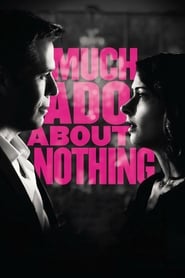
Much Ado About Nothing
Скачать English субтитры
Информация о релизе
Теги
Предпросмотр субтитров (English)
Первые 200 строк.
I learn in this letter that Don Pedro
of Arragon comes this day to Messina.
He is very near by this, not three leagues off.
Have any gentlemen been lost in this action?
But few of any sort, and none of name.
A victory is twice itself
when the achiever brings home full numbers.
I find here that Don Pedro hath bestowed much honor
upon a young Florentine called Claudio.
Much deserved on his part
and equally remembered by Don Pedro,
he hath borne himself beyond the promise of his age,
doing, in the figure of a lamb, the feats of a lion.
Rarh!
I pray you, is Signior Mountanto returned from the wars or no?
I know none of that name, lady.
My cousin means Signior Benedick of Padua.
O, he's returned
and as pleasant as ever he was.
I pray you, how many hath he killed and eaten in these wars?
But how many hath he killed?
For indeed I promised to eat all of his killing.
Faith, niece, you tax Signior Benedick too much,
but he'll be meet with you, I doubt it not.
He hath done good service, lady, in these wars.
You had musty victual, and he hath holp to eat it.
He is a very valiant trencherman,
he hath an excellent stomach.
And a good soldier too, lady.
And a good soldier to a lady.
But what is he to a lord?
A lord to a lord, a man to a man,
stuffed with all honorable virtue.
It is so, indeed,
he is no less than a stuffed man.
You must not, sir, mistake my niece.
There is a kind of merry war betwixt Signior Benedick and her.
They never meet but there's a skirmish of wit between them.
Who is his companion now? He hath every month a new sworn brother.
Is't possible?
Very easily possible.
He wears his faith but as the fashion of his hat,
it ever changes with the next block.
I see, lady, the gentleman is not in your books.
No, and he were, I would burn my study.
But, I pray you, who is his companion?
Is there no young squarer now that will
make a voyage with him to the devil?
He is most in the company of the right noble Claudio.
O, lord, he will hang upon him like a disease.
He is sooner caught than the pestilence,
and the taker runs presently mad.
O, God help the noble Claudio!
If he have caught the Benedick,
it will cost him a thousand pound ere he be cured.
Good Signior Leonato,
You are come to welcome your trouble.
The fashion of the world is to avoid cost,
and you encounter it.
Never came trouble to my house in the likeness of your grace.
For trouble being gone, comfort should remain.
But when you depart from me sorrow abides and happiness takes his leave.
Hmm, you embrace your charge too willingly.
I think this is your daughter.
Her mother hath many times told me so.
Were you in doubt, sir, that you asked her?
Signior Benedick, no, for then were you a child.
Truly, truly, the lady fathers herself.
Be happy, lady, for you are like an honorable father.
If Signior Leonato be her father,
She would not have his head on her shoulders for all Messina
as like him as she is.
I wonder that you would still be talking, Signior Benedick.
Nobody marks you.
What, my dear Lady Disdain! Are you yet living?
Is it possible disdain should die
while she hath such meet food to feed it as Signior Benedick?
Courtesy itself must convert to disdain, if you come in her presence.
Then is courtesy a turncoat.
But it is certain I am loved of all ladies, only you excepted,
and I would I could find it in my heart that I had not a hard heart,
for, truly, I love none.
Dear happiness to women, else would they
have been troubled with a pernicious suitor.
I thank God and my cold blood, I am of your humor for that.
I had rather hear my dog bark at a crow than a man swear he loves me.
God keep your ladyship still in that mind
so some gentleman or other shall 'scape a predestinate scratched face.
Scratching could not make it worse,
an 'twere such a face as yours were.
Well, you are a rare parrot-teacher.
Um, a bird of my tongue is better than a beast of yours.
I would my horse had the speed of your tongue,
and so good a continuer.
But keep in your way, God's name, I have done.
You always end with a jade's trick.
I know you of old.
Signior Benedick, my dear friend Leonato hath invited you all.
I tell him we shall stay here at the least the month,
and he heartily prays some occasion may detain us longer.
Lady.
Let me bid you welcome, my lord.
Being reconciled with the prince your brother,
I owe you all duty.
I am not of many words, but I thank you.
Please it your grace lead on?
Your hand, Leonato. We will go together.
Benedick, didst thou note the daughter of Signior Leonato?
I noted her not, but I looked on her.
Is she not a modest young lady?
Do you question me, as an honest man should do,
for my simple true judgment,
or would you have me speak after my custom,
as being a professed tyrant to their sex?
No, I pray thee speak in sober judgment.
Why, i' faith, methinks she is too low for a high praise,
too brown for a fair praise, too little for a great praise.
Only this commendation I can afford her,
that were she other than she is,
she were unhandsome,
and being no other than as she is, I do not like her.
Thou thinkest I am in sport. I pray thee tell me truly how thou likest her.
Would you buy her, that you inquire after her?
Can the world buy such a jewel?
Yea, and a case to put it into.
But speak you this with a sad brow?
In mine eye she is the sweetest lady that ever I looked on.
I can see yet without spectacles and I see no such matter.
There's her cousin, an she were not possessed with a fury,
exceeds her as much in beauty
as the first of May doth the last of December.
But I hope you have no intent to turn husband, have you?
I would scarce trust myself,
though I had sworn the contrary,
if Hero would be my wife.
Is it come to this?
Shall I never see a bachelor of three-score again?
Go ty i' faith, an thou wilt needs thrust thy neck into a yoke,
wear the print of it and sigh away Sundays.
What secret hath held you here, that you followed not Leonato?
I would your grace would constrain me to tell.
I charge thee on thy allegiance.
O, on my allegiance? Mark you this.
On my allegiance he is in love.
With who? Now that is your grace's part.
Mark you how short his answer is.
With Hero, Leonato's short daughter.
Amen, if you love her, for the lady is very well worthy.
You speak this to fetch me in, my lord.
By my troth, I speak my thought.
And, in faith, my lord, I spoke mine.
And, by my two faiths and troths, my lord, I spoke mine.
That I love her I feel.
And that she is worthy, I know.
That I neither feel how she should be loved
nor know how she should be worthy
is the opinion that fire cannot melt out of me.
I will die in it at the stake.
Thou wast ever an obstinate heretic in the despite of beauty.
That a woman conceived me, I give her thanks,
that she brought me up, I likewise give her most humble thanks.
But that I will have a recheat winded in my forehead,
or hang my bugle from an invisible baldrick,
all women shall pardon me.
Because I will not do them the wrong to mistrust any,
I will do myself the right to trust none.
And the fine is, for the which I may go the finer,
I shall see thee, ere I die, look pale with love.
With anger, with sickness,
or with hunger, my lord, not with love.
Well, as time shall try.
"In time the savage bull doth bear the yoke."
The savage bull may,
but if ever the sensible Benedick bear it,
pluck off the bull's horns and plant them in my forehead
and let me be vilely painted,
and in such great letters as they write,
"Here is good horse to hire,"
let them signify under my sign,
"Here may you see Benedick the married man."
Nay, if Cupid have not spent all his quiver in Venice,
thou wilt quake for this shortly.
I look for an earthquake too, then.
Hath Leonato any son, my lord?
No child but Hero, she's his only heir.
Dost thou affect her, Claudio?
O, my lord, when you went onward on this ended action,
I look'd upon her with a soldier's eye,
that liked,
but had a rougher task in hand
than to drive liking to the name of love.
And that war-thoughts have left their places vacant,
in their rooms come thronging soft and delicate desires,
all prompting me how fair young Hero is,
saying, "I liked her ere I went to wars."
Thou wilt be like a lover presently
and tire the hearer with a book of words.
If thou dost love fair Hero, cherish it,
and I will break with her and with her father, and thou shalt have her.
I know we shall have reveling to-night. Hmm.
Much Ado About Nothing subtitles in other languages
More English subtitles for Much Ado About Nothing
- Much Ado About Nothing (2012) BDRX DL 1080p AVC DTS-HD MA 5 1-SharpHD · 97 downloads · 2015-02-15
- Much Ado About Nothing 2012 DVDRip X264-GECKOS mkv · 79 downloads · 2013-11-30
- Much Ado About Nong 2012 LIMITED 1080p BluRay x264-GECKOS · 47 downloads · 2013-10-08
- Much Ado About Nong 2012 720p BluRay x264 YIFY · 88 downloads · 2013-10-05
- Much Ado About Nothing 2012 LIMITED 1080p BluRay x264-GECKOS English · 64 downloads · 2013-10-05
- Much Ado About Nothing 2012 LIMITED 1080p BluRay x264-GECKOS · 45 downloads · 2013-10-04
- Much Ado About Nothing 2012 HDRip XviD-AQOS · 55 downloads · 2013-09-27
- Much Ado About Nong 2012 1080p WEB-DL H264-PublicHD · 48 downloads · 2013-09-24
Комментарии
No comments yet. Be the first to leave one.