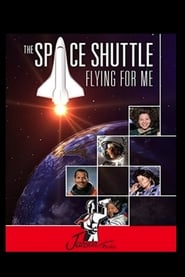
The Space Shuttle: Flying for Me
Скачать English субтитры
Информация о релизе
Теги
Предпросмотр субтитров (English)
Первые 200 строк.
>>Fergie, Doug, Sandy, and Rex.
Good luck, God speed, and have a little fun up there.
Verify ready to resume count and go for launch.
>>Two, one, zero and lift off.
>>When the engines light and then those solid rocket boosters
light you know you're gonna go flying.
If the bolts didn't fire they would pull the launch pad with it.
It's that much power.
>>Having a chance to fly the most amazing flying machine ever built
was just incredible.
>>Every time a child draws a spaceship for us and
sends it to us it's in the shape of a Space Shuttle.
That image, the silhouette of the Space Shuttle is an iconic
image that I think is going to last for generations.
>>The pure number of astronauts that
the Space Shuttle program brought to space
have made a difference for humanity.
>>What I think one of the most lasting achievements of the
shuttle program was I think it allowed us to carry so many
people into orbit that had such a wide spectrum of backgrounds
and capabilities and it allowed young people to dream.
>>This exhibit is a powerful reminder of NASA's
unmatched accomplishments during more than 50 years of exploration
and the great future that lies ahead.
With their payload bay doors wide open,
Atlantis is literally reaching out with open arms to welcome
all visitors, create our unprecedented achievements in space,
and inspire a new generation.
>>Atlantis has flown 126 million miles in space,
2 and a half million handmade parts.
It was made by man and it was made by people that were
dedicated to the program for over 30 years and that really is
something really special.
This is not the end of the program and
thats really a strong message.
We've got a great opportunity on STS-136 here, which is the
next mission for Atlantis and that is to inspire
and teach and really
get the next generation of kids ready to go to space.
>>Of my 7 Space Shuttle flights, 5 of them
were on the Space Shuttle Atlantis so obviously
Atlantis is my favorite bird.
But when I first walked into the facility down there I was
overwhelmed and then when the curtains opened and you walk out
and see Atlantis being so perfectly displayed
it was a very melancholy moment for me.
I had a mixture of emotions.
I had an overwhelming joy of seeing it being displayed so well
so that people could get up close to it and see the wonders
of the incredible devise, the incredible hardware that we flew in space.
But at the same time I had this feeling that I wish we were
still flying to vehicle because because it was an incredible flying machine.
And it gave us capabilities to operate in space
we may never see again.
>>After 30 years of missions,
the Space Shuttle program is over.
The orbiters are now gifts to the American people.
Atlantis at the Kennedy Space Center visitors complex in Florida...
Discovery now at the Smithsonian National Air
And Space Musuem in Virginia...
Endeavour put on quite a show on its way to the California
Science Center in Los Angeles.
And Enterprise, the first shuttle used only in test landings,
is on display at the Intrepid Sea-Air-Space Museum in New York City
with the massive orbiters relegated to museums,
2011 and the final flight of the Space Shuttle is
now but a dream...
>>We would go down to places like the Kennedy Space Center
and people would come up to us and say ' Hey just want to
let you know I've been working for 25 years and this is my last day.'
And at first you would say,
I'm so sorry but almost to a person they would come back
and say ' No don't be sorry.
I am so happy that I was able to be a part of this program.'
And so it was really amazing to see the dedication people
had to that program.
But there's one other thing the shuttle would be remembered for.
Beauty.
The shuttle was just as beautiful on its last flight
as it was on its first.
When we were in the Astrovan on the way to the launch pad for
STS-135, we rounded the final curb and headed straight for it.
The view of the shuttle on the launch pad was simply
breathtaking as it always is.
>>2, 1, 0 and lift off.
The final lift off of Atlantis.
>>People always say how does it feel to fly the last flight
and for me the time it hit me the most I think was when
we undocked from the space station and I was looking out
the window and I could see the station and I was shooting a
hand held laser to give us data about how for it was away.
Then I backed away from the window and kind of floated down
to a corner and as I did I had a few seconds
and I heard Ron Garren on the Radio say,
>>"Atlantis will be parting from
the International Space Station for the last time."
>>And it just gave me a little bit of a lump in the throat
and I go, "Wow this is it."
>>Atlantis weighs anchor from the International Space Station
for the last time.
Twelve and a half years of shuttle missions to build and
service a million pound complex at an end.
>>Space Shuttle flight director and NASA veteran
since the 1960's, Milt Heflin, is the only person to be present
at the final splashdown of Apollo, and the final landing
of the Space Shuttle.
>>When Atlantis came out of the darkness for the 135 landing at
the end of the runway my thought was
boy, she is really strutting her stuff.
She is kind of looking at us and telling us, ok, you guys we're
really good at what we're doing and we're stopping it.
I just want you to know I recognize that,
I'm not happy about that, but we have accomplished a lot in this program.
>>The final touchdown of Atlantis ended an era for the world's
first and only re-usable spacecraft...
>>I believe the Space Shuttle is going to go down in history as
one of the most remarkable advances in aviation and in space ever.
A reusable space vehicle.
We have never had one before.
That was such a giant leap forward.
>>I think we've also done an awfully lot in the last 30 years.
The shuttle and the space station,
international partnership, the total spectrum of what has come
out of that activity in my judgment is equal to at least
the accomplishment of landing on the moon.
>>It is a vehicle that houses 1960's and 1970's technology.
We have learned to take these technologies and put them to
work and get more out of them then we ever imagined before.
>>You had an airplane that could launch like a rocket,
go up into space and be a spacecraft,
spend 2 weeks in orbit, fly back down and land on a runway
like a big cargo airplane.
Nothing before it and nothing since has taken its place.
>>The concept of a re-usable space plane has been around as long as
NASA began launching men into orbit with rockets,
beginning with the Mercury Program in the early 1960's.
With Gemini and later Apollo, the rockets only got bigger as
the United States landed on the Moon in the first 10 years of
its space program.
>>Tranquility Base here. The Eagle has landed.
>>The moon landings were mankind's greatest feat,
but as john young and charlie duke scampered on the moon's
surface in the spring of 1972, Congress approved funding for
NASA's next goal...to make Space a livable and workable place...
at a more affordable price.
The people who got us to the Moon began to turn their
attention to the Space Shuttle.
>>The concept was re-usable and I think that was a nobel endeavor
and it turned out to be a re-usable space craft
took a lot of care and feeding but that was the goal.
>>Glynn Lunney, a veteran flight director of Apollo,
would become one the early program managers of the Space Shuttle.
>>NASA and the space team had a pretty clear goal
of building a machine that could take people and things
up the Earth's orbit and bring them back home
and it could do it fairly lively,
much more reliably then we were doing with the Apollo
and it could do it more cheaply.
When it was ultimately approved by President Nixon in 1972
the whole project picked up a great amount of steam and moved
forward in the design of this vehicle turned out to be
partially re-usable and thats what took us into the shuttle program.
>>As Lunney oversaw the Skylab and Apollo-Soyuz missions of the mid-70's,
the shuttle began to take shape.
>>So while we were doing that there was major progress being made
in the design and construction of the Space Shuttle
and I give full credit to Bob Thompson who was
the program manager on all those years of the 70's
and to his team of people.
>>So the issue we're arguing is a functional test.
You ought a just function a test...
>>We thought we might want to build a two stage fully re-usable
vehicle with a big flyback booster at Marshall and a big orbiter.
A JSC much like the Apollo mode.
But that vehicle was quite complex.
It cost quite a bit.
So we figured out a more simple way to do the same thing
which in my judgement turned out to be
a better way to do the whole thing.
>>The Space Shuttle was a new way to fly.
Its development was plagued by cost overruns,
delays, and critics, but by 1981,
Apollo veteran John Young and rookie Bob Crippen
were ready to fly the shuttle's first mission.
With its solid rocket boosters, external tank,
and main engines on the Orbiter Columbia,
the Space Shuttle was set to make history.
And on April 12th, Columbia blasted off from
Launch Complex 39 at Kennedy Space Center...
>>6,5,4 we've gone from main engine starts
And the shuttle has cleared the tower.
>>It was almost miraculous that it flew that first time.
A friend of mine in the astronaut office said it
looked like a butterfly bolted to a bullet.
It just took my breath away, it rattled my bones to be that
close to a space launch.
>>As soon as Columbia lifted off...Mission Control at
Johnson Space Center in Houston took over the flight.
Milt Heflin was monitoring the orbiter's power systems in a
back room that day.
Комментарии
No comments yet. Be the first to leave one.