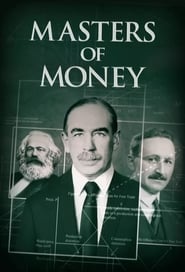
Masters of Money
Скачать English субтитры
Информация о релизе
Теги
Download English Subtitle Files for Mobile (3)
Предпросмотр субтитров (English)
Первые 200 строк.
Narrator: This vast solar power plant
being built in the remote Arizona desert
is part of the biggest economic rescue effort in history.
- While the cost of action will be great,
I can assure you that the cost of inaction
will be far greater.
Narrator: With the economy still struggling,
the American government is shelling out
three quarters of $1 trillion
to try to haul the country out of trouble.
And in Britain, billions are being spent
to accelerate growth,
even by a government determined to cut borrowing.
Is this really the right road to take?
After the crash in 2008,
the world seemed to be running out of cash.
But rather than cut back,
governments spent huge amounts of money
they didn't have. Why on earth would they do that?
It all goes back
to the extraordinary ideas of this man -
the British economist John Maynard Keynes.
Quite simply, he changed the world.
- I think it is true that he's one of the great figures
of the 20th century and in many ways,
of the 21st century.
Narrator: Keynes thought capitalism was brilliant,
but left to its own devices,
it could also go seriously wrong.
It was up to governments to step in
to get the economy back on track.
He was the archetypal man
in Whitehall, Westminster or Cambridge
who thought he knew best.
Narrator: Keynes has never been more relevant or controversial
than he is today.
Because for the first time since the 1930s,
the problems he was grappling with then -
bank failures, international crises,
the possibility of a long economic slump -
we're facing, too.
In this series, we'll explore the stories
of the lives and world-changing thinking
of three men with dramatically polarised views.
Karl Marx, Friedrich Hayek, and tonight, Keynes.
They're the ones who taught us the awesome power of money.
The good that markets and capitalism could do,
but also, the enormous trouble they could bring.
Could these radical thinkers
help us understand the huge mess we're in?
Could their ideas help us get out of it?
Narrator: The quiet hills of Northwest England.
This is economics in action.
These rally cars are competing in the Tour of Cumbria.
The sponsors, Pirelli, are getting a slice
of the government's £2.4 billion fund
to help regional growth and employment.
They want to show
what the company's really all about.
Pirelli's one of the world's biggest tyre makers.
It's been manufacturing in Britain for almost a century.
It wants to develop some of its top ranges
and beef up research and development.
But the sums hadn't been adding up.
This factory's one of Carlisle's biggest employers.
There are about 750 workers here,
producing 10,000 tyres a day.
Not so long ago,
people worried the company would shift production overseas
to cut costs.
A £2 million government grant
has persuaded Pirelli to invest in Britain instead.
- When we have a major investment,
the confidence in people
to spend their wages is increased
and the local economy benefits.
And it's not only Pirelli employees.
We have hundreds of suppliers and contractors
who depend on this factory,
and they benefit also when Pirelli increases its spend
and also they recycle that money into the local economy.
Narrator: It might seem surprising,
a handout to a private company
when the government's so worried
about the mounting national debt -
now more than £1 trillion.
But Keynes was quite clear.
There are times when we need to step in
to make capitalism work for us.
Even when that means spending money we don't have.
- What Keynes said was that it was possible
for a government to come in
and make markets work better.
So, one way that it's often put is that,
Keynes saved capitalism from the capitalists.
Narrator: Though for Keynes critics,
it's mistakes by governments that really cause the trouble.
- When we find instances of economies
being seriously knocked out of equilibrium,
it's generally been as a result of government policy mistakes.
But Keynes didn't really make a convincing case
that even when an economy was knocked out of equilibrium,
that government action could do better
than allowing the economy to essentially mend itself.
Narrator: Keynes is either an economic saviour,
or the man who led us all astray.
But he was at the centre of the debate 80 years ago,
and he's back there again today.
A great weight is lifted from us.
Narrator: This is the only known film
of Keynes speaking.
There's no danger of the exchange falling too far,
there's no danger of a serious rise
in the cost of living.
Narrator: It's a broadcast about economics.
How to share out the world's resources.
Meanwhile, British trade...
Narrator: But for Keynes, this was no dry science.
It was about changing the world for the better.
- I think if we're looking at Britons
who made a real difference in the 20th century,
the most obvious name
would be Winston Churchill.
John Maynard Keynes
is really not far behind.
Narrator: Keynes spent years in this house in London,
developing ideas that helped shape
some of the most important events of the past century.
Helping to save capitalism from the Great Depression.
Funding the war against the Nazis.
And building a new post-war economic order
that helped pave the way for decades of growth
and rising prosperity.
He had the ear of everyone who mattered.
Presidents and prime ministers
all listened to what he had to say.
Though it was only after his death
that everyone actually started taking his advice.
- I applied to university in 1965,
and the whole intellectual climate
of the time, not just in terms of economics, but politics,
was driven by the idea that Keynes
had solved the economic problem.
Narrator: By the late 1960s,
Keynes ideas were built into the fabric
of pretty much every Western economy.
But he didn't seem to have an answer
to the high inflation of the '70s.
After that, Keynesian fine tuning was out,
and free market ideas gradually took over.
But when the world got into serious bother in 2008,
Keynes was back.
It's ideas that mobilise the world.
On right and left, good and bad.
And Keynes was the author of, in my judgement,
the best suite of ideas
about how to think about capitalism
that there's been.
And if you think that counts, then, he counts.
Narrator: So what are these great ideas
that have dominated our economic landscape
for so long?
And where exactly did they come from?
Keynes was born at the height of the British Empire, in 1883,
to middle-class parents
who sent him to Eton
and Cambridge.
So far, so conventional.
But at university, he fell in
with a very unconventional crowd,
The Bloomsbury Set.
As a young man, he spent a lot of time here,
at their country retreat, Charleston, in Sussex.
It was a kind of commune
for artists and writers
and the one economist.
- They did see themselves as very different.
To an extent, they where tinged
by that rather indefinable concept - bohemian.
They were very ahead of their time.
They were pioneers about sexual behaviour,
they were pioneers on the political front,
they were pioneers in many aesthetic fields,
in writing and in the arts.
- The Bloomsbury Group allowed him
to step outside of the box
and to think the unthinkable,
and that breadth of intellect that he had
allowed him to leap off cliffs
with the confidence that there was no bottom.
Narrator: Keynes immersed himself
in the cultural world all his life.
Collecting paintings, fine books,
even founding the Arts Theatre, here in Cambridge.
Perhaps it's no coincidence
that a man with such wide-ranging interests
should have the vision to develop
a radically new approach to economics.
Keynesianism.
Shorthand today for government efforts
Комментарии
No comments yet. Be the first to leave one.