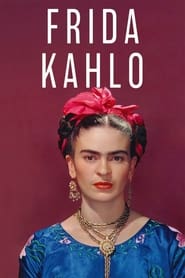
Frida Kahlo
Скачать English субтитры
Информация о релизе
Теги
Предпросмотр субтитров (English)
Первые 200 строк.
"It's been such a long time since I've written
that I don't know where to start this letter.
I've never suffered so much,
and I did not think I could take so much pain.
I know it's going to take me years
to be able to get out of this mess that I have in my head.
That's why I've decided to tell you everything now."
Frida Kahlo was a genius.
She is in many ways a unique artist.
Her work transcends time.
She is iconic.
You feel like you know her.
I've met people who really don't like Frida Kahlo's paintings.
I think it is because they are so visceral, so personal.
She could say, through art, the unsayable,
the repressed, the taboo, and give it a voice.
That's why she is so important.
Whatever point people enter into thinking about Frida Kahlo,
whether it's the biography, whether it's the tragedy,
or whether it's the,
"What was this artist doing and who were they as an intellectual?"
there is a story there to be enjoyed
that is deeply immersive and captivating.
Frida Kahlo was born on the 6th of July 1907
in Coyoacán, a fashionable suburb of Mexico City.
She lived with her parents and three sisters in a house built by her father,
which became known as the Casa Azul – The Blue House.
Her mother was Mexican, of Indian and Spanish descent,
and Catholic, which is important,
because there's a lot of Catholic imagery in Frida Kahlo's paintings.
Her father was German and an immigrant to Mexico,
and Frida Kahlo had polio when she was a young child
and her father was the one that helped her get stronger afterward,
getting her to do all sorts of athletic things.
She was the child that he said, "Frida is the most like me"
and he almost treated her like a boy.
Mexico City was a very cosmopolitan city.
It had had a cultural life for several hundred years.
The Mexico City elite are very much emulating the high culture of Europe.
And that's something that might have been what motivated her father
to come to Mexico in the first place.
This sophisticated capital with economic opportunity and cultural opportunity.
Guillermo Kahlo, my great-grandfather
was from Pforzheim in Germany on the edge of the Black Forest
He arrived in Mexico aged 19 with a backpack
without speaking any Spanish
He was an avid reader
He painted accomplished watercolours
in a European tradition
He was a photographer
and that was the first contact Frida had with art
seeing her father take photographs
I'm sure that the way later on
Frida came to pose throughout her life
in a very natural way
originated from there
posing for her father Guillermo Kahlo.
She was a very active child
and rambunctious and mischievous and kind of fun.
She was one of the very few girls
accepted to the best school in Mexico City,
the National Preparatory School,
and there she became part of a group called Las Cachuchas.
They were all very brilliant
and they actually even became a little bit political.
writers, philosophers...
One of them was her boyfriend, Alejandro Gómez Arias.
And it's really important to understand
that Frida Kahlo was on a track to become a doctor,
so her schooling was in science.
It was a very macho society, very traditional.
She was very different from the beginning.
But one day in 1925 - September 17th, to be exact -
she and Alejandro Gómez Arias took a bus from Mexico City,
where their school was, to Coyoacán, where the Blue House is, and...
a tram slammed across and just completely devastated her.
It was a fatal crash. People died.
Kahlo was changed forever.
The accident fractured Kahlo's spine,
collarbone, ribs and right leg in eleven places.
Her right foot and left shoulder were dislocated,
and a metal handrail pierced her pelvis.
She spent months recovering.
Enforced confinement returned Kahlo
to her childhood interests in drawing and painting.
Although untutored, she had already shown artistic talent as a young girl.
"I began to paint after the accident.
Papa gave me a little box of paints
and a small book that told me how to prepare the canvases.
My boyfriend Gómez Arias bought me books on painters from Europe.
These were the first books on art that fell into my hands."
When we think about what happened,
she was hospitalised, she felt very lonely
she had to drop out of school,
she would never be a doctor,
people thought she would never walk again.
There was a mirror fixed inside the canopy of her bed,
and a wooden easel, and she started to paint.
And this painting she painted for Alejandro.
At that time she complained
that Alejandro didn't come to see her
His family decided to send him to Germany
so he didn't have to spend his life with an ill woman
He left her
This painting reflects her broad knowledge of the European art
that her father had taught her about
but also her great love that will never be forgotten
for Alejandro Gómez Arias.
Kahlo's Self-Portrait in a Velvet Dress
is a very important early painting,
not the first painting but the first sort of formal self-portrait.
The portrait relates to the photograph that her father took of her,
where she is wearing a black silk dress and she is seated in a chair
and she's holding a book, not a brush, not a palette,
and her hair is short there as well.
So Self-Portrait in a Velvet Dress
is Kahlo making a declarative statement to her boyfriend
for whom she painted that painting
that I am the alluring seductive emancipated young modern.
We see her with that intense gaze that will become her look.
When she wrote to Alejandro, she called it "Your Botticelli",
so she associated herself with Botticelli's The Birth of Venus.
When you look at the way her hands are placed,
the gesture is a kind of awkward beginner's attempt
to show the Botticelli hand.
She has a very low-cut dress,
so she tries to accentuate her femininity
although she keeps her connected eyebrows
which, by the way, she often writes that she loves her eyebrows.
I think that's a kind of rebellion that speaks to me.
She knew she could adopt an alternative beauty.
It's a beautiful painting, partly for its emotional resonance, I think.
She was able to put into it that feeling of need
which is strong in all of Frida Kahlo's art,
of desperate need for somebody to love her.
Her earliest paintings, other than the self-portrait,
are almost all of family and friends.
They're very dark, and they're very European, sort of Renaissance.
And she clearly saw Italian Renaissance paintings.
I mean people in Mexico were extremely sophisticated
about what was going on in Europe.
It wasn't an isolated country.
Overwhelming medical bills forced Kahlo
to abandon her studies and her dreams of a medical career.
Instead she turned to politics.
In 1928 she joined the Communist Party
Diego Rivera.
Muralism.
The muralists formed in the wake of the 1910 Revolution -
a decade long civil war
that ended with the overthrowing of a 30-year dictatorship
and the birth of a new Mexico.
You have to remember that Mexico was a new country,
with a new government,
with a new social movement that was reflected in its art.
You had Diego painting murals in the public buildings.
And after the revolution,
Mexican society changed drastically.
Mexico became the centre of culture in America.
You had a great migration of painters, writers and intellectuals
coming to Mexico to experience this social revolution.
You cannot understand the muralists and their art
if you don't understand the revolution
The revolution changed Mexico
It brought about renewal and reform
It embraced both popular Mexican art and pre-Hispanic culture
and gave birth to a great number of major artists
who defined Mexico by saying "We are Mexican."
It was a renaissance that was political,
dismissing the colonial, dismissing the Spanish,
dismissing the bourgeois
and trying to adapt and adopt
the native, indigenous Mexican culture,
the pre-Hispanic culture.
Kahlo became very, very politically aware.
One of the earliest photographs of Frida Kahlo and Diego Rivera together
is she's wearing this pencil skirt
and she's marching with this huge Rivera,
and it's a Mayday parade
and it's for the workers that they're marching.
And so you have in Frida and Diego the perfect couple.
One was a revolutionary that was free-flying
and the other you have the very professional powerful painter
that painted the spirit of Mexico
and the spirit of the people of Mexico.
Rivera was also a larger-than-life celebrity,
notorious for his numerous and very public love affairs.
He was to change the direction of Kahlo's life,
artistically, politically and emotionally.
They married in 1929.
She apparently wore a servant's clothes.
In her wedding photograph she's smoking.
You can see her breaking all the proper modes of behaviour even then.
Her mother said, "It's like a marriage between an elephant and a dove."
Her father was not against it.
They had financial problems,
and he realised that Diego Rivera was going to be able to support her
and pay her medical bills,
that were going to be large for the rest of her life.
It was a tumultuous marriage.
Комментарии
No comments yet. Be the first to leave one.