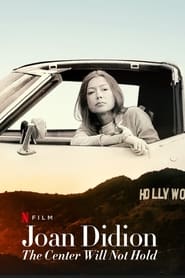
Joan Didion: The Center Will Not Hold
Download English Subtitle
Release info
Tags
English subtitle preview
The first 200 lines.
I went to San Francisco
because I had not been able to work in some months.
I'd been paralyzed by the conviction that writing was an irrelevant act...
that the world as I had understood it no longer existed.
It was the first time I'd dealt directly and flatly
with the evidence of atomization,
the proof that things fall apart.
If I was to work again, it would be necessary for me
to come to terms with disorder.
When snakes would appear so much in your...
in your later work, was that an unconscious...
image, do you think, from growing up?
I think it was an unconscious image from growing up, yeah.
But, I mean, snakes appeared in my later work because they just...
They were always on my mind. You had to avoid them.
- Do you have snakes? - Hmm?
- You have snakes? - I have no snakes.
I'm not a big fan of snakes.
Well, how do you know up in the country?
Uh...
I just take a rake and kill it.
Killing a snake is the same as having a snake.
Oh, yes, that's true.
My first notebook was a Big 5 tablet given to me by my mother
with the sensible suggestion I stop whining
and learn to amuse myself by writing my thoughts.
The first entry is a woman who believes herself
to be freezing to death in the arctic night...
only to find when day breaks she has stumbled on to the Sahara desert
where she will die of the heat before lunch.
I have no idea what turn of a 5-year-old's mind
could have prompted so insistently ironic and exotic a story.
But it does reveal a predilection for the extreme
which has dogged me into adult life.
My Aunt Joan grew up on stories of the doomed Donner party.
Her family actually traveled across the plains with them.
They parted company when the Donners insisted on taking an uncharted shortcut.
Instead, her family followed the map that they brought
which safely guided them to the last frontier...
California.
"I was born in Sacramento and lived in California most of my life.
I learned to swim in the Sacramento and the American rivers before the dams.
I learned to drive on the levees up and downriver from Sacramento.
Yet California has remained in some way impenetrable to me,
a wearying enigma...
as it has to many of us who were from there."
My family had come to Sacramento in the 19th century.
They came to it as a frontier.
And it was the last frontier.
Don't you think people are formed by the landscape they grow up in?
It formed everything I ever think, or ever do, or am.
I remember once when we were snowbound,
my mother gave me several old copies of Vogue...
and pointed out an announcement
the competition Vogue then had for college seniors, the Prix de Paris.
First prize, a job in Paris or New York.
"You could win that," my mother said. "You could win that
and live in Paris, or New York, wherever you wanted.
But definitely you could win it."
My senior year at Berkeley, I did win it.
I got out of Berkeley, and I was offered a job at Vogue.
So, I moved to New York to take the job.
It was very thrilling to me, naturally.
When I first saw New York, I was 20.
And it was summer time, and the warm air smelled of mildew
and some instinct
programmed by all the movies I'd ever seen
and all the songs I'd ever heard sung
and the stories I'd read about New York
informed me it would never be quite the same again.
In fact, it never was.
When she was here, you know, some time ago,
it was at a moment in Vogue's history when,
if you were an editor, you'd still wear a hat and gloves.
And if you were just an assistant, no gloves, no hat.
I mean, it was just a very...
Everyone was addressed by Ms. or Mrs. I mean, it was a very different time.
It would be exciting,
because Vogue was the preeminent fashion magazine.
You had to learn to...
write with irony,
or with a kind of humor, you know, something that would grab the reader.
You had to do it in this short space.
You didn't have the luxury of writing, and writing, and writing.
They would've been a little daunted by some of the editors.
Allene Talmey, whom, uh, Joan obviously knew,
she could be very frightening.
I remember she would have this big aquamarine ring.
She'd get violently
crossing, x-ing out things, muttering:
"Action verbs, action verbs."
And everybody who lasted with her...
basically learned to write.
The first thing I wrote for Vogue was "Self-respect, its source, its power."
They had assigned a piece called...
"Self-respect, its source, its power." They put it on the cover.
And the writer didn't materialize. No piece came in.
So, I had to write it.
People with self-respect exhibit a certain toughness,
a kind of moral nerve.
They display what was once called "character"...
a quality which although approved in abstract
sometimes loses ground to other, more instantly negotiable virtues.
"Character," the willingness to accept responsibility for one's own life,
is the source from which self-respect springs.
However long we postpone it, we eventually lie down alone...
in that notoriously uncomfortable bed, the one we make ourselves.
Whether or not we sleep in it depends, of course,
on whether or not we respect ourselves.
It seems that would be unusual for Vogue to have a voice like that,
that personal. Was it?
Well, it was probably...
sort of unusual, yeah.
You might have pieces on ways of doing makeup or something like that
but these weren't like that.
They were personal pieces.
I started writing a novel, basically, when I came to New York.
That was sort of what you... did.
You got out of school, and now you were gonna write a novel.
So, I'd work all day at Vogue then I'd come home...
and have dinner or whatever and do this.
I didn't have any real clear picture of how to do it.
So, I would just do parts of it.
And then I would just pin up these parts on the walls of my apartment.
I think ten people read it.
I think a total of 11 copies were sold.
First time I saw her in print
was probably her first novel which was Run River.
It's not her best novel, but it was her first, and it was the, uh...
The, uh, story about people we knew.
It was a Sacramento story.
So, I've always enjoyed that.
"Here was the story about my father.
There was about him a sadness so pervasive that it colored even those moments
when he seemed to be having a good time.
He could be in the middle of a party at our own house, sitting at the piano,
a bourbon highball always within reach.
The tension he transmitted would seem so great
that I would have to leave, run to my room and close the door."
My father was severely depressed.
I didn't realize that at the time. I thought...
this depressed behavior was totally normal.
"We went to the movies three or four afternoons a week.
And it was there that I first saw John Wayne.
I heard him tell a girl in a picture he'd build her a house
at the bend in the river where the cottonwoods grow.
Deep in that part of my heart where the artificial rain forever falls...
that is still the line I wait to hear.
As it happened, I did not grow up to be the woman who is the heroine in a Western.
All of the men I have known have had many virtues
and have taken me to live in many places I have come to love,
they have never been John Wayne.
They have never taken me to that bend in the river where the cottonwoods grow."
He's, you know, a protector.
You married a protector.
I did.
Although...
Also... Also a hothead.
- Quick with a gun. - Yeah.
I met John Gregory Dunne at TIME magazine.
We were sitting in this building, late at night
with too much to drink.
And, so, there were a lot of affairs going on.
But people were very quiet about it.
John was a great gossip...
and, uh, always came into my office...
and held up his hand and said,
"This, you will not believe."
I made him a character in a novel about working at a news magazine.
The beginning of the book had a claimer instead of a disclaimer. And it said,
"The character of Andy Wolferman is based on John Gregory Dunne,
though it tends to flatter."
Later, he said,
"Calvin, I was wondering, what's the...?
Why was I Jewish in the book?"
And I said, "That's the 'tends to flatter, ' John.
You don't want to be a lace curtain Irish all your life."
As Irish Catholics become assimilated, they lose something.
They lose their Irish which makes them, uh, unique.
It's sort of a very sort of dark, uh, sense of humor that they have.
The Irish sense of humor is "A man kisses the Blarney Stone
and falls and fractures his skull." That makes the Irish laugh.
There is that sense of storytelling, and the Irish are great storytellers.
As Joan's family crossed the frontier,
John's grandfather came through Ellis Island at the age of 11
with only a 3rd-grade education.
It was his love of storytelling that John said influenced him to become a writer.
He'd offer the kids a quarter, a lot of money at the time...
to recite a Shakespeare sonnet or poem.
John went on to write 13 books, both fiction and non-fiction.
His older brother and my father, Dominick Dunne,
also became a journalist and novelist.
I went to Hartford and fell in love with his family...
and determined that I was gonna marry him...
and did.
I don't know what "fall in love" means.
Um... It's not part of my...
world.
But I do remember having a very clear sense that I wanted this to continue.
I liked being a couple.
Joan Didion: The Center Will Not Hold subtitles in other languages
Comments
No comments yet. Be the first to leave one.