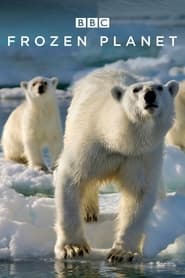
Frozen Planet
Download English Subtitle
Release info
Tags
Download English Subtitle Files for Mobile (8)
English subtitle preview
The first 200 lines.
Over one third of our planet is frozen,
and yet, the icy worlds of the Arctic and Antarctic
are as alien to most of us as the surface
of another planet.
They are places of superlatives.
From ice caps that hold nearly 80% of our planet's fresh water
to frozen forests that encircle the entire globe.
These are places that feed our imaginations,
places that seem to be borrowed from fairy tales.
They're dominated and shaped by the ice...
both by its coming and by its going.
This is our planet's last true wilderness
and one that is changing just as we're beginning to understand it.
In this series, we'll be travelling to all parts of these lonely lands,
both north and south,
to witness its wonders perhaps for the last time
and to discover some extraordinary examples
of survival against all the odds,
as can be found anywhere on the planet.
The poles are permanently capped with ice.
Nowhere is colder, windier or more hostile to life.
I'm standing at the North Pole ... the very top of the Earth.
Up here, it's easy to see why the polar regions are so cold.
The sun never rises high enough in the sky to warm my back
and those rays that do strike the surface
are mostly reflected back from this great whiteness.
But the fundamental problem is that there's no sun here at all
for half the year.
The polar winter is unrivalled in its harshness.
A night that lasts for months.
Only the toughest stay,
as temperatures plunge to minus 70 degrees centigrade.
And yet, the greatest challenge to life here is not the cold,
but the extreme swings between the seasons.
When the sun finally returns,
an extraordinary transformation begins.
This frozen world begins to melt away.
The polar spring brings a brief opportunity for life.
By summer, the sun no longer sets
and works its magic for 24 hours a day.
Now it's a race to breed before the sun departs.
By autumn, all but the hardiest abandon the poles
and the ice extends its grip.
Land and sea close down for the long, polar winter,
until, once again, the sun returns.
It's spring in the High Arctic
and the sun illuminates a giant frozen ocean,
the first stop on our journey.
The most powerful land predator is on the prowl.
A male polar bear is searching for a mate.
Willing females are few and far between
and the sea ice on which he travels will soon melt and vanish.
He's running out of time to find a mate in this vast, frozen desert.
Ten miles ahead, a single female without cubs...
exactly what the male is seeking.
He seems to relish her scent, even though she's miles away.
This is an exciting prospect.
She's clearly giving off the right signals.
He locks onto her tracks, eager not to lose her trail.
It's easier to tread in the compacted snow of her footprints.
This pursuit could last for days.
The female eventually comes into view.
The search is finally over.
For the female, only half his weight,
this must be a nerve-racking encounter.
The male could kill her if he chooses.
But he has other intentions...
and she is ready and willing.
She leads him to higher ground.
It seems that courting polar bears prefer privacy,
often leaving the sea ice and heading for the hills
to avoid the prying eyes
of rival males who might disturb them.
Few have witnessed this moment.
For the male,
his only tender encounter in an otherwise solitary life.
But it doesn't last long...
a rival suitor has also caught the female's scent.
Courtship has to be put on hold. He must fight for his rights.
He sees off this first challenger without injury to either party,
but bloodier battles are to come.
Another battle won, though he has been slightly injured.
He hurries back to his mate,
but now she seems to have lost her enthusiasm.
Female polar bears are high-maintenance.
Wherever she goes, he will follow, mating with her when she allows
and guarding her at all times.
Over the next two weeks, the male sees off many rivals
but the battles take their toll on him.
He is almost spent,
but he has ensured that no other bears have mated with his female.
It's time for the couple
to go their separate ways.
She will give birth to his cubs, alone, in nine months' time
and he may never see her again.
He returns to the frozen ocean,
no doubt relieved to resume his solitary ways,
and just in time.
The ice beneath his feet will soon be gone.
Each spring, the Arctic Ocean undergoes
an extraordinary transformation.
An area of sea ice the size of Europe melts,
exposing the rich waters beneath.
Short-tailed shearwaters have travelled 10,000 miles
from Australia to be here.
18 million visitors darken the skies,
the largest gathering of sea birds on the planet.
Humpback whales have come all the way from the Equator
to feed in these rich, polar waters.
Their giant tails are five metres across.
Simply raising them above the surface
gives the whales enough downward momentum
to reach the great swarms of krill and herring below.
The shearwaters follow the giants' lead.
For those who can get here, in summer,
these waters provide a feast of epic proportions.
But the good times will be very short...
a problem that faces all life in the polar regions.
Journeying south across the Arctic Ocean,
the first land you reach is Greenland,
the largest island in the world.
Despite its name, Greenland is mostly white,
covered by a giant ice sheet
six times the size of the United Kingdom.
In the middle of the island, the ice is nearly two miles thick.
It's a bleak, quiet world.
Sapphire-blue melt lakes
are the first sign that a dynamic process is underway.
Each lake forms in a matter of days, expanding until it's miles across
and starts to overflow.
The spill water then carves its way through the ice.
The water courses through an icy delta
like blood along the arteries of a cold-blooded monster,
a monster that is stirring.
And without warning, the water suddenly plunges down an open shaft,
falling a vertical mile into the heart of the ice sheet.
This meltwater has a surprising effect...
it lubricates the junction
between the ice and the rock floor beneath,
so the entire ice sheet is now on the move,
sliding downhill into the ocean.
This, Jakobshavn Isbrae,
is the fastest-flowing glacier on our planet,
moving as much as 40 metres a day.
As it advances, it destroys everything in its path,
even cutting its way through Greenland's great mountain ranges
on its drive downwards towards the sea.
When speeded up,
these solid rivers of ice seem to flow just like liquid rivers.
This is the titanic force
that cuts down mountains and levels the surface of continents.
The ice is now entering the last stage of its descent.
As it gains speed,
huge crevasses open that extend down to its very core.
It's reached the ocean,
and millions of tonnes of ice have lost the support of their rocky bed.
Something must give.
These icefalls are an ominous sign of what is about to happen...
a rupture deep within the glacier.
A colossal iceberg is born.
This single block of ice,
many hundreds of metres across,
would dwarf the biggest of mankind's buildings.
Every year,
tens of thousands of icebergs are spawned by Greenland's glaciers,
and their number is steadily increasing
as the climate continues to warm.
The break-up of the bergs fills the bays of the Arctic
with exquisite ice sculptures.
It also releases great volumes of cold, fresh water into the sea.
Greenland's meltwater influences the course of the ocean currents,
which, in turn, has an effect on the weather around the world.
The Arctic is closer to home than many of us realise.
It includes the northernmost parts of the three continents
on which most of us live ... Europe, Asia and North America.
The first bare land we reach on our journey south
is a bleak treeless wilderness known as tundra.
Each spring, animals travel up from the south,
to be ready for the rich grazing
that will be unveiled by the spring melt.
For the caribou,
the timing is critical.
Arrive early and a winter storm could kill you.
Delay too long and you may fail to lay down the fat
needed to survive a polar winter.
Further south still,
and stooped, shrouded figures end the flat monotony of the tundra.
This is the tree line, the first place on our journey
with sufficient warmth and liquid water
to enable a tree to grow.
Surviving here is so crushingly difficult,
that it can take hundreds of years for a seedling
to grow into a stunted shrub.
But even small trees
can provide cover for a predator.
Wolves. These, in northern Canada,
are the largest and most powerful in the world
and they are setting out to hunt.
The pack is 25 strong,
a sign that the prey they are seeking is formidable.
Frozen Planet subtitles in other languages
More English subtitles for Frozen Planet
- BBC: Frozen Planet - Complete Series (2011) · 135 downloads · 2018-07-16
- 07 On Thin Ice 720p HDTV MP4 · 83 downloads · 2014-03-17
- Frozen Planet -Complete Series-720p HDTV x264 YIFY-350mb-Eng · 131 downloads · 2013-07-23
- Frozen Planet 2011 720p BluRay x264-RO4EVA · 166 downloads · 2012-05-09
- BBCFrozen Planet EP01 To The Ends Of The Earth 2011 720p BluRay AC3 x264-HDxT En · 248 downloads · 2012-03-07
- BBC Frozen Planet 2011 1080p BluRay DTS x264 D-Z0N3 · 173 downloads · 2012-01-21
- BBC Frozen Planet E08 The Epic Journey · 81 downloads · 2011-12-30
- frozen planet ep7 Resync for vsenc release · 89 downloads · 2011-12-16
Comments
No comments yet. Be the first to leave one.