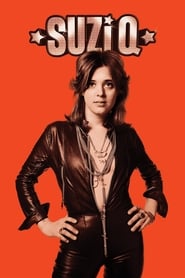
Suzi Q
Download English Subtitle
English subtitle preview
The first 200 lines.
I am always bitterly disappointed
that women's rock groups are so bad.
Although there are rock groups coming up in the states
who are trying to lay down a kind of heavy feminist rock.
But it's nothing like the explosion of creativity
that happened among the boys.
You know, everybody had a guitar.
The girls just somehow never picked them up.
Most of the girls we lost along the way
because they got bored with it,
or they didn't want to take time off for the dating,
or they went to do something else.
You know? I mean, I gave up most of my early life
to the business, and a
lot of women aren't prepared to do that.
Mm. Rightly so. Probably. I mean, very few make it.
And, and gentlemen, miss Suzy tro,
that's Susie Quatro on American Band.
Yes, she can. It's Suzy Quattro.
Here's Suzie.
Oh, she was the first
And broke the ice and kicked the
Door for us gals. She
Was such a pioneer in the
quintessential rock and roll chick
Back when we were first starting at 64, 65, 66.
The girl bands were few
and far between. Few and far between.
Of course, there were early trailblazers
who were musicians, female musicians
playing instruments in rock bands.
They were making great music.
But in the shadows, Susie was the one
who really smashed it wide open
and broke into the mainstream with that string
of top 10 hits around the world.
She was the first.
Did you start something nobody else did?
Did you actually succeed at it?
How long did the career last?
Was there quality to what you did? Were you an innovator?
Susie was an innovator. Absolutely.
It was just unbelievable.
It was like, you know, that thing where your chills go
through your body and you're just, um, freaking out
because it's like, did I really just hear this?
Susie was authentic.
When that young lady was in her leather with her guitar,
that audience got crazy and she's still doing it.
Young kids these days, you know, unfortunately for them,
they don't really know Susie.
And that's a shame
because they should, especially anybody that wants
to get into this business, they should study Susie Cuatro.
Most any successful artist would,
would only see it in hindsight.
But, um, knowing the cost of fame
and success, there's always a trade off.
A massive trade off. Huge. Um,
Huge. How, I
mean, do you, how does one reconcile themselves
with that knowing that you do pay a price
that the public just don't see?
You have to say goodbye to a very comfortable,
perfect existence.
And I knew it, taking it out.
I knew it the first time I went on the road with the
Tell you, I'm hot
streak.
I gonna, again,
I got my food on.
And the gone When you
and you push me, I'm the,
I'm get outta my way.
Hey, hey, Suzy Q what's cooking with you?
WJ Estate Detroit.
I was born Susan k Quatro.
My father's name was Arthur Quatro.
My mother's name was Heaven Quatro.
You know, I just don't think my father wanted four
dependent daughters.
So he brought us all up, very ballsy,
and he loved my mom very much.
They were together over 50 years.
But my mom was more the strict one.
I'm very close to my mom.
I think she's the only one that really knew me.
I mean, she knew me, knew me, knew me, could never fool her.
If I came in like 13, 14 after being out with some people
and I'd had a beer or a cigarette
or something, she'd be sitting six rooms away
and she'd say, Susan, come here.
I can smell smoke and I can smell the drink.
And I couldn't lie. I am very much my
mother's daughter, morally.
She was a Catholic lady and very strict.
She gave me the tracks to run on for the rest of my life.
So there's that part of me.
And then there's the performer part I get from my dad.
I love that melody. I love that melody. Heart of my heart.
Love my, brings back a memory.
Brings back when we were kids,
I was in a very musical family with five kids,
and my father played various instruments in various bands.
So we all grew up with a million music lessons.
I took drums, I took piano.
We had a joyous life with our family.
It was always, uh, singalongs
around the organ, all that stuff.
Mickey had his own stardom,
and he was young, you know, he was a teenage prodigy.
And on national television,
Susie got that entertainer, gene.
She had that charisma to draw people and tell jokes
and be upfront.
Dad was very thrilled that we all went into music
and followed his dream.
He was January in 1956,
the whole family were watching the, uh, ed Sullivan show.
He brings out Elvis.
And when he went well,
and I had my first light bulb moment at the age of five
and a half, I'm going to do that.
She never was told not to.
You know, she, no one ever said,
you can't do this 'cause you're a girl.
You just thought like, I wanna be Elvis. It's rad.
You know, let's go for it.
And I, I think that's, that kind of spirit is
what makes rock, rock, rock and roll, rock and roll.
And it was right after watching the Beatles,
us neighborhood Girls got on the phone talking about
how great they were every babbling at the same time.
And Patty suggested, what about an all girl band?
And we all went, yay.
That first band was the neighborhood kids with the,
uh, two sets of sisters.
And I remember it exactly.
Nan went, I'm gonna play the drums.
Mary Lou said, I'm gonna play rhythm guitar.
Patty said, I'm playing lead. And I went, hello?
She said, you're gonna play bass? I went, okay.
And I went and asked my dad, did he have a bass?
And he gave me this, and I really did literally plug it in
and just said, yeah, it was for me,
the real sort of, uh, pivotal point of my life starting
that band and being on
that stage the first time playing the three songs
that we knew, three chords, three songs same, three chords.
Um, and I was up there with the bass and I looked down
and I remember going, that's it.
Here I am. This is it for the rest of my life.
The guitar always looked too big because she was so small.
I'm surprised she didn't get a smaller guitar.
Here's this little woman, you know, petite
playing this enormous heavy bass
and just making it look like it was a feather.
As it went on, we got more and more popular.
We had our little single out. Susie was 14, I was 16.
What a way to die. The girls from the garage arriving
pre punk before punk,
I mean five Catholic girls singing a beer and drinking song.
So it was very popular, as you can imagine.
We read a gig and we round the, um, on the floor
of the gymnasium because they didn't have a stage for us.
And somebody said, we can't see the
singer put her up on a table.
So I was up on top of the table looking down at the crowd.
So I was looking down at the people,
and I just was got, all of a sudden I went, wow.
And they went like that. And I went, oh, okay.
You like that?
I left school very young.
My dad let me go. I went on the road.
So I've, I've gone away from the normal school attitude,
you know, with your girlfriends
and the sleepovers and this and that. I'm on the road.
Wow, what away to die.
I'm playing in nightclubs, doing five shows a night,
not even supposed to be in there.
And I remember thinking, oh my God,
all my friends are at school
and I'm not part of that life anymore.
Wow. And there's a whole chunk of growing up
that got missed out, which
probably explains why I've got a big vulnerable streak in
me, even though I'm a tough girl.
That part never got, never grew up.
And there was almost like a nostalgic that I wanted
to go back and be with them,
but at the same time, I couldn't go back
because I found what I wanted to do. Wow.
Wow.
I am suitcase Lizzie from Detroit City
out to try my wings.
I'm suitcase Lizzie from Detroit City. I can do anything.
They have an advantage over other groups
because they not only play so well, but they look so fine.
The pleasure seekers.
When my eldest sister's husband started
Suzi Q subtitles in other languages
Comments
No comments yet. Be the first to leave one.