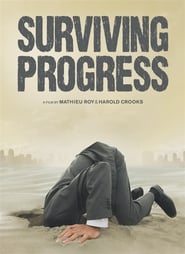
Surviving Progress
Download English Subtitle
Release info
Tags
English subtitle preview
The first 200 lines.
Surviving progress.
In defining progress,
I think it is very important to make a distinction
between good progress and bad progress.
I mean, things progress in a sense that they change.
Both in nature and in human society there appears to be a clear trend towards increasing complexity.
As change proceeds, we tend to delude ourselves that these changes always result in improvements.
....from the human point of view.
SURVIVING PROGRESS
We are now reaching a point in which technological progress and the increase in our economies and our numbers
threaten the very existence of humanity.
WHAT IS PROGRESS?
What is progress.....
I think..... mhm. That's too hard question....
When I think of the word 'progress'...
Progress will not come easy, it won't come quick, but today we have an opportunity to move forward.
It seems we are stuck in this trap for the last 200 years, since the industrial revolution
where we think progress is more of the same, like:
We should make our machines better and get more machines
but we've been doing it for 200 years, so doing more of that is not progress.
We're like stuck in this like a record......
Things are start out to seem like improvement or progress.
These things our seductive, there seems like there is no downside to these
but when they reach a certain scale they turn out to be dead ends, more traps.
PROGRESS TRAPS
I came up with a term 'progress trap' to define human behaviors that
sort of seem to be good things, seem to provide benefits in a short term
but which ultimately lead to disaster, because they are unsustainable.
One example would be going right back to the old stone age
the time of when our ancestors were hunting mammoths.
They reached a point, where their weaponry and hunting techniques got so good
that they destroyed hunting as a way of life through the most of the world.
The people who discovered how to kill two mammoths instead of one
had made real progress, but the people who discovered that they can
eat very well by driving a whole herd over a cliff and kill 200 at once
had fallen into a progress trap
they'd made too much progress.
Our physical bodies and physical brains as far as we can tell
have changed very little in past 50 000 years.
We've only been living in civilization for the last 5000 years
...at the most which is less then 0.2% of our evolutionary history.
So the other 99.8 we were hunters and gatherers
and that is the kind of way of life that made us.
We are essentially the same people as those stone age hunters.
What makes our way of life different from theirs is that culture has taken off at exponential rate
and has really become detached from pace of natural evolution.
So we are running 21st century software, our knowledge,
on hardware that hasn't been upgraded for 50 000 years
and this lies at the core of many of our problems.
All of this is because our human nature is back in hunting-gathering era of the old stone age
whereas our knowledge and technology, in other words, our ability to do both good and harm to ourselves and to the world in general
has grown out of whole proportion.
One thing to remember, of course, about human mind is that it's not
that fundamentally different from, say, a brain of a chimpanzee.
Most of the human brain, the basic structure of the brain
is much older than human species
some of it goes back to bacteria
some of it goes back to worm, some of it originated in first mammals
some of it within the first primates, some of it in first human beings.
Very little however changed in the last 50 000 years.
And so most of what we do, we do with hardware components
that are much older than any of the problems that we face.
When I first began to study chimps
I thought that the task was to just map out more and more similarities
to find the areas of cognition that hadn't been studied yet
and simply show that chimps were just like us.
WHY
You can imagine teaching a small child to stand up a block up right
and you can teach a chimp to do the same thing
'oh I set up a block here, set up a block here, I can see everything, it’s very, very clear'
'and I get a piece of fruit for doing it'
But what happens when you introduce a small subtlety into the situation
when you trick them and make the block off center just that the block keeps falling over.
Well, the chimp will come in, set up the good block
set up the block that we've tricked them with
but then it falls over.
Well the chimp can see that it's not the way it's supposed to be
so they try again, and they try again
and they move it to one place, and they move it to another place
and they keep trying to get it to stand up
because they know what is supposed to happen.
But they have no understanding or no inclination to ask why.
What unobservable part of the situation is causing that block to keep falling over.
The young child will enter set up the good block
try to set up the block that we've tricked them with
but when it falls over, well first they'll try again
then maybe try again, but very quickly they'll turn it over, feel the bottom of it, shake it,
try to concern what unobservable property of that block is causing it to fall over.
That's the fundamental, core difference, I believe, between humans and chimps
that humans ask why, we're constantly probing for unobservable phenomenon to explain the observable.
It's what's driven us to discover gravity,
it's what's driven us to probe into the mysteries of quasars,
and it's the same thing that drives us to probe into mysteries of each other
in our every day life’s.
'Why does she keep doing that?'
'Why does he keep behaving like that, he must think this, he believe this, I don't understand...'
'Why, why, why, why...'
So the upside of the human capacity that asks why,
to continuously probe behind appearances
and to try to find out how the world really works
is we develop fabulous new medicines, fabulous new therapeutic techniques to take care of people,
we invent the whole cascade of modern technology.
But the downside is that
we invent the whole cascade of modern technology.
Arguably we are the most intellectual creature that ever walked on planet earth.
So how come then that so intellectual being
is destroying its only home, because we only have the one home.
Maybe one day people will be on Mars, but at the moment we've got planet earth.
We are destroying, we are polluting, we are damaging the future of our own species
which is very counterproductive from the evolutionary perspective.
This capacity that seems so wonderful to us,
ability to ask 'why'
the very ability that defines modern science
as a double-edge sword.
If humans go extinct on this planet
I think what's gonna be our epitaph on our gravestone is:
'Why?'
We have the ability to think into the future
but most of our mechanisms, most of our brain mechanisms
evolved before we had any ability to think forward to the future
and when it made some sense for decisions to be short-term.
A lot of our brain mechanisms, what I call ancestral mechanisms or reflexive mechanisms
are tuned to making snap decisions, right away, like fight or flight
you see a lion, either you're gonna fight or you gonna run
no time to think about long-term consequences
and that's good when we're stressed about something immediate that we can deal with, for example
but those very systems that work by reflex
are not so good at cooperating with these more modern systems, deliberative systems
that allow us to make long-term decisions, and say
is this good for me, is it good for my society, for my planet.
NOT ENOUGH PLANETS
Between the fall of the Roman empire
and Columbus sailing it took 13 centuries
to add 200 million people to the world’s population
now it takes only 3 years.
A simple thing like pasteurization, the warming of milk so that the bacteria are killed
and the control of smallpox.
Things like that have led to a great boom in human numbers.
Overpopulation, which no one really wants talk about
because it cuts that things like religious believes and the freedom of individual and autonomy of family and so on
is something that we will have to deal with.
We probably have to work towards a much smaller worldwide population then 6 or 7 billion.
We probably need to go down to a half of that or possibly even third of that
if everybody is going to live comfortably and decently.
The other side of this problem
and perhaps the more dangerous side is
the footprint of the individuals at the top of the social pyramids
who are consuming the most.
Somebody in the U.S. or Europe is consuming about 50 times more resources
then a person in a place like Bangladesh.
If China is going to reach the level of consumption
of the U.S. or Europe it's very unlikely that the world could support the addition of billion consumers at that level
I'd say in China, maybe 200, 300 million people are affluent
they could afford a lot, all that we can in the west
in India ca. 200 million, so you add up this affluent segments of population
in these developing countries
but still what you come up with is no more then one and half, maybe two billion people.
So there is still five billion people waiting to tap into these bonanzas
of plentiful food, cars, decent housing, right education for their children.
So the potential demand for resources is immense.
For thousands of years, you know,
China has the longest continuous civilization in the world.
And it is only in the recent period of time
when the European countries started to industrialize
that China started to lag behind and therefore, you know,
between the First Opium War in around 1840 all the way to 1978
China went through a roller coaster of great humiliation, wars, aggression of foreign nations
Japanese aggression against China, Civil War, collapse of Qing Dynasty, great cultural revolution, chaos in China
that's when Deng Xiaoping reemerged in 1978
he basically pointed out the only correct path.
We need to go out to the path of growth
and China needs to modernize and insutrialize.
NATURAL CAPITAL
Some people have written about, ehm,
natural capital, the capital that nature provides
which is the clean air and clean water
the uncut forest, the rich farmland and the minerals, the oil, the metals,
all these things are the capital the nature has provided
and until about 1980 human civilization was able to live on
what we might term interest of that capital
or surplus that nature was able to produce
the fruit that farmland can grow without actually degrading the farmland
or the number of fish you can put out of sea without causing the fish stocks to crash
but since 1980 we've been using more than the interest
so we are in effect somebody who thinks he's rich cause he is spending the money that has been left in his inheritance
not spending the interest but eating into the capital.
The last time I visited the New York Stock Exchange
was in 1980 and the mood sure was different than.
Government with its high taxes, excessive spending and over regulation
had thrown a wrench in the works of our free markets.
With tax reform and budget control our economy will be free to expand to its full potential
driving the bears back into permanent hibernation.
That's our economic programme for next four years, we're going to turn the ball loose.
The world is this big.
It's not this big and it can't be this big.
It's just this big, it's a finite sub.
Instead of thinking that nature is this huge bank that we can just....
this endless credit card that we can just keep drawing on.
We have to think about the finite nature of the planet
and how you keep it alive, so that we too may remain alive.
Surviving Progress subtitles in other languages
More English subtitles for Surviving Progress
- Surviving Progress 2011 WEBRip x264-ION10 · 40 downloads · 2019-10-10
- Surviving Progress 2011 DVDRip XviD-WIDE · 80 downloads · 2019-07-22
Comments
No comments yet. Be the first to leave one.