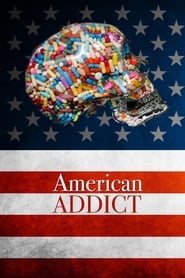
American Addict
Download English Subtitle
English subtitle preview
The first 200 lines.
You know. There are drugs in this country that are
classified as legal
and other drugs that are classified as illegal.
And, for some people, all it needs
to be labeled is legal
and if you have a doctor in place.
A doctor's an authority figure
who has the, you know,
ability to prescribe drugs.
A lot of people feel like,
"Well. If a doctor prescribed it,
it's fine."
But if we look at someone like Michael Jackson
who is probably
the most famous person on the planet
at the time that he died,
he was getting drugs
such as Propofol or Diprivan.
This is a medication that is used in an operating room,
should never be used outside of an operating room.
But he was taking pain pills.
He was taking pills for anxiety,
pills for sleep.
It's sort of an interesting question why,
you know, are prescription drugs
less dangerous than alcohol and cigarettes?
Sometimes. But sometimes not.
We've turned the corner on
drug addiction in the United States.
One of the most famous stars
in Hollywood history is dead at 36.
Marilyn Monroe was found dead in bed
under circumstances that
were in tragic contrast to her
to her glamorous career
as a comic talent.
I said, "We need an ambulance at Graceland.
Get somebody real quick."
Rigor mortis had set in. And...
I turned him over real quick.
I pulled up his pajama bottoms.
He walked in, said, "Elvis is gone."
Flowers. Candles. Notes.
These are items found
left outside of the Manhattan apartment
where the body of
Oscar nominated actor
Heath Ledger was found.
Police say prescription pills
were found nearby.
An autopsy performed Wednesday
was inconclusive.
We have a-- gentleman here
that needs help
and he's not breathing.
prescription drug abuse
had been a problem for Jackson for years.
Jackson family attorney
Brian Oxman tells us weekly.
"I warned them.
There is the misuse of
prescription medications by
people who were enabling him."
It all really started in 1972
when Richard Nixon coined
the phrase "The war on drugs."
But it's pretty clear
at this point that we have lost that war.
And that war was really
dealing with illegal drug trade.
God bless you.
What a glorious day
for American seniors.
A strong and modern Medicare starts today.
It took a lot of work to get us here,
and it took the leadership
of President George W. Bush.
Law enforcement now after 9/11
is locking down the border
and focusing on terrorism.
But when you lock down the borders
what's not getting in?
All of the illegal substances
that were coming in from out of state
are significantly reduced.
So look at the statistics.
After 9/11, it looked like
we were winning the war on drugs.
But the problem is,
no one addressed the drug seeking behavior.
The supply was reduced of your
of your street level drug.
But the demand was still there
for the misuse of drugs.
Whitney Houston was
pronounced dead at the Beverly Hilton hotel.
Greg Giraldo, who died from
accidental overdose.
Brittany Murphy, she died very suddenly.
Leslie Carter has died.
I was addicted to Oxycontin and Opanas.
40 milligrams a day along with
Dilaudid.
4 milligrams six times a day.
I was taking Norco.
I was taking about eight a day.
'co... Anywhere from two to--
Every two to three hours.
about six times a day.
Norco. Eight a day.
And pretty much every other
Opioid or dangerous narcotic
that's out there.
He said he had hurt his back
and that he was taking it because
his back was hurting.
Oxycontin and Roxicodone
and... Somas.
All prescribed at one time.
And this doctor was prescribing him
medication for an illness he didn't have.
He kind of lost his--
his drive... you want to say.
And I went to work. And about
probably like, 10:00-- I don't... even the day...
the day is just a mess for me.
I get a call. And it's my mom.
She says:
"Something's wrong with Joseph.
I went to wake him up
and there's this stuff coming out of his mouth."
And I yelled at my mom.
I'm like. "Why are you calling me?
Why aren't you calling the--
you know, the paramedics or something?"
I ran out of work, I left work.
And I prayed all the way home,
tried to bargain with god
No bargaining with god.
I got here.
No paramedics.
Only police.
And so he was gone.
And from what the coroner says, he...
he only took one pill.
He took one pill.
And his body couldn't handle it anymore.
And he went to sleep. He didn't wake up.
And I guess they found out that.
Well, maybe it wasn't just my son.
Maybe there's others.
So they started doing their own undercover work.
They went in there undercover
and how easy it is to walk into
a doctor's office and say your back hurts
"My neck hurts, my leg hurts."
and get a prescription for
A drug that is really for people
with, like, cancer or something
that's very--you know, a very severe illness.
OK. My name is sergeant Steve Opferman
from the Los Angeles county Sheriff's Department.
I'm assigned to our detective
division, major crimes bureau.
I supervise a multi-agency Task Force
called HALT, which is the
Health Authority Law Enforcement Task Force.
We handle over 100 cases a year.
We confiscate and destroy
probably $3 - $5 millions worth of
confiscated drugs annually.
We've estimated we've probably
saved the government by
stopping, you know, a lot of
These illegal businesses about
$50 million in Medicare
and Medi-Cal claims.
This is an example of
medications that we seize from
what we call "a capper".
This is a recruiter that would
go around skid row and, you know,
find people with Medicare cards.
When we're talking about the
non-controlled substances,
when we're talking about
medicines themselves. when we're talking about
medicines themselves.
There's a different black market
but the drugs are initially
acquired by the same means.
The main focus by government
is usually on supply.
If we reduce the supply,
that reduces the problem.
Well, not true.
If you have drug seeking behavior
and you reduce the supply,
it's like squeezing the
End of a balloon.
Comments
No comments yet. Be the first to leave one.