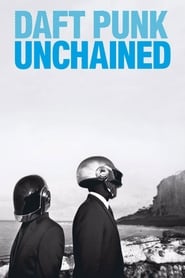
Daft Punk Unchained
Download English Subtitle
Release info
Tags
English subtitle preview
The first 200 lines.
We're always trying
new things.
We are so used
to having crappy products.
Daft Punk thought about their music before they made it.
That makes a real difference. And weirdly enough,
creating those robot personas let them stay human,
grounded and completely free.
They bought their freedom by sending the robots
to do their dirty work.
They were proud to release an EP on the same label as Stereolab.
That's how it all started.
Guy-Manuel and Thomas were 17 or 18 back then.
They thought everything had been set in motion.
But a critic from Melody Maker called them "daft punky thrash".
That made them stop and wonder.
It changed the optimistic view they had on their music.
It took them six or seven months to send me two other tracks.
I think they just did not want to go that way.
They would say "you'll have the new tracks next week",
but what they really meant was "we don't care.
We have other things to think about."
We were 18 when we went to our first rave
on the roof of Beaubourg.
We discovered a new kind of music and energy
with people dancing to music they had never heard before.
Something new was happening on that scene
and it was still alternative and underground at the time.
Not the kind of music you heard on the radio.
We thought there was something to be done
with electronic music.
Thomas, Guy-Manuel and I met there
and the closer we got, the more we could feel the vibrations.
There's a track from Chicago with a dark voice
singing Can You Feel The Bass...
It was the last major revolution in recent decades.
Electronic music and hip-hop were the last great revolutions.
Everything since then ultimately comes from
one of those two movements.
There were people discovering drugs as well.
I remember Thomas saying he did not like it
because using ecstasy made you
lose your critical faculties.
And that was it.
He hates nothing more than losing control.
I called and asked them to come
and to bring their demo.
When they arrived,
they were wondering what was going on.
They come in, their eyes wide open. Guy-Man is blushing.
I introduce the people from Slam.
We didn't have a name.
We decided to use the name from that bad review.
They called us "daft punk".
They have a very clear vision of their careers
because they get advice from Thomas's Bangalter father.
He produced disco music in the 70s under the name Daniel Vangarde.
He helped them work out the deals they were offered.
He was the ideal advisor for a band
making dance music produced in France
with lyrics in English and aimed at the whole world.
We've received faxes
from Denmark, Sweden,
Spain, Japan, New York...
although we've only sold 15,000 records.
It shows that there is an audience
for that kind of music all around the world.
When I met them in 1995,
between the Scottish label, and their energy and talent,
Daft Punk were already in demand
for a live set.
I would say that they were recording their first album
and a live set wasn't possible yet.
Technically, it was stunning.
That music was made in a bedroom...
this big.
There were electric cords all over this child's bedroom.
Child's. Not teenager's.
It was full of cables, keyboards and stuff.
The two albums which changed the face of electronic music were made there.
The specificity of our music and our work is that
there is a real interaction between music and technology.
In a way, we consider technology to be a part of the band.
Thomas is a genius with machines.
When he was working on their debut album,
he read his instruction manuals once a month.
He was one of the first to have a Macintosh in France
so he had a very early approach to computer-aided
music and images.
But artistically there's more to him than that.
He creates wonderful melodies.
He has a real feeling for what makes a hit.
Guy-Man is the mystical one.
There's just one thing that works for him
and as long as he hasn't found it, the rest is junk.
The contract we signed with the label is 100% good for us
so we've avoided problems that others artists have had
with their record companies.
The deal they signed with Virgin was a break with the norm.
Artists usually signed for 4 or 5 albums for a percentage.
They said "no, we own our recordings and
we'll give you the rights for 10 years."
This showed me something.
What I learnt was
that success is built on solid foundations.
Guy-Man and Thomas were already thinking
about an international deal.
They already had quite a clear vision of their career.
Their album was almost ready, they were finishing it off.
From the start, they already understand the business.
The business model is in place.
They know they need complete artistic freedom and control
of their image and everything else.
They were able to impose their own rules
because they were OK financially.
They were not starving.
They even became an example for hip-hop bands
who were influenced
by their business model
which was said to be the greatest hold-up ever.
They invited us to listen to the album in Thomas's flat.
We went with the London Virgin team and some of the French team.
It was fantastic, a small studio, with not much equipment.
We listened on a ghetto blaster,
which impressed us all.
It was a revelation.
We listened to one hit after the other.
Spike Jonze's video had a huge impact.
When Michel Gondry hears about Daft Punk, he has the great idea
for the music video of Around The World.
Where's that stupid little black box?
I'm looking for the remote control.
It's crazy.
Why would I have put it somewhere else?
It has only one use.
That's the story of my life.
Alright.
I met them in a hotel room
in London.
I was sitting on the bed and they were on chairs.
I don't like having an idea before talking to the group.
I don't want to get on the wrong track.
I always talk to the band first
before I propose anything at all.
I think it was Guy-Manuel
who came up with the idea of a choreography.
Choreo-
graphy.
I asked my designer Florence Fontaine,
although we did not have much money,
to make robots.
She used motorbike helmets.
She added two antennas.
Then we decided to cover
the visors with semi-transparent tape.
I think it's the first time they wore helmets.
Maybe it was their idea and I just worked around it,
but I think I wanted them to look like Robocop.
One question,
techno music is supposed to be underground, anti-star system.
Yet you're becoming stars.
How do you feel about that?
I still believe it's anti-star system.
We try not to expose ourselves too much.
The music is the only thing that really matters.
Then people decide for themselves.
But we're not really trying to show ourselves off.
The choice not to show their faces anymore
was made when they decided
to go to the top by signing with Virgin
with the aim to sell records and to conquer pop culture.
Before that, they released EPs with a small Scottish label.
The movement was underground
so there was no reason to protect their identities.
Hiding one's face is part of techno culture.
The founders of techno like Underground Resistance did it.
When techno emerged, it was a faceless music.
Back then, people even danced
backs turned to the DJ.
Americans had done it before. Kraftwerk did it and Kiss.
All pop stars invent and reinvent themselves.
They aren't born that way.
When I talk to David Bowie,
I'm talking to one of his thousand avatars.
Not to the Bowie born in London in 1947.
Those bands influenced them by using make-up and costumes.
They did photoshoots
at the beginning but they probably thought
they looked like kids.
What could be smarter?
That was part of the process as well.
How to still make music when you're 40?
When Homework is released, they are what shakes up the 90s,
they bring a new energy with their electronic music.
It soon becomes clear
that all the major pop stars want to get in touch
to produce them or to work with them.
People from all around the world want to work with them.
Janet Jackson, Madonna, George Michael...
They all tried to collaborate with them.
Daft Punk Unchained subtitles in other languages
Comments
No comments yet. Be the first to leave one.